Roofs in northern Illinois are asked to do something roofs in most of the country are not: survive a hundred-degree summer temperature swing, wet snow loading, hail, and dozens of freeze-thaw cycles a year, all on the same assembly. Each of those does its damage differently, and the confusion between them is why a lot of roofing money gets spent on the wrong thing.
Freeze-thaw cycling
This is the one that does the most cumulative damage and gets the least attention. Water gets into a small gap (a hairline crack in mortar, a lifted shingle edge, an open sealant joint) freezes, expands roughly nine percent, and makes the gap slightly bigger. Then it thaws and does it again. The Chicago area goes through this cycle repeatedly every winter, not once.
What it destroys, in order: mortar joints that chimney counterflashing is embedded in, sealant at penetrations, the seams on low-slope membranes, and the edges of aging shingles. It is why counterflashing on a masonry chimney is a maintenance item rather than a permanent installation, and why sealant-based repairs on a low-slope roof rarely survive a winter.
Ice dams
Ice dams are the signature Chicago roofing problem and the most misdiagnosed. Here is the actual mechanism: warm air from inside the house reaches the underside of the roof deck. Snow on the deck above it melts. The meltwater runs down the slope until it reaches the eave overhang, which is not over heated space and is therefore cold. There it refreezes, building a ridge of ice. Subsequent meltwater pools behind that ridge and works its way back up under the shingle courses, which are designed to shed water flowing down, not standing water sitting still.
Note what is not in that description: a defect in the roof. Ice dams are a heat and ventilation problem that expresses itself as a roof leak. That is why chipping ice off the eaves every February does not stop it recurring, and why a new roof installed without addressing ventilation will ice dam exactly like the old one did.
The durable fixes are: sealing air leaks from the living space into the attic, adequate insulation so the deck stays cold, a genuine intake-to-exhaust ventilation path, and ice-and-water shield membrane at the eaves so that when water does back up, it hits a waterproof layer instead of a shingle overlap. Homes with finished attics, which describes a large share of Chicago bungalows and older two-story homes: are the hardest cases, because the conventional ventilation path was removed when the space was finished.
Wind
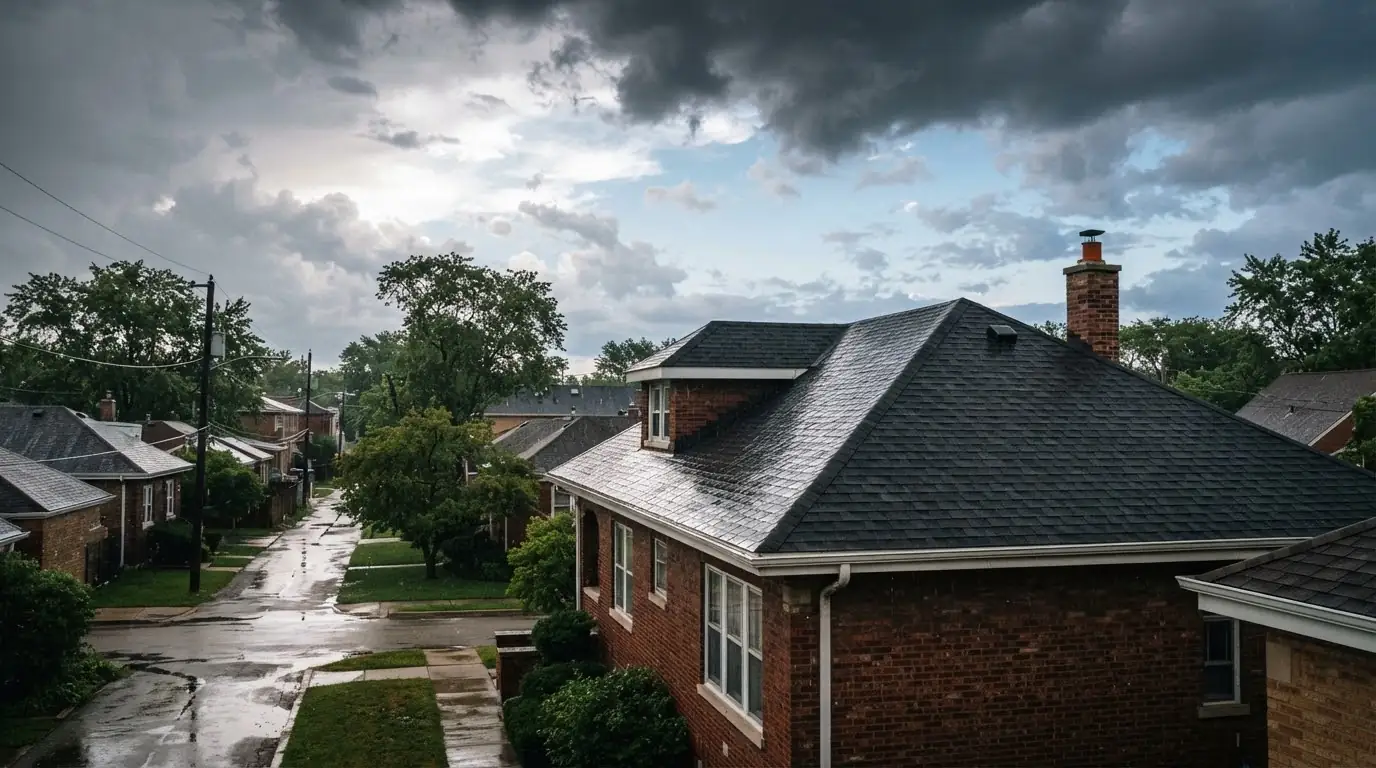
Straight-line winds from summer thunderstorm complexes do more roof damage across this metro than tornadoes do, because they are far more common and cover much more ground. Wind damage starts at the edges (ridge caps, rake edges, and the first courses above the eave) because that is where uplift pressure is highest.
The single biggest factor in whether a roof survives a wind event is where the fasteners went. Every shingle has a narrow nailing zone, and a shingle nailed above it is held only by the tab above rather than by its own fasteners. Roofs lose shingles in 50 mph winds that should have handled 100 because of this. It is also the most common reason a wind-damage warranty claim gets denied.
Exposure matters too. Open terrain communities on the outer edge of the metro, places like Huntley, Plainfield and the newer subdivisions in Will and McHenry County, take wind loading with essentially nothing upwind to slow it down.
Hail
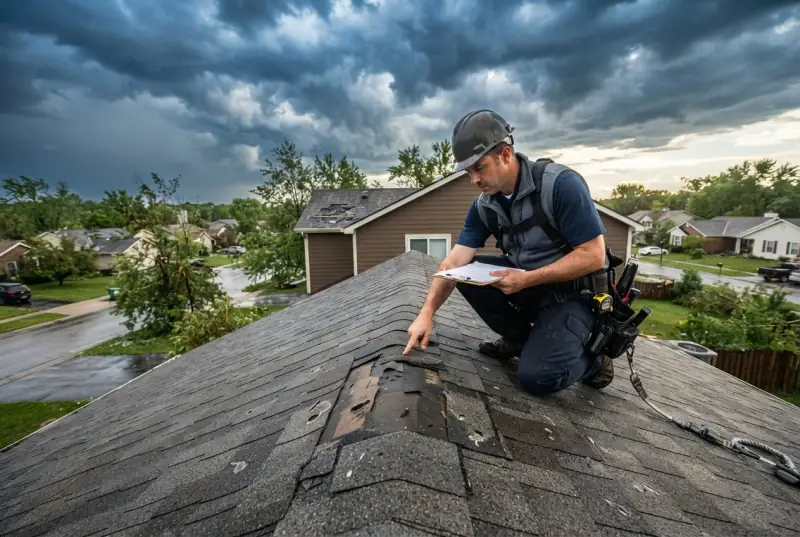
Hail damage on asphalt shingles is not usually a hole. It is a bruise: the impact knocks granules away and fractures the mat underneath, leaving a soft, roughly circular spot. The shingle still sheds water, so nothing leaks. What has happened is that the UV protection is gone at that spot and the mat is damaged, so that area will degrade over the following seasons and fail years earlier than the rest of the roof.
This is why hail damage gets missed. It looks fine from the ground and it does not leak, and then three years later the roof is failing in patches. It is also why the assessment matters: genuine hail bruising is randomly distributed and soft to the touch, while damage in straight lines or repeating patterns is usually foot traffic, blistering or a manufacturing issue rather than hail.
Heat and thermal cycling
Summer does its damage two ways. Direct heat on a dark roof surface accelerates the aging of asphalt, particularly when attic ventilation is poor and heat is trapped against the underside of the deck as well. And thermal cycling: the daily expansion and contraction as a roof surface swings through a large temperature range: works at seams and terminations, which is why low-slope membrane seams open over time and why metal flashing works its fasteners loose.
On dark low-slope roofs in the city the surface temperature swing across a summer day is substantial, and it is the main reason reflective membranes became standard on new commercial work.
What actually helps
- Ice-and-water shield at eaves, valleys and penetrations: the layer that saves you when water does get past the surface.
- Balanced intake and exhaust ventilation, verified rather than assumed. Blocked soffit intake is extremely common and easy to fix.
- Correct fastener placement in the nailing zone, which is an installation practice, not a product.
- New flashing on replacement work rather than reused flashing.
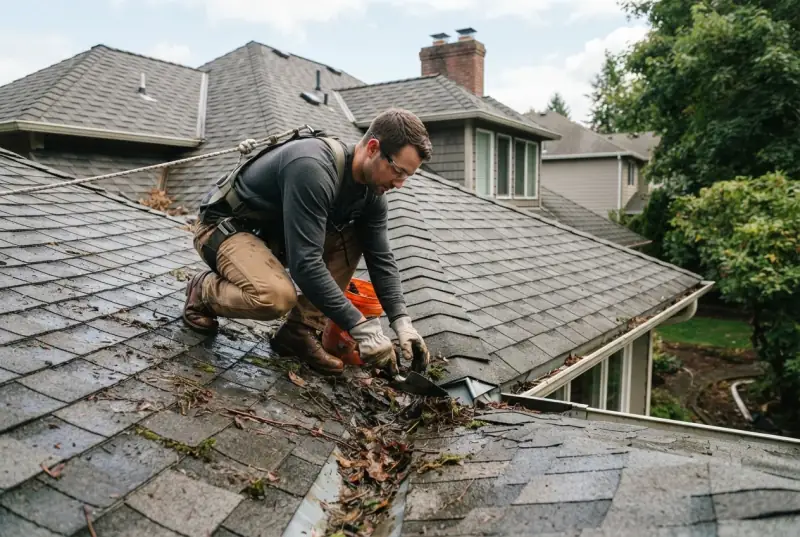
- Keeping valleys, gutters and drains clear so water leaves the roof instead of sitting on it. Our maintenance page covers a realistic schedule.
- An inspection after any significant hail or high-wind event, whether or not you can see damage from the ground.
This article is general guidance for Chicago-area property owners. Roofing problems are specific to the building, so nothing here substitutes for having your own roof looked at. Call (844) 596-0711 to get yours looked at.