
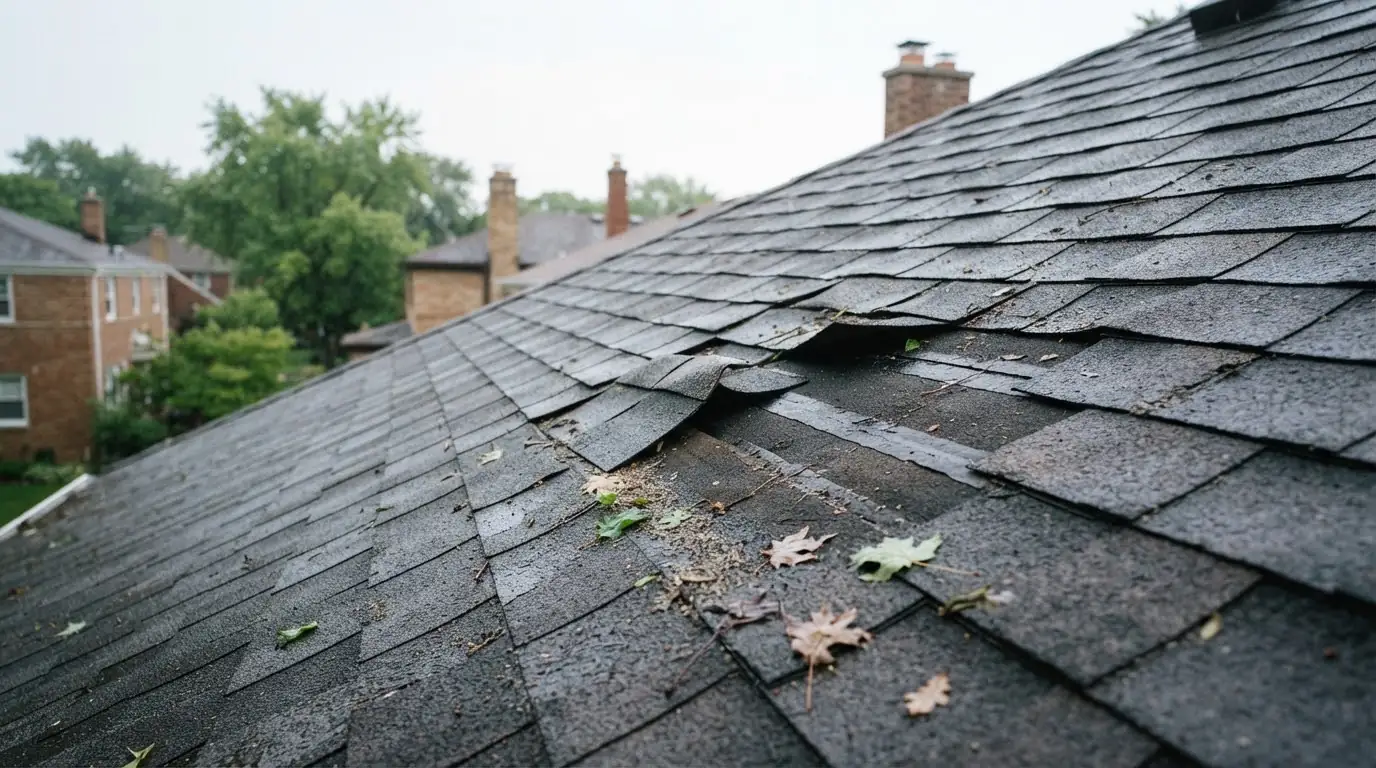
Storm Damage Roof Repair in Chicagoland
Hail bruises shingles you can’t see from the yard. Get the roof inspected and photographed before you call your insurer.
About storm damage roofing
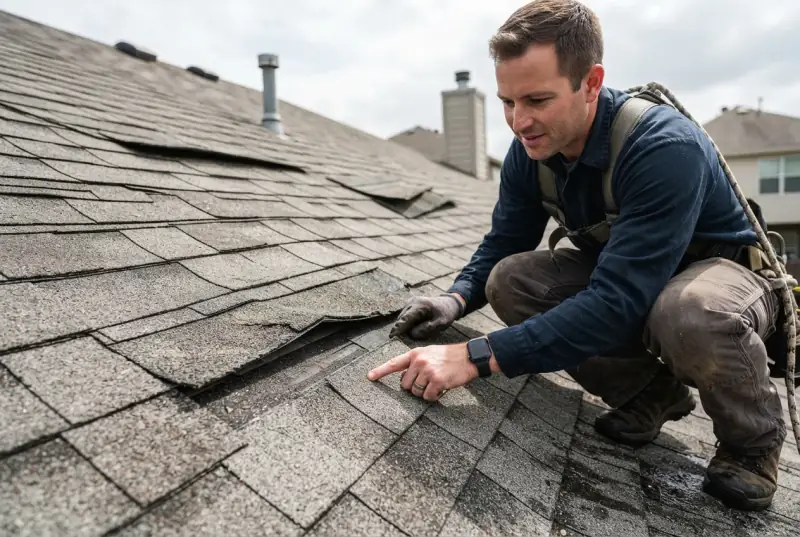
Storm damage is not always obvious from the ground. Hail bruising in particular can leave a roof looking intact while the mat underneath the granules has been compromised, and the leak shows up months later. Wind damage tends to start at the edges (ridge caps, rake edges, the first courses above the eave) where uplift is strongest.
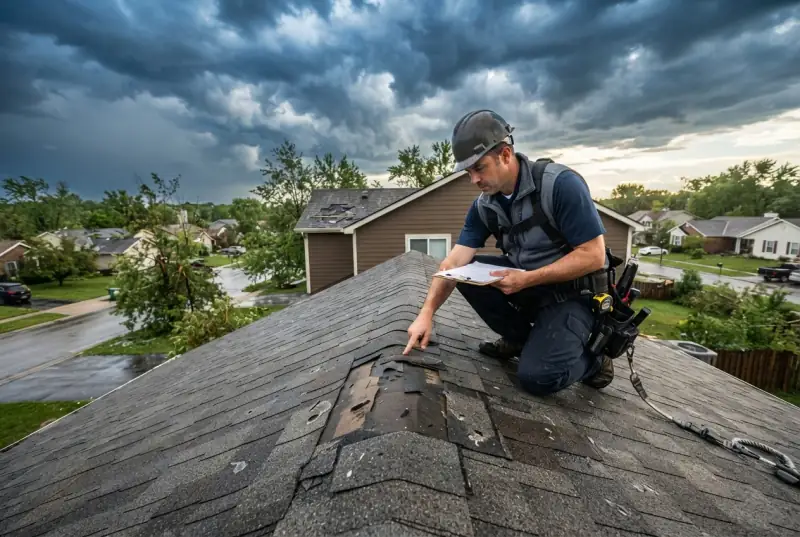
After a significant storm the roofer inspects, documents what they find with photographs and measurements, and tells you whether the damage is cosmetic, repairable, or extensive enough to warrant replacement. That documentation is what you need whether or not you file a claim.
Storm Damage Roofing by area
How storm claims generally work
This is how claims usually go. It is not advice about your policy: the policy decides what applies, so read it or ask your agent.
- What is usually covered
- Sudden damage from a storm, such as hail or wind. Wear, age and neglect generally are not.
- There is a deadline
- Policies set a window for reporting storm damage. Find yours, and do not wait for a leak, because hail damage can take months to show inside.
- The adjuster inspects
- The insurer sends an adjuster to assess the roof. Having your roofer’s photos, and where possible the roofer there too, helps make sure nothing is missed.
- Your deductible is yours
- It comes out of any payout. Be wary of anyone offering to cover or waive it: in many places that is insurance fraud, and it puts you at risk.
- You can dispute a decision
- If you disagree with the adjuster, your policy describes how to ask for a re-inspection or appeal. Keep everything in writing.
Storm damage you cannot see from the yard
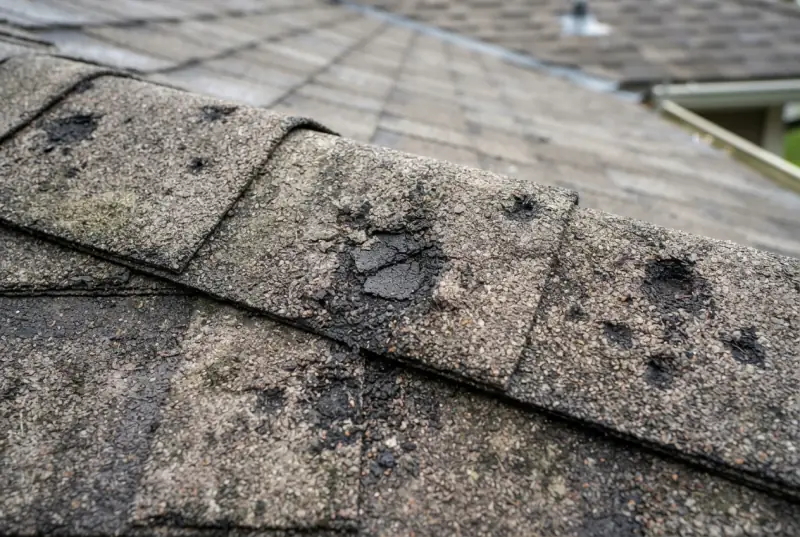
- Hail bruising
- A dark spot where granules are knocked off and the mat underneath is cracked. It is soft to the touch and often does not leak for months.
- Wind creasing
- A tab lifted and folded back by wind, breaking its seal strip. It lies flat again afterwards and hides the damage.
- Unsealed shingles
- Shingles that have lost their bond to the course below. They look fine but the next storm can take them off.
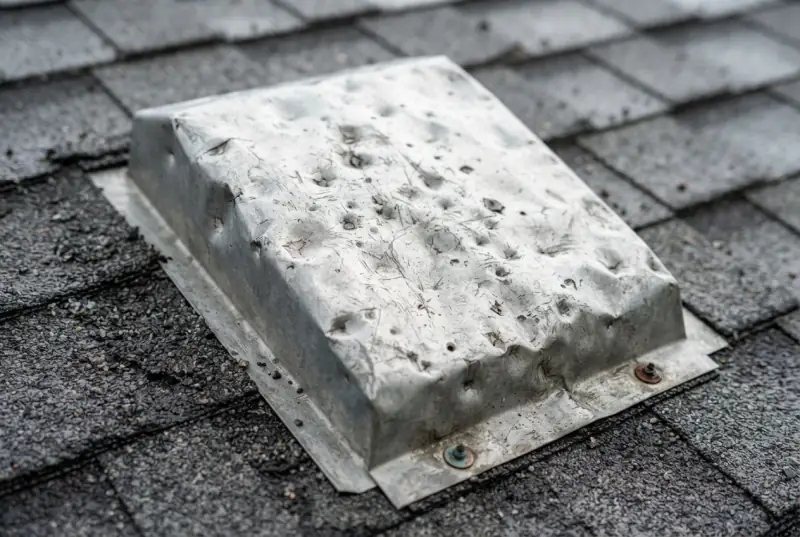
- Soft metal dents
- Dents in gutters, vents and downspouts are a quick sign from the ground that hail hit the roof hard enough to check.
The adjuster’s estimate and the roofer’s
- They can differ
- An adjuster may miss damage or price items differently from a roofer who has walked the whole roof.
- Compare line by line
- Check that both list the same damaged areas, the same materials and the full scope, including flashing and code items.
- Supplements
- If more damage is found once work begins, the roofer can document it and the insurer may review an additional amount.
- Keep the paperwork
- Photos, both estimates, and every letter from the insurer, in one place.
What hail and wind do to a roof
Hail impact assessment
Identifying bruising, granule displacement and fractured mats, and distinguishing genuine hail damage from blistering and normal weathering.
Wind damage
Lifted, creased and missing shingles, torn ridge caps and compromised edge metal.
Emergency tarping and leak control
Temporary protection to stop water entry while a permanent repair is scheduled.
Debris impact and puncture repair
Damage from falling limbs and wind-driven debris, including deck repair where the impact went through.
Heavy snow and ice load
Stabilization after snow load events, and repair of the eave and valley damage ice dams leave behind.
Damage documentation
Dated photographs, marked-up diagrams and a written summary of conditions for your records or your insurer.
Storm damage up close
The details that decide whether a roof reaches its rated life, most of them invisible once it is finished.
Storm Damage Roofing in the city itself
Storm response in the city is mostly wind and debris rather than hail. Ridge caps and rake edges on the pitched stock, and on low-slope roofs, membrane damage at perimeters and corners where uplift concentrates.
Shared walls spread the damage
Water entering an attached building does not stay in one unit. Emergency access and mitigation have to be arranged quickly, sometimes across more than one owner.
Perimeter uplift on low-slope roofs
Membrane failures concentrate at the edges and corners rather than the field, which is also where a tarp is hardest to secure and easiest to lose overnight.
Debris punctures on flat roofs
Wind-driven material on a low-slope roof punctures rather than lifts, and the entry point can be small enough that it is only found by looking for it deliberately.
Roof stock changes by neighbourhood across the city. The Chicago area page covers the bungalow belt, the two-flats and three-flats, and the greystones block by block.
Storm damage questions
More questions are answered on the main FAQ page.
How soon after a storm should I have the roof looked at?
Sooner is better, particularly if you can see displaced shingles or debris on the roof. Water that gets past the shingles works on the deck and insulation quietly. There is also usually a time limit on insurance claims tied to a specific storm date.
Do you handle the insurance claim for me?
The roofer provides the inspection, photographs, measurements and written documentation, and can usually meet the adjuster at the property. The claim itself stays between you and your insurer. Good documentation records what is there and lets the evidence stand on its own.
My neighbors are all getting new roofs. Do I need one?
Maybe, maybe not. Hail is localized and one side of a street can be hit while the other is not. Roof age, slope orientation and shingle type all change the outcome. An inspection tells you what your roof actually shows.
What does hail damage actually look like?
On asphalt shingles, a hail strike leaves a dark bruise where granules are knocked away and the mat is dented. It is soft to the touch, roughly circular, and randomly distributed. Damage that follows a straight line or appears only in one pattern is usually something else: foot traffic, blistering or manufacturing defects.
How long do I have to file a storm damage claim?
It depends on your policy, which sets a window for reporting. Check it rather than assume. Do not wait for a leak to appear, because hail damage often does not leak for months, and by then the claim may be harder to tie to the storm.
Will my insurer replace the whole roof for hail damage?
Sometimes, if the damage is widespread and the policy covers it. Often it is a repair of the damaged areas. The adjuster decides based on what they find. Your own roofer’s documentation helps make sure the full extent of the damage is counted.
Should I sign a contract with a roofer before my claim is approved?
Be careful. Read anything carefully before signing, and avoid agreements that hand control of your claim to a contractor or commit you before you know what the insurer will pay. Get a written estimate and an inspection first, and take your time.
Storm damage across Chicagoland
Roofers cover Chicago and the surrounding suburbs across Cook, DuPage, Lake, Will, Kane and McHenry Counties.
Related Roofing Services
Get the roof photographed before you file
Call with the address and the date of the storm. A licensed roofer inspects and documents the damage, so you know what you have.