
Elgin Roofing, Historic Districts and New Subdivisions
Victorian-era districts with preservation limits, and newer subdivisions beyond them. The two need different materials.
Older roofs and what keeps them watertight
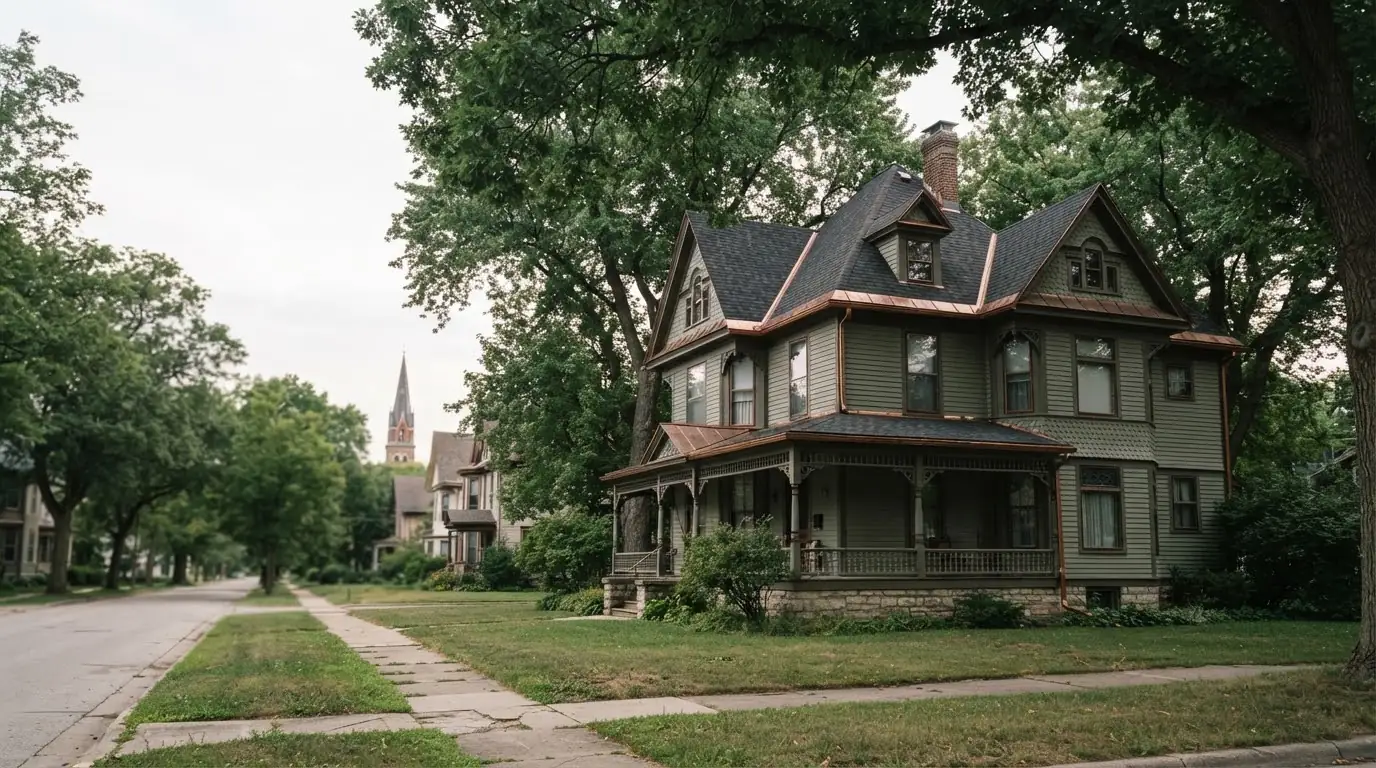
Elgin has one of the largest concentrations of intact Victorian-era housing in the region, spread across several designated historic districts near the Fox River. Working on that stock is a specialist exercise: steep, elaborate roofs with turrets, complex valleys, decorative detail and in many cases original slate. The far west side is the opposite: large volumes of 1990s and 2000s subdivision construction on open terrain.
The historic districts carry Queen Anne, Italianate, Stick and Colonial Revival homes from the 1870s through the 1910s, with steep pitches, turrets and towers, multiple intersecting gables, extensive decorative detail and a great deal of flashing linear footage. Original slate survives on a meaningful number of these homes and calls for salvaged-material repair rather than substitution. Mid-century neighborhoods add bungalows and ranches on simpler forms. The far west subdivisions bring 1990s and 2000s two-stories with multi-gable elevations, heavy valley footage and vaulted interior spaces. Downtown carries older masonry commercial buildings with parapets.
What the weather does to an older roof
The Fox Valley takes recurring severe thunderstorm complexes with straight-line wind and periodic hail, and the open terrain on the west side offers no buffering. In the historic districts, mature tree canopy loads the many valleys these roofs have, and freeze-thaw cycling works steadily on the aging mortar that historic counterflashing is embedded in.
What each service runs into in Elgin
Roof Repair
Repairs in the Elgin historic districts are specialist work: turret and dormer flashing, decorative cornice transitions, counterflashing cut into century-old mortar, and original slate still in service on a meaningful number of homes. On the far west side it is conventional step flashing and valley repair.
Decorative detail complicates the termination
Where a roof meets ornamental woodwork or a decorative cornice, the flashing has to work around it. That is slow, careful work and it does not respond well to shortcuts.
Slate assessed before anything else
On a slate roof the first question is condition of the slate versus condition of the fasteners and flashing. The answer decides whether this is a small repair or a large project.
Open exposure on the west side
The newer subdivisions sit on open ground with nothing upwind, so their repair calls are dominated by wind damage at ridges and rake edges rather than by age.
Roof Replacement
Replacement on Elgin historic housing is rarely a straightforward tear-off. Turrets, towers, intersecting gables and decorative detail mean flashing and transition work dominate the labour. The far west subdivisions are the opposite.
Complexity, not square footage, drives cost
On this housing the roof area is a poor predictor of the job. The number of transitions, dormers and changes of plane is what actually determines the labour.
Slate assessed before replacement
Where original slate is still performing, replacing it is often the more expensive path over twenty years. A roofer worth using will say so before quoting a tear-off.
West-side phases turning over together
The 1990s and 2000s subdivisions reach first replacement in waves, which makes scheduling predictable and makes the ventilation correction worth doing consistently.
Storm Damage Roofing
Open terrain on the Elgin west side means storm systems arrive with little to slow them, and the newer subdivisions there take the wind loading directly. In the historic districts the damage pattern is entirely different.
Decorative detail is fragile
Cornices, turret flashing and ornamental metalwork suffer in high wind, and repairs need matching materials rather than the nearest available substitute.
Slate needs specific assessment
Wind can shift individual slates and stress the fasteners holding neighbouring ones. What looks like minor damage is sometimes the start of a larger problem.
West-side wind pattern
The subdivisions on open ground show conventional wind damage, concentrated along the ridges and rake edges where uplift is highest.
Services called in most here
What gets called in most around Northeast Neighborhood and Far West Side, roughly in the order it comes up.
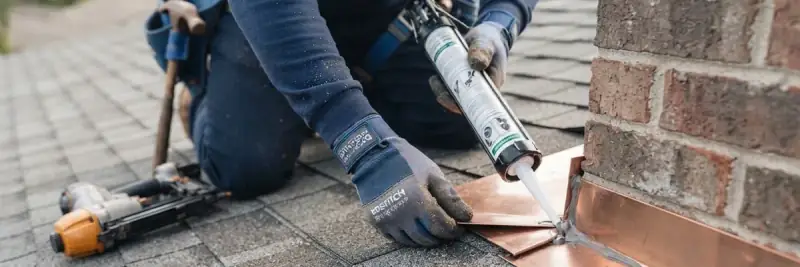
Roof Repair
Repairs in the Elgin historic districts are specialist work: turret and dormer flashing, decorative cornice transitions, counterflashing cut into century-old mortar, and original slate still in servic
Learn more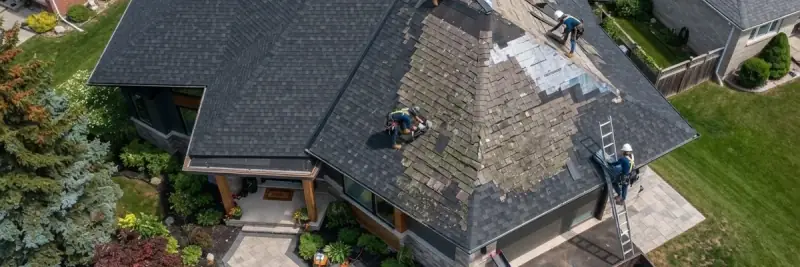
Roof Replacement
Replacement on Elgin historic housing is rarely a straightforward tear-off. Turrets, towers, intersecting gables and decorative detail mean flashing and transition work dominate the labour.
Learn more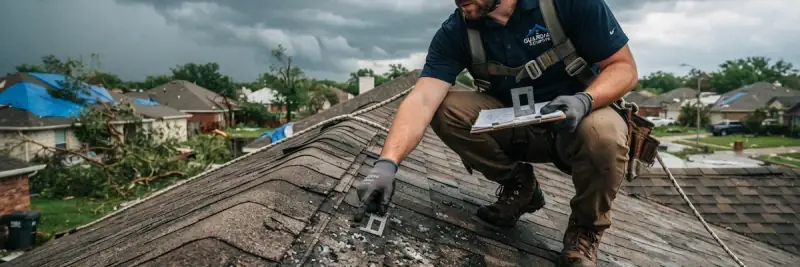
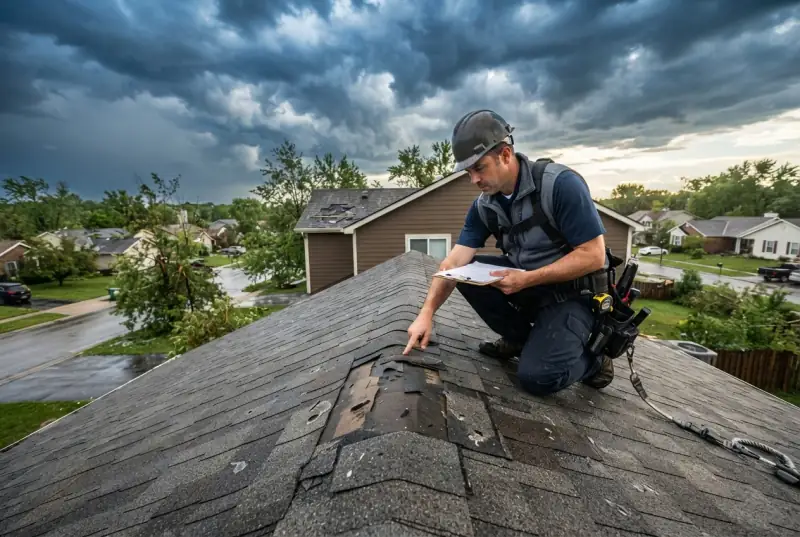
Roof Inspection
Learn more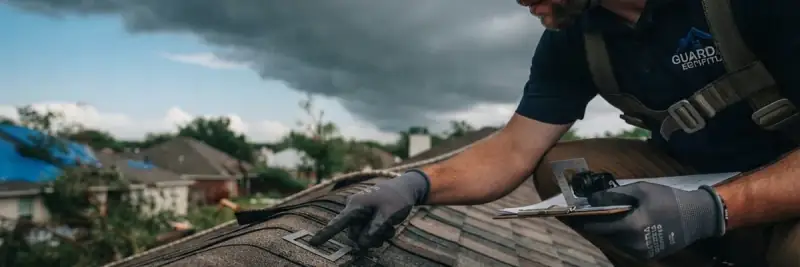
Storm Damage Roofing
Open terrain on the Elgin west side means storm systems arrive with little to slow them, and the newer subdivisions there take the wind loading directly.
Learn moreOlder commercial buildings
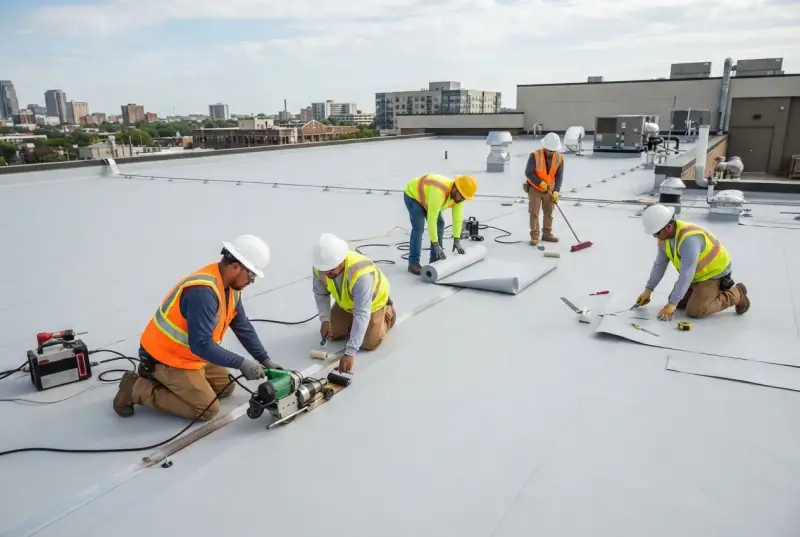
Downtown Elgin carries historic masonry commercial buildings with parapets, while the Randall Road corridor and the industrial areas bring newer retail and large-format low-slope commercial roofs.
Getting a roofer out
Call with the address and a licensed, insured roofer working Elgin takes it from there: inspection, photographs, then the price in writing. Who does the work.
Roofing questions from Elgin
Specific to Northeast Neighborhood, Far West Side and the rest of Kane County, with everything else on the FAQ page.
What is a Stick-style roof, and why does it need care?
Stick style homes, built mostly in the late 1800s, have steep gables with decorative trusses and brackets at the gable ends. That exposed woodwork sits right in the weather where it meets the roof. When the roof is redone, the joints around that detail need careful flashing to keep water out of it.
Why do the tower roofs on Elgin’s older homes leak at the top?
At the peak of a tower, several slopes converge on one small point, often under a finial. That apex is hard to reach and hard to flash well, so it is a frequent leak source. Getting to it usually means scaffolding or careful rigging, which is part of why tower repairs cost more.
Do the west-side subdivisions take more wind?
They do. The open terrain on Elgin’s west side leaves the newer subdivisions exposed to summer storm complexes. Wind lifts shingle edges and ridge caps first. A roof fastened to the manufacturer’s high-wind nailing pattern holds up noticeably better out there.
Can the decorative trim stay when the roof is replaced?
Usually. Cornices, brackets and ridge cresting can generally stay in place or be removed and reinstalled, with the crew working around them. It takes more care and time than a plain roof. Ask how the roofer plans to protect the detail before the work starts.
Nearby communities
St. Charles, Batavia, Hoffman Estates, Huntley, Algonquin. Each has its own page covering local housing stock.
Talk to a roofer in Elgin
Give the address and what you are seeing, and a roofer who already works Northeast Neighborhood and knows the stock takes it from there.