
Roofing in Algonquin, on the Fox River Bluffs
Hilly ground and 1990s and 2000s housing now reaching its first replacement. Wind exposure is real up here.
Subdivision roofs at replacement age
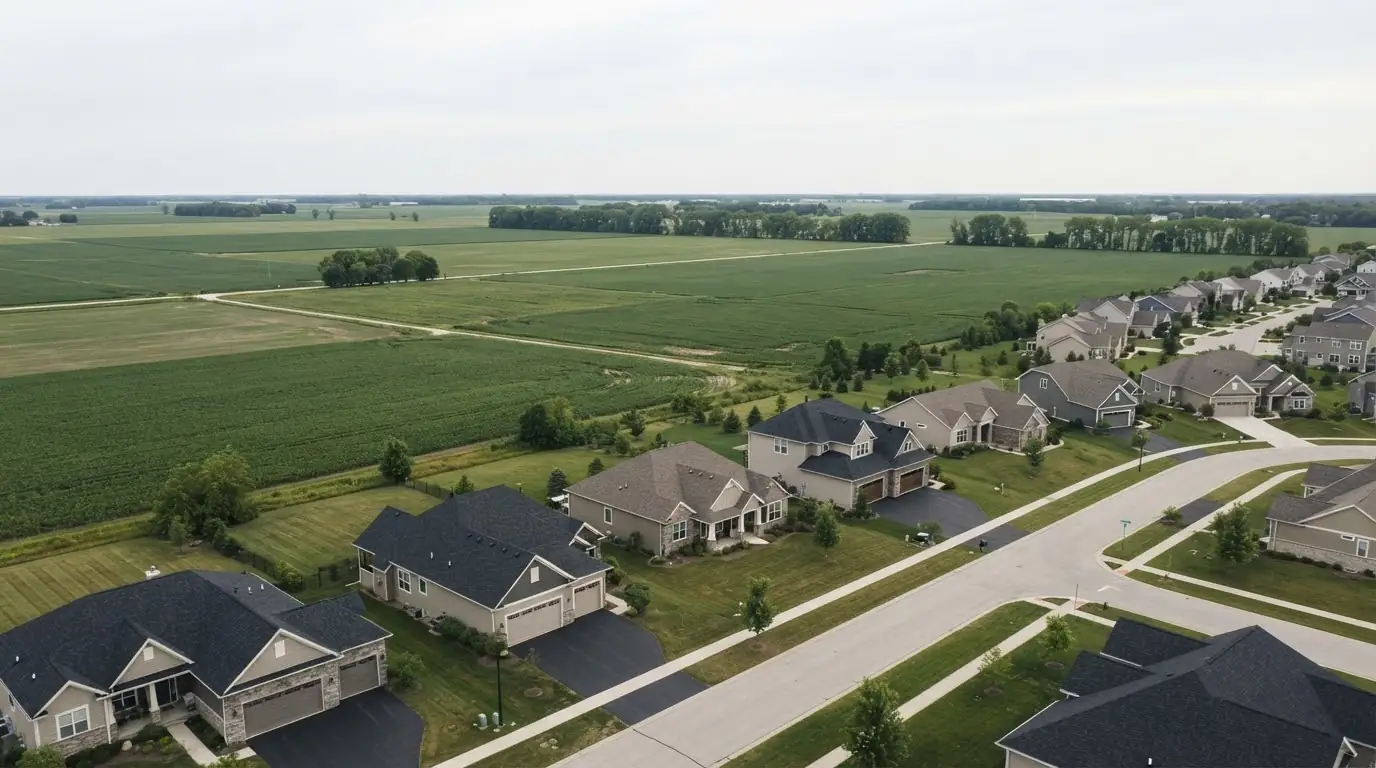
Algonquin sits on the Fox River with hilly terrain by Illinois standards, and the topography matters: homes on the bluffs and slopes frequently have roof sections at multiple levels, and access and staging require more planning than a flat lot. The bulk of the housing is 1990s and 2000s subdivision construction, now moving into first replacement.
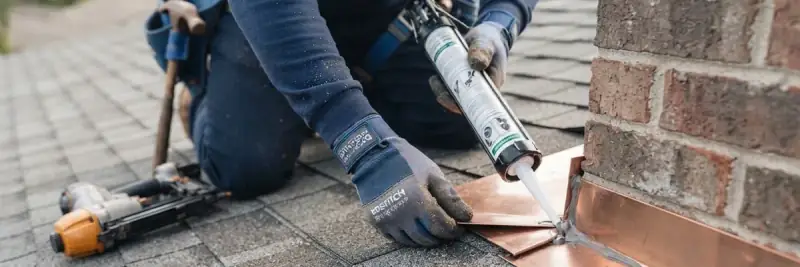
The dominant type is the late-1990s and 2000s two-story home with a multi-gable elevation, projecting garage, significant valley footage and frequently a vaulted great room or bonus room over the garage that eliminates conventional attic ventilation in that section. Older housing near the original village center along the river carries early-20th century frame homes on steeper, simpler forms. The hillside and bluff properties often have walkout configurations with roof sections at different levels and the transitions between them, which is where the flashing work concentrates.
Services called in most here
What gets called in most around Fox River corridor and Willoughby Farms, roughly in the order it comes up.
Storms and what they take off these roofs
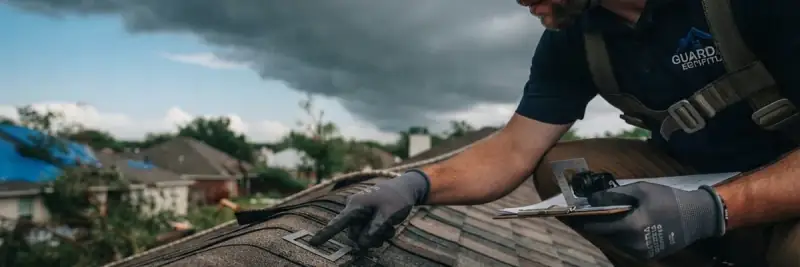
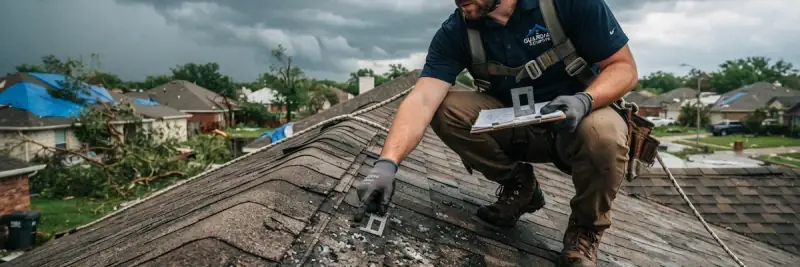
McHenry County exposure with open country to the west means storm systems arrive with little to slow them, and straight-line wind loading is a serious recurring factor. Hail affects the area periodically. Winter conditions are more severe than closer to the lake. On the hillside properties, water and ice moving from an upper roof section onto a lower one puts real demand on the transition detailing and the lower section is where leaks appear.
Roofing questions from Algonquin
Specific to Fox River corridor, Willoughby Farms and the rest of McHenry County, with everything else on the FAQ page.
Why does the roof over my great room get ice dams when the rest does not?
A vaulted great room usually has no attic above it, so warm air from the room reaches the roof deck and melts the snow, which refreezes at the cold eaves. The rest of the house, with a proper attic, stays cold. Fixing it means better insulation and ventilation in that section.
My 2000s house is at its first replacement. What should change?
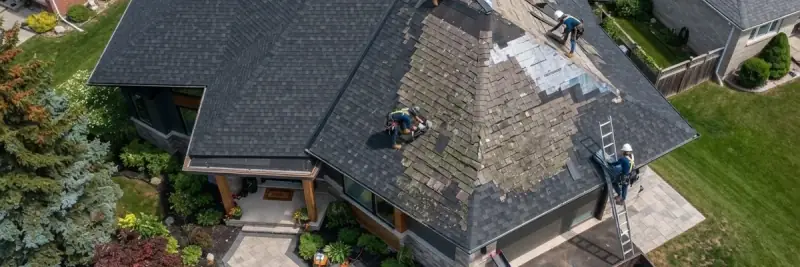
Use the replacement to fix what the original builder skimped on: proper ventilation, ice and water shield in the valleys and along the eaves, and shingles fastened to the high-wind pattern. Those cost little extra and help the second roof last longer than the first.
Do homes on the Fox River bluffs take more wind?
They can. Raised ground on the bluffs is more exposed, and McHenry County storms arrive with little to slow them. Edges, ridges and the corners of the roof take the most load. High-wind fastening is worth asking for on a home up there.
Should the projecting garage roof be replaced with the house?
Yes. Doing the garage and the house together lets the roofer redo the joint where the garage roof meets the house wall, which is a common leak point. Replacing them separately leaves that transition caught between old and new work.
Getting a roofer out
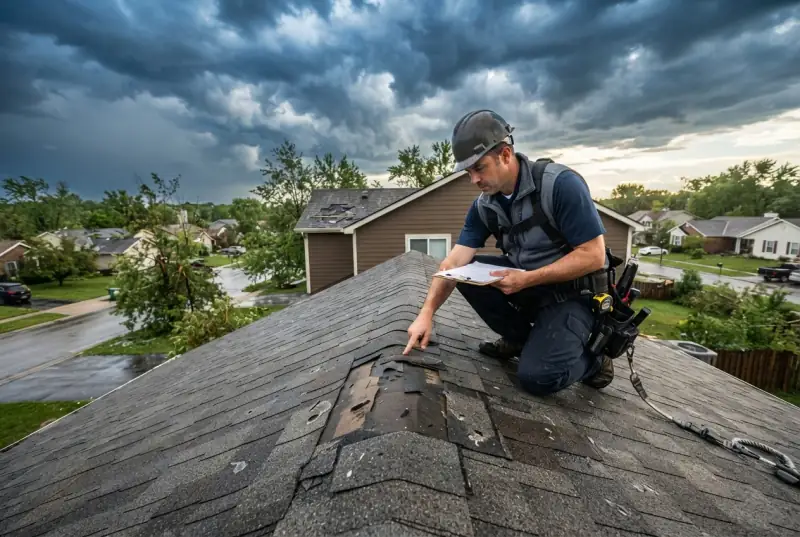
Call with the address and a licensed, insured roofer working Algonquin takes it from there: inspection, photographs, then the price in writing. Who does the work.
Retail and office roofs nearby
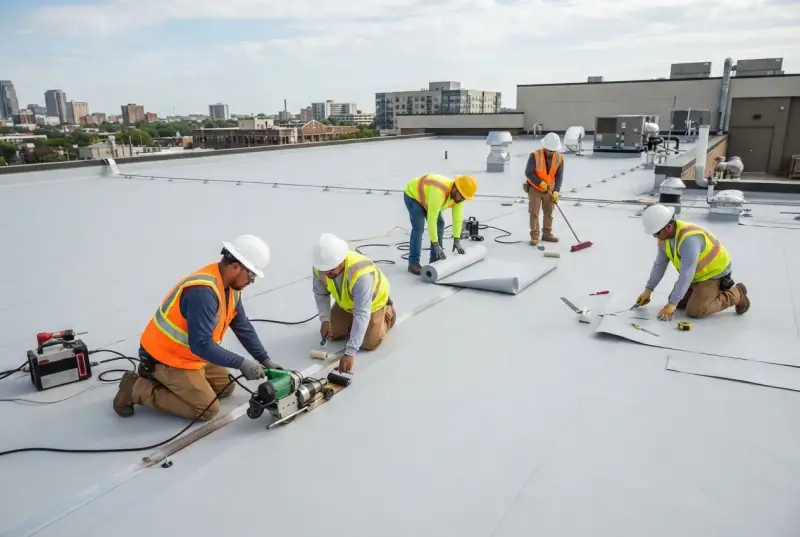
The Randall Road corridor carries one of the larger retail concentrations in the county, with shopping centers, restaurants and office property on low-slope membrane systems.
Nearby communities
Lake in the Hills, Crystal Lake, Cary, Huntley, Barrington. Each has its own page covering local housing stock.
Request a roof estimate in Algonquin
One call, and a licensed and insured roofer covering Algonquin gets back to you. Estimates are free and carry no obligation.