
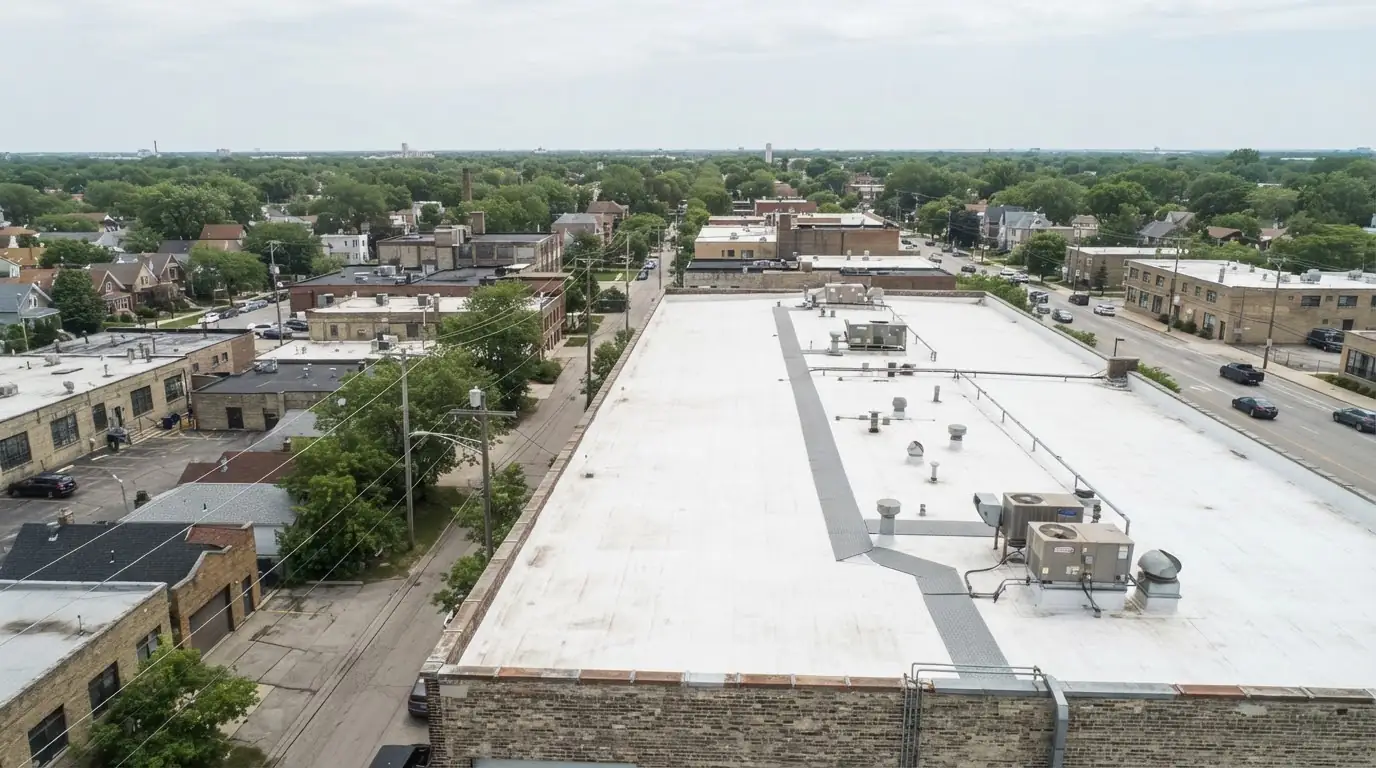
Commercial and Flat Roofing for Chicago Properties
Ponding, open seams or a failing membrane? A licensed commercial roofer inspects it and documents the condition for your budget.
About commercial roofing
Commercial roofing is a different discipline from residential work. The systems are low-slope rather than steep, the failure modes are seams and terminations rather than shingles, and the cost of a leak is measured in disrupted operations and damaged inventory as much as in building repairs.
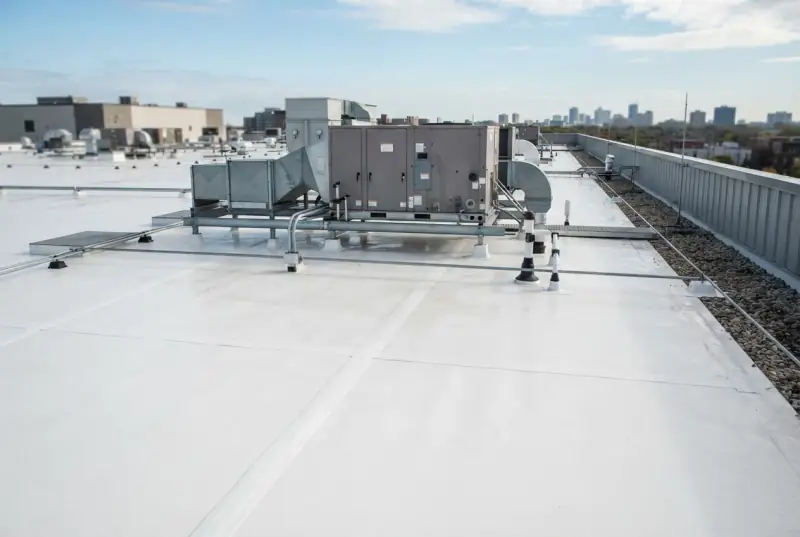
Commercial roofing covers repair, replacement and scheduled maintenance for building owners, property managers and commercial landlords, across office, retail, restaurant, warehouse, industrial and multi-unit residential properties. Scheduling around your operations should be part of the scope, not an afterthought.
What goes into the work
TPO single-ply
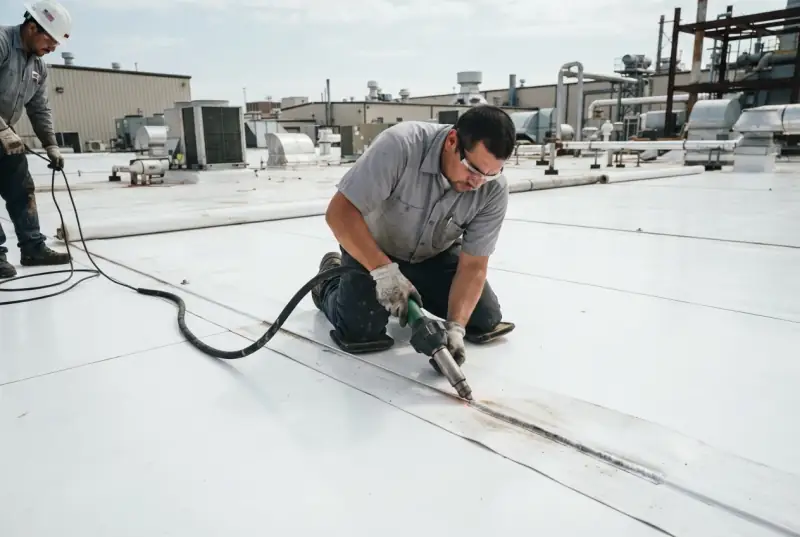
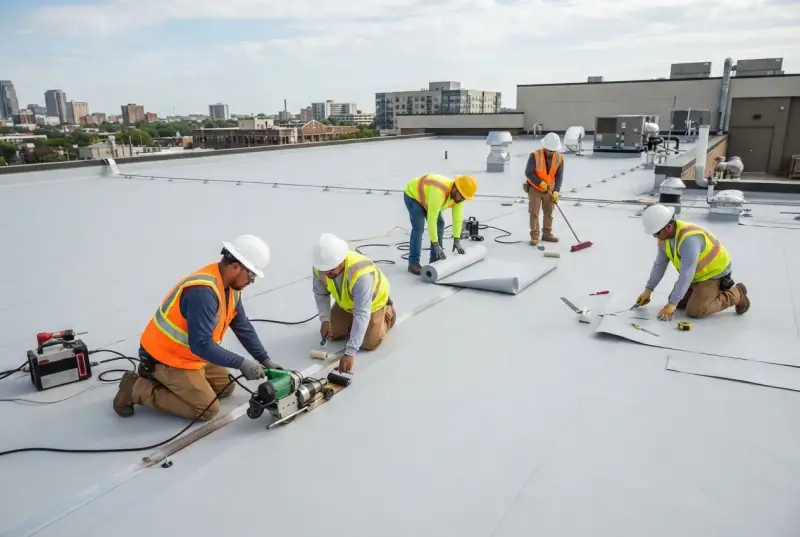
Heat-welded thermoplastic membrane. Reflective white surface, strong seam integrity, widely specified for new low-slope work.
EPDM single-ply
Synthetic rubber membrane with a long track record in this climate and good resistance to thermal cycling.
Modified bitumen
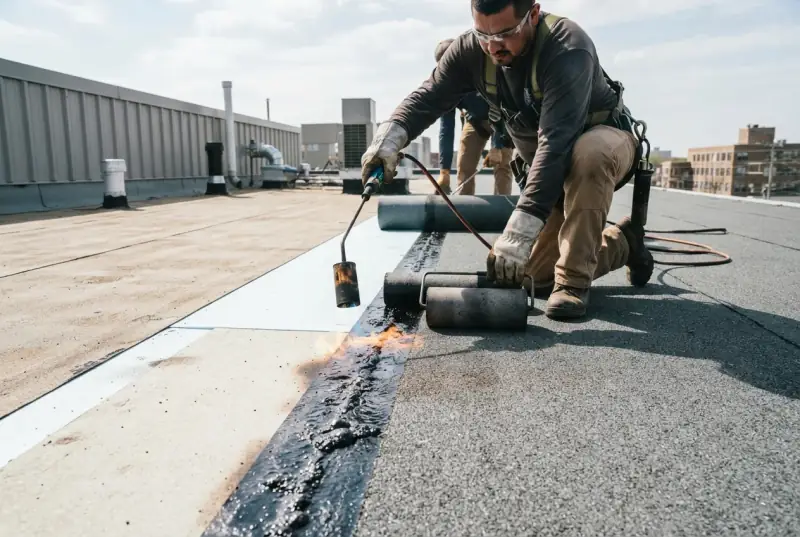
Multi-ply asphalt-based system, well suited to roofs with heavy foot traffic or complex penetrations.
Roof drains, scuppers and tapered insulation
Ponding water is a drainage problem before it is a membrane problem. Correcting slope and drainage is often the durable fix.
The three options, and when each one fits
A survey with moisture readings is what tells you which of these you are looking at.
- Repair
- Localised failures on a membrane that is otherwise sound, with dry insulation underneath. Seams, flashings and drains fixed where they fail.
- Restore
- A coating or similar system over a membrane that is aging but still sound and dry. It can add years. It is not a fix for wet insulation.
- Replace
- When wet insulation is widespread rather than localised, or the membrane is failing across the roof. Over the life of the building, it usually beats repeated repair.
What moves the cost of commercial work
- Roof area and system
- TPO, EPDM, modified bitumen and built-up roofs each install and repair differently.
- Wet insulation
- Saturated insulation has to be cut out and replaced. The more of it, the bigger the job.
- Drains and edges
- Failed drains and edge metal drive leaks and wind damage, and need their own work.
- Rooftop equipment
- Every unit, fan and curb is a penetration with its own flashing.
- Access and operations
- Working around tenants, loading and business hours changes how the job is staged.
What a commercial roof proposal should spell out
- Scope by area
- Which parts of the roof are repaired, restored or replaced, ideally on a marked-up plan.
- System specified
- The exact membrane, its thickness, how it is attached, and the insulation beneath.
- Insulation
- How much wet insulation is being removed and what replaces it.
- Warranty type
- Whether it is a manufacturer warranty, a workmanship warranty, or both, and what each covers.
- Schedule and staging
- How the work is phased around your building’s operations.
A maintenance schedule for a commercial roof
Most commercial roofs that fail early were never looked after, not badly built. A simple routine catches the problems that turn into wet insulation.
- Spring
- A full inspection after the freeze-thaw season. Clear the drains, check seams and terminations, and photograph any ponding.
- Fall
- Clear the drains again before the leaves and the first freeze, and deal with anything that should not go into winter open.
- After major storms
- Hail, high wind and heavy snow all warrant a look. Hail in particular can damage a membrane without an obvious leak.
- After rooftop equipment work
- Technicians servicing units can puncture the membrane or disturb curb flashing. A short check afterwards catches it.
- Keep a record
- Dated photos and notes from each visit build a history that helps with warranty claims, budgeting and selling the building.
Commercial roofs and where they fail
Commercial roof repair
Remediation of ponding water, membrane seam failures, and flashing deterioration.
Commercial roof replacement
TPO, EPDM, and modified bitumen low-slope replacement systems.
Flat roofing systems
Membrane installation and patching on flat commercial roofs, including seams, terminations and curb flashing.
Preventive maintenance
Scheduled evaluations to identify minor issues before expensive structural leaks occur.
Roof inspections and condition reports
Documented assessments suitable for capital planning, budgeting and property transactions.
Storm damage response
Rapid stabilization and documentation following hail, high wind and heavy snow events.
Commercial roofs, up close
The details that decide whether a roof reaches its rated life, most of them invisible once it is finished.
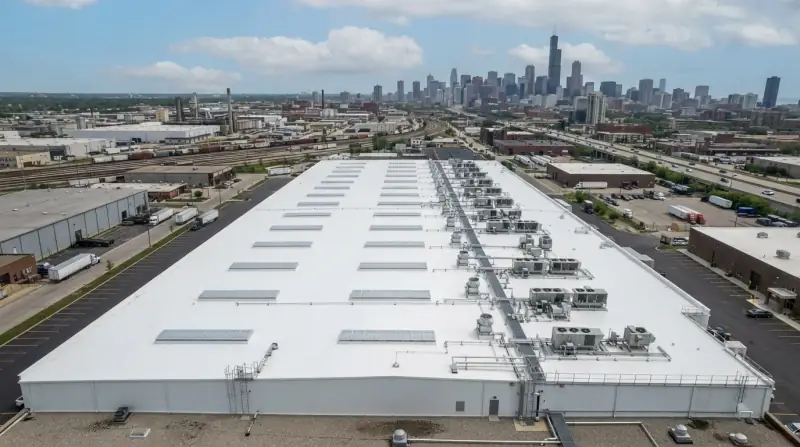
Commercial Roofing in the city itself
City commercial work runs from storefront and mixed-use buildings on the neighborhood retail corridors to warehouse and industrial property on the South and West Sides and institutional buildings downtown. Almost all of it is low-slope.
Parapet terminations dominate
On masonry commercial buildings the membrane termination at the parapet, and the coping above it, are among the most common leak sources.
Internal drains on older buildings
Undersized or partly blocked drains, and failed drain bowl seals, put water straight into the building rather than onto the roof surface where it is visible.
Restaurant exhaust penetrations
Kitchen exhaust curbs and grease contamination degrade membrane in a way nothing else on a roof does, and they need their own maintenance attention.
Roof stock changes by neighbourhood across the city. The Chicago area page covers the bungalow belt, the two-flats and three-flats, and the greystones block by block.
Commercial roofing questions
More questions are answered on the main FAQ page.
Do you work on occupied buildings during business hours?
Yes, with planning. Access routing, staging, noise and any odor from hot work should be agreed before the job starts, so tenants and staff know what to expect.
What is causing water to pond on our flat roof?
Ponding is usually a drainage or slope issue: blocked drains, undersized scuppers, or insulation that has compressed and created a low spot. Patching the membrane where water sits treats the symptom; the roofer should find out why the water is not leaving.
Can you provide a roof condition report for a property purchase?
Yes. Ask for a documented condition assessment: photographs, identified deficiencies and remaining service life, which is the format most buyers and lenders want. Say on the call that it is for a transaction, because the closing date usually drives the scheduling.
Which membrane should we specify for a replacement?
It depends on the building. Rooftop equipment and foot traffic, existing deck and insulation, drainage design, and how long you plan to hold the property all factor in. A good roofer walks through the tradeoffs rather than defaulting to one system.
What is the difference between TPO and EPDM?
Both are single-ply membranes common on commercial roofs. TPO is usually white and its seams are heat-welded. EPDM is a rubber membrane, often black, with seams that are adhered or taped. Each has strengths for different buildings. A roofer can explain which suits yours and why.
How long does a commercial roof last?
It depends on the system, how it was installed, and how well it is maintained. Regular inspection and keeping drains clear make a large difference. A survey tells you where your roof stands in its life and roughly when to plan for replacement.
Can a commercial roof be replaced in sections?
Often, yes. Phasing a replacement by area spreads the cost and lets the building keep operating. It needs careful tie-ins where new sections meet old ones. A survey helps decide which areas to do first, usually the ones with the most wet insulation or the worst drainage.
Commercial roofing across the region
Roofers cover Chicago and the surrounding suburbs across Cook, DuPage, Lake, Will, Kane and McHenry Counties.
Related Roofing Services
From the Roofing Education Center
Get a documented roof survey
Call with the building address. A licensed commercial roofer surveys the roof and documents its condition, so you can budget against it.