
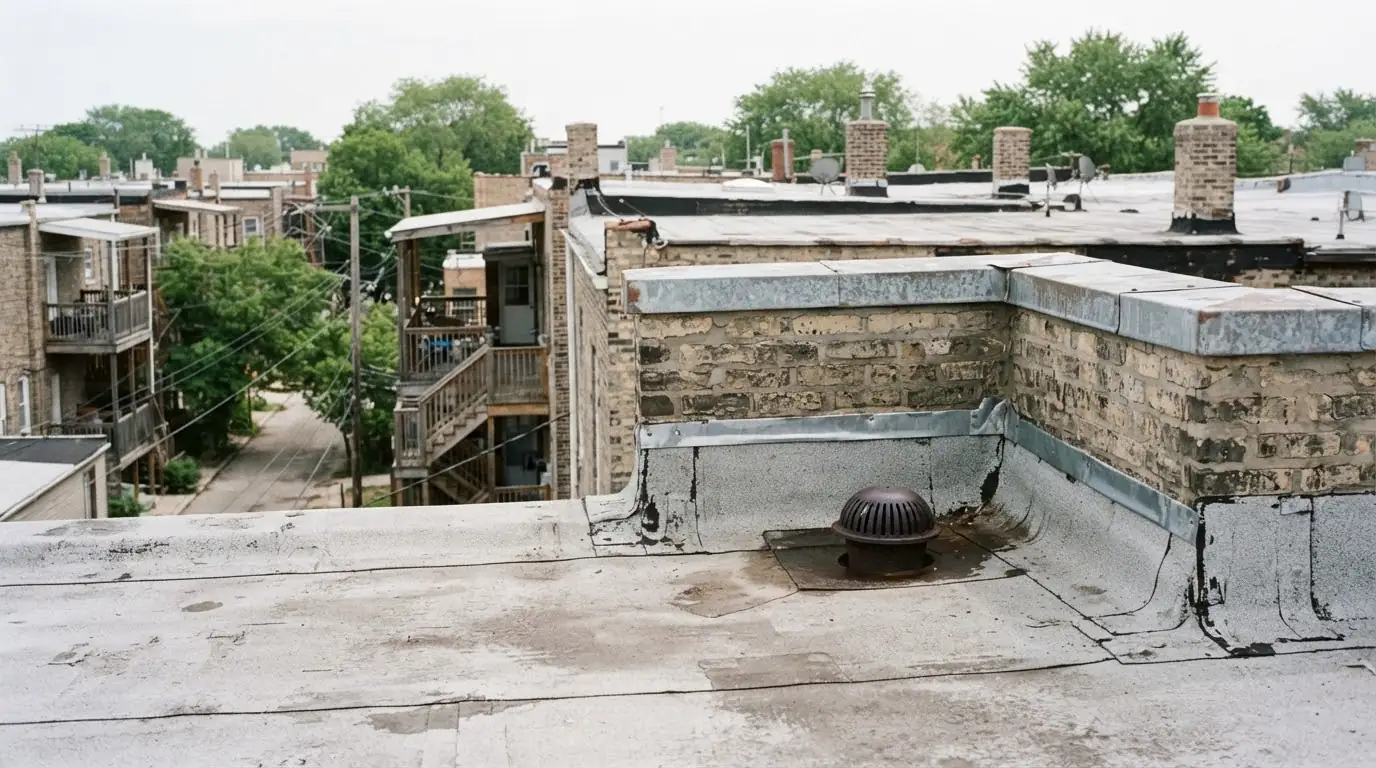
Flat and Low-Slope Roofing in Chicago
Two-flat, garage or warehouse, a licensed roofer finds where the water sits and seals the seams that let it in.
About flat roofing
Flat roofing is not just a commercial concern in Chicago. The city is full of two-flats, three-flats, courtyard buildings, rear additions and garage roofs with low-slope sections, and those roofs fail differently than pitched ones. Water does not run off a low-slope roof; it is escorted off by design. When the design or the membrane stops working, water stays.
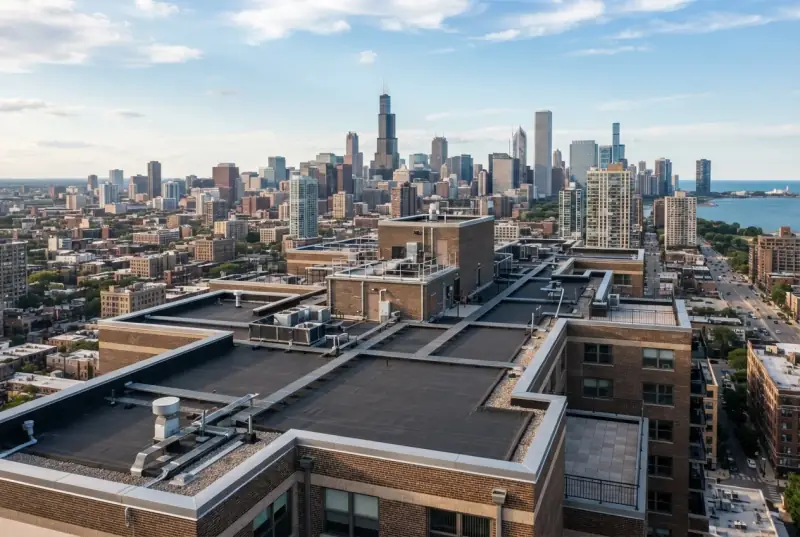
Ponding, seam separation, failed terminations at parapet walls, and drains that have not been cleared in years account for most of what roofers find. The membrane is often the last thing at fault.
What goes into the work
TPO
Heat-welded thermoplastic. Reflective, strong seams, widely used for new commercial low-slope work.
EPDM
Synthetic rubber with a long service record in Midwest freeze-thaw conditions.
Modified bitumen
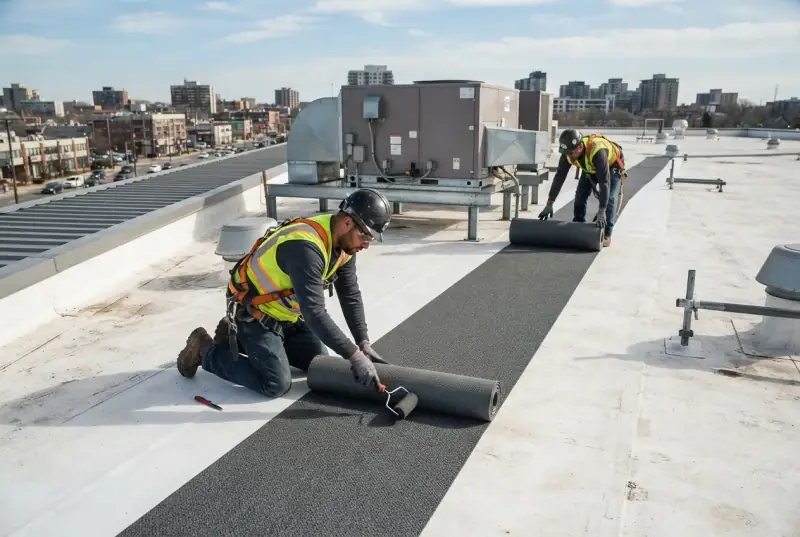
Multi-ply asphalt-based system, well suited to complex penetrations and heavier traffic.
Where flat roofs let water in
Ponding water
Standing water 48 hours after rainfall. Usually a slope or drainage issue, addressed with tapered insulation or drainage correction rather than repeated patching.
Seam and lap failures
Separated or lifting seams on single-ply membranes, re-welded or repaired depending on membrane condition.
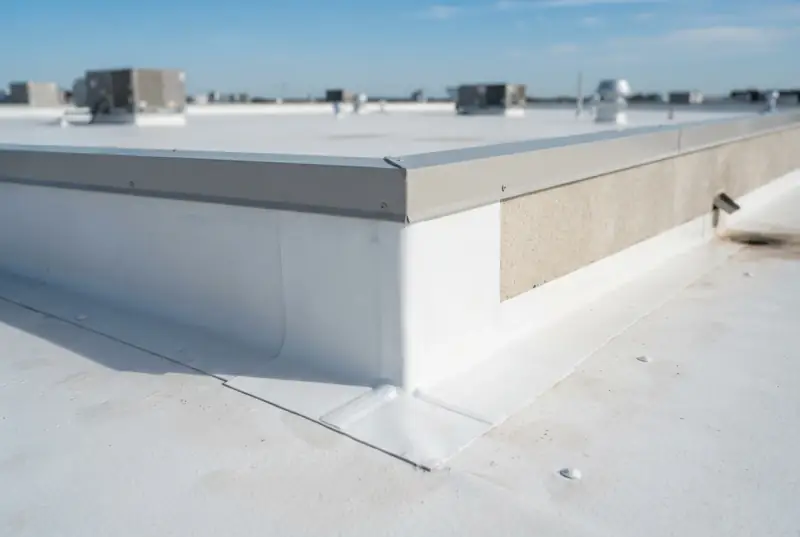
Parapet and termination detail
Wall terminations, counterflashing and coping: the single most common leak source on Chicago flat roofs.
Drains, scuppers and overflow
Clearing, resetting and correcting undersized or poorly located drainage.
Punctures and traffic damage
Repair of damage from rooftop equipment service, foot traffic and debris.
Full membrane replacement
TPO, EPDM or modified bitumen replacement including insulation and drainage correction.
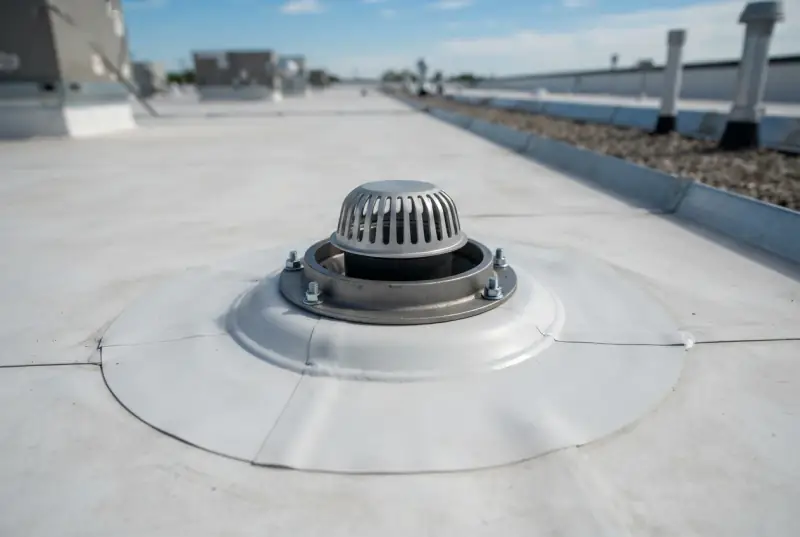
Flat roof work, close up
The details that decide whether a roof reaches its rated life, most of them invisible once it is finished.
Flat roof questions
More questions are answered on the main FAQ page.
How long does a flat roof last?
A properly installed and maintained single-ply system commonly runs 20 to 30 years. Maintenance moves that number substantially: a roof with clogged drains and untouched seams will not get near the top of the range.
Is standing water on my flat roof a problem?
Water still sitting 48 hours after rain is considered ponding, and yes, it is a problem. It accelerates membrane degradation, adds structural load, and in winter it freezes and works at the seams. It also usually means drainage is not doing its job.
Can a flat roof be repaired, or does it need full replacement?
Repair is often the right answer, especially when the problem is a specific detail: a termination, a drain, a set of seams. Full replacement becomes the better value when the membrane is broadly degraded or the insulation underneath is saturated.
Do you work on two-flat and three-flat roofs?
Yes. Low-slope roofs on Chicago multi-unit buildings are common, and the roofer should know the parapet and firewall details specific to that building type.
Flat roofing by area
Roofers cover Chicago and the surrounding suburbs across Cook, DuPage, Lake, Will, Kane and McHenry Counties.
Related Roofing Services
From the Roofing Education Center
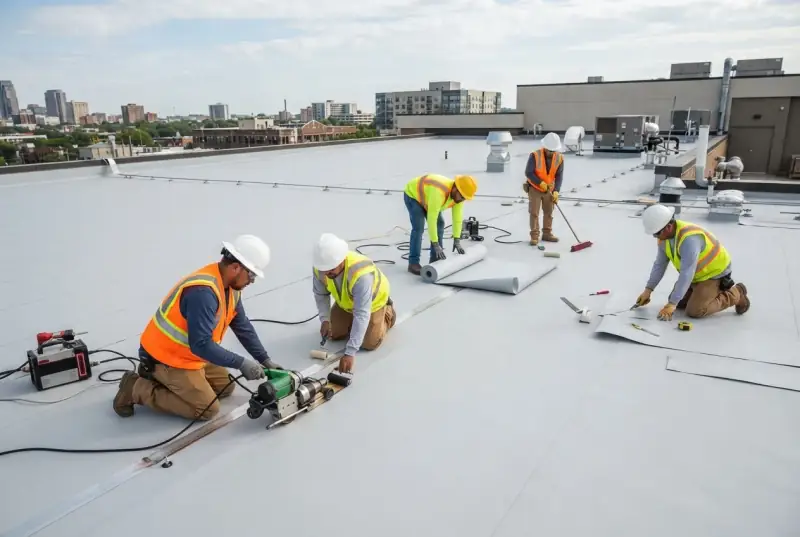
Call about your flat roof
Call with the address. A licensed roofer finds where the water sits and seals the seams that let it in.