
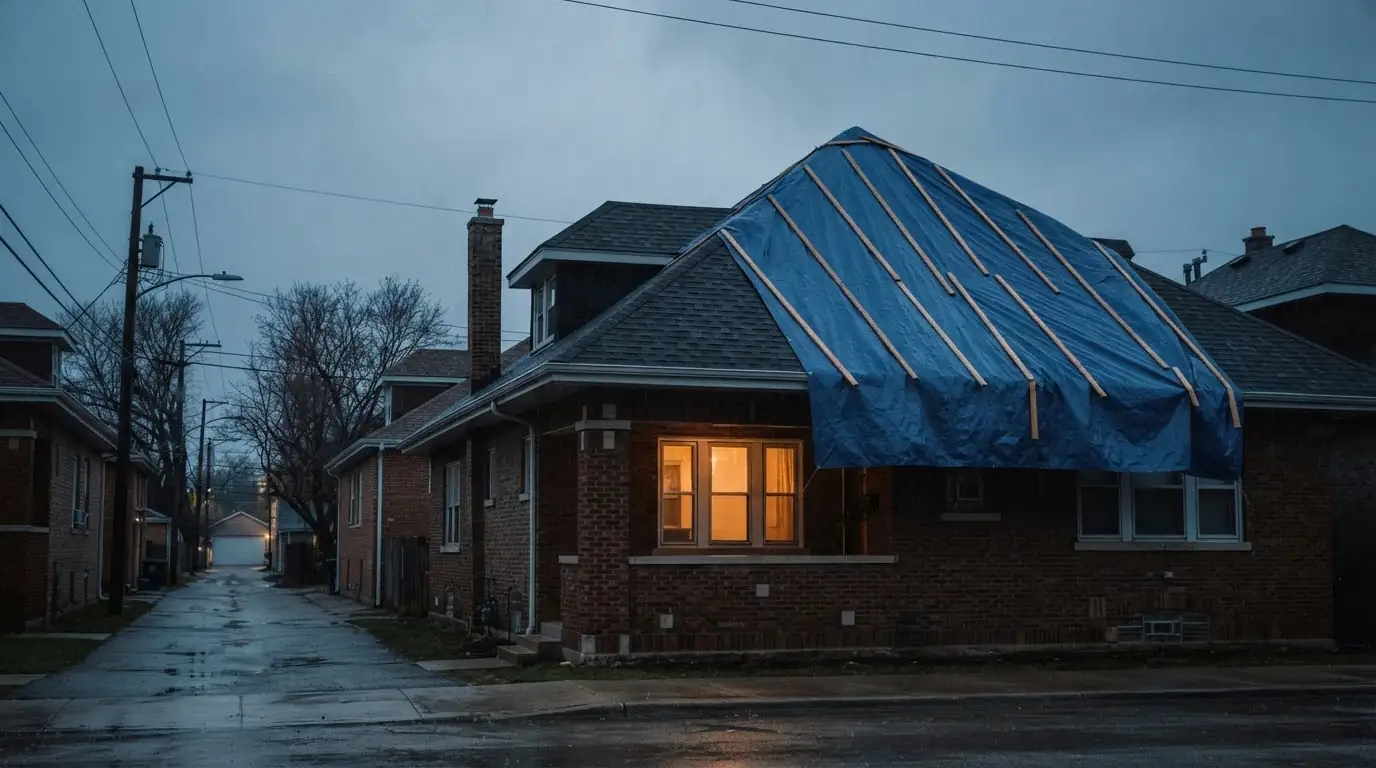
Emergency Roof Repair and Tarping in Chicago
Water coming through the ceiling? Call now to get a roofer out to tarp it and stop the leak spreading.
About emergency roof repair
An emergency call has one job: stop the water. Everything else (matching shingles, planning the permanent scope, sorting out the insurance) happens after the building is dry and stable.
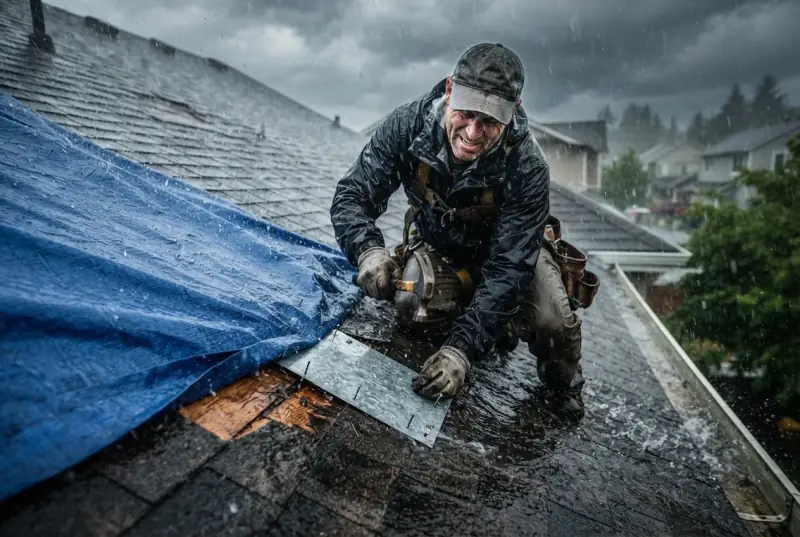
Call about an active leak and expect to be asked where the water is showing, how fast it is moving, and what is underneath it, so the roofer arrives with the right materials. There are a few things you can do before they get there, and you will be walked through them on the call.
Calling about an active leak
- Hours
- Emergency calls are answered 24 hours a day, 7 days a week, Sundays included. Other calls are answered 9 AM to 5 PM, every day.
- While you wait
- Move what you can away from the water, put a bucket under the drip, and if a ceiling is bulging with water, keep people out from under it. Do not climb onto a wet roof.
- What to say on the call
- Where the water is coming through, how fast, and roughly where on the roof you think it is entering. That helps the roofer bring the right materials to stop it.
What emergency work covers
Active leak control
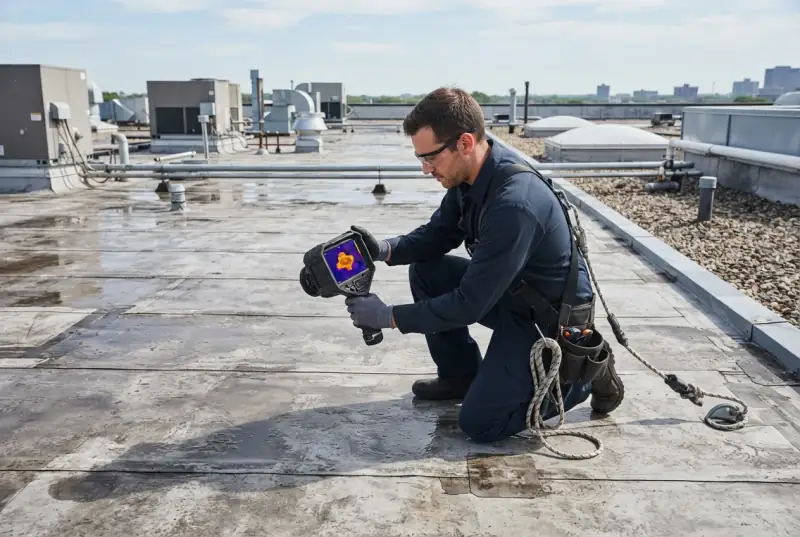
Locating the entry point and stopping water movement into the structure.
Emergency tarping
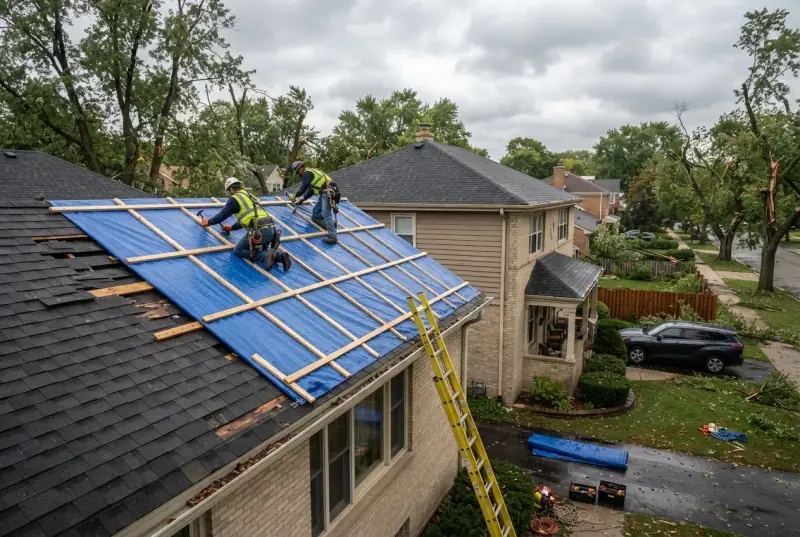
Properly secured temporary covering that holds through subsequent weather rather than blowing off overnight.
Storm and impact damage
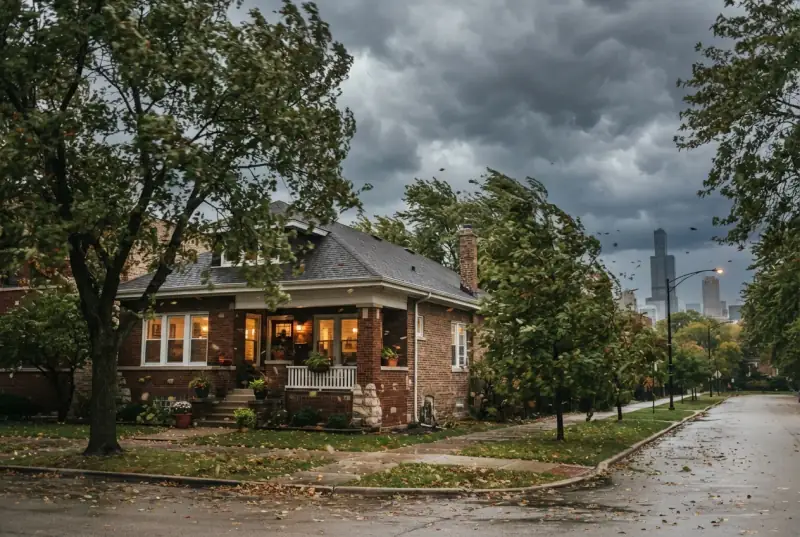
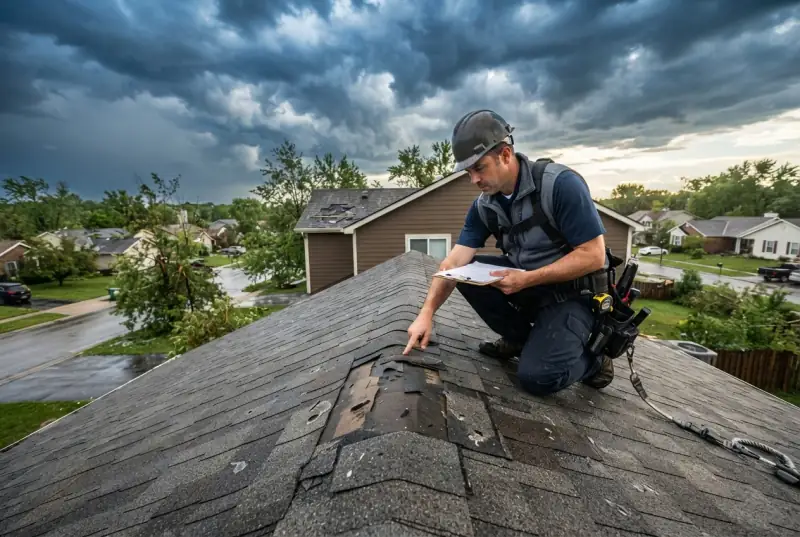
Stabilization after wind, hail or falling limbs have opened up the roof.
Ice dam water intrusion
Immediate mitigation when meltwater is backing up under shingles and coming through at the eaves.
Structural stabilization
Securing compromised areas so the damage does not spread before permanent repairs.
Emergency work
The details that decide whether a roof reaches its rated life, most of them invisible once it is finished.
Emergency roof questions
More questions are answered on the main FAQ page.
What should I do while I wait for you to arrive?
Move what you can out of the path of the water, put a container under active drips, and if a ceiling is bulging with trapped water, poke a small hole at the low point to let it drain in a controlled way rather than letting the ceiling come down. Do not go up on a wet or storm-damaged roof.
Is a tarp a repair?
No. A tarp buys you time (typically weeks, not months) so a permanent repair can be planned and done properly rather than rushed in bad weather. Ask the roofer to schedule the permanent work at the same visit.
Can you do emergency work in winter?
Yes. Winter is when a lot of emergency calls happen, because ice dams and snow load do their damage in exactly the conditions that make permanent repairs hard. Mitigation now, permanent repair when conditions allow.
Emergency roof repair by area
Roofers cover Chicago and the surrounding suburbs across Cook, DuPage, Lake, Will, Kane and McHenry Counties.
Related Roofing Services
From the Roofing Education Center
Water coming in? Call now
Call with the address and tell us where the water is coming through. Getting a roofer out to stop it spreading comes first.