
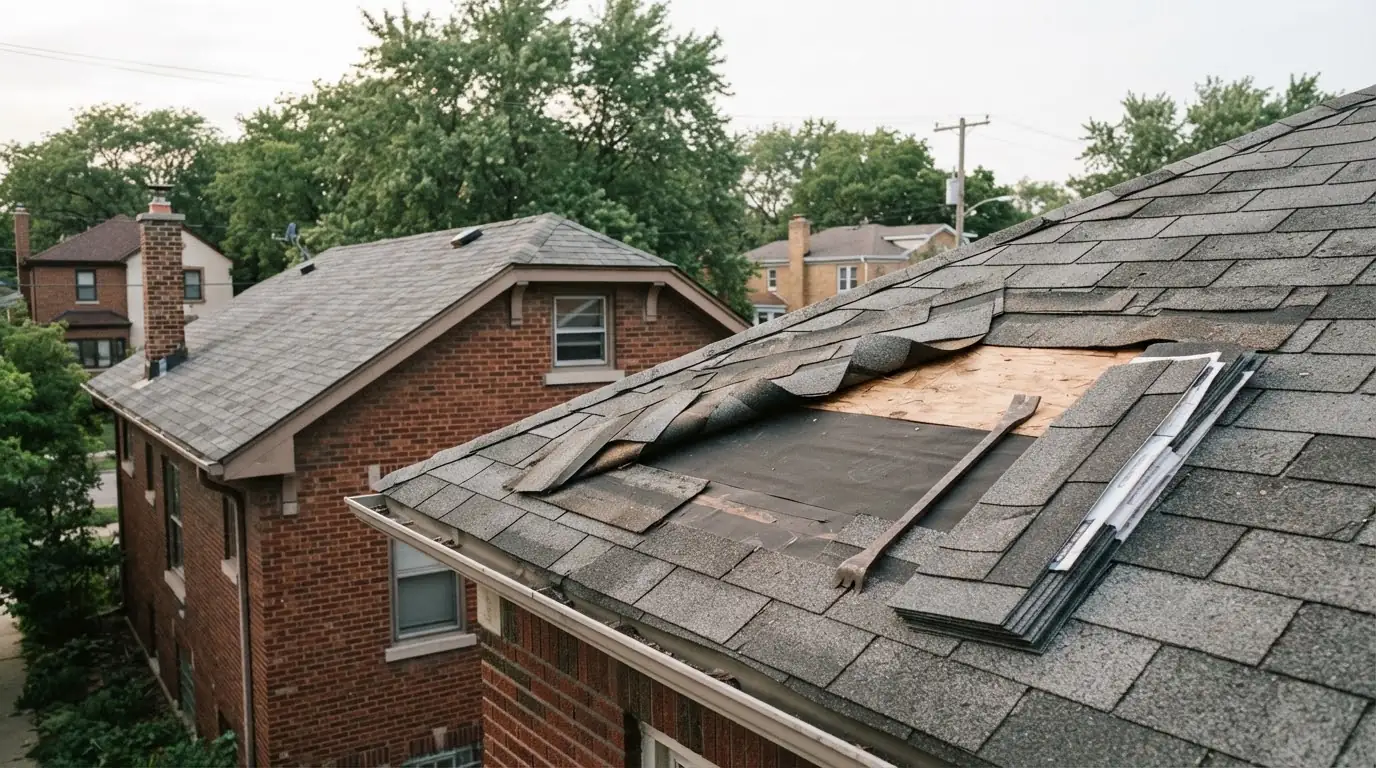
Roof Repair in Chicago and the Suburbs
Most leaks start at flashing, vents or valleys, not under the ceiling stain. One call gets a licensed roofer out to trace yours.
About roof repair
Most roof leaks are not a mystery. They start at a penetration, a transition or a worn edge (a chimney, a vent boot, a valley, a wall flashing) and travel from there. Water rarely enters where the stain appears on the ceiling, which is why a repair that begins with guesswork usually turns into a second repair.
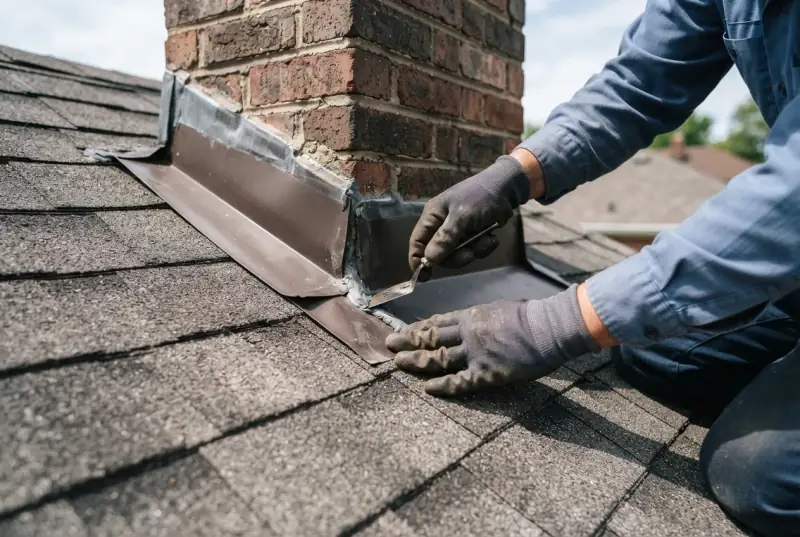
Expect the roofer to start with an inspection that traces the leak back to its actual entry point, then walk you through what they found and what it will take to fix. If a targeted repair is the right answer, they should say so. If the roof is far enough along that repairs will not hold, they should say that too.
Roof Repair by area
The leaks that come through most
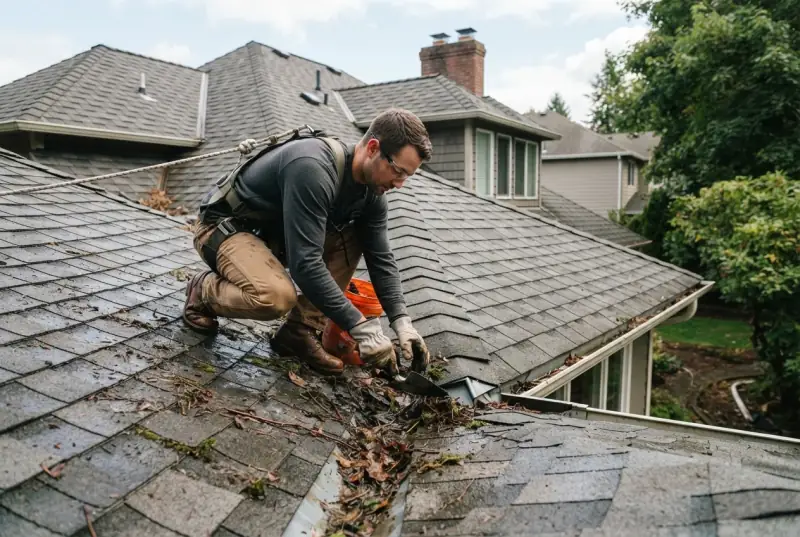
Missing, cracked or curling shingles
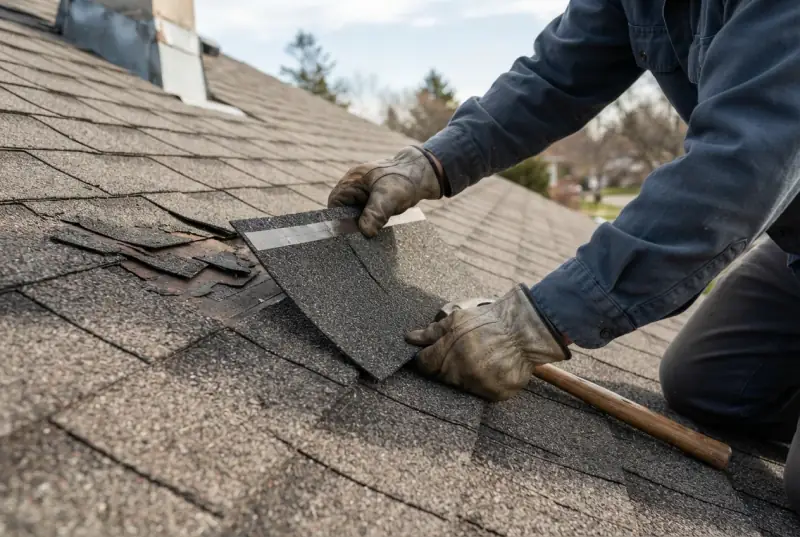
Wind uplift along ridges and rakes pulls tabs loose, and aging shingles crack or curl as they lose flexibility. The roofer replaces the affected field and re-seals the surrounding courses.
Deteriorating valley flashing
Valleys carry the highest water volume on a sloped roof. Rusted or short-cut valley metal is a frequent source of chronic leaks that look like a shingle problem.
Chimney and pipe boot leaks
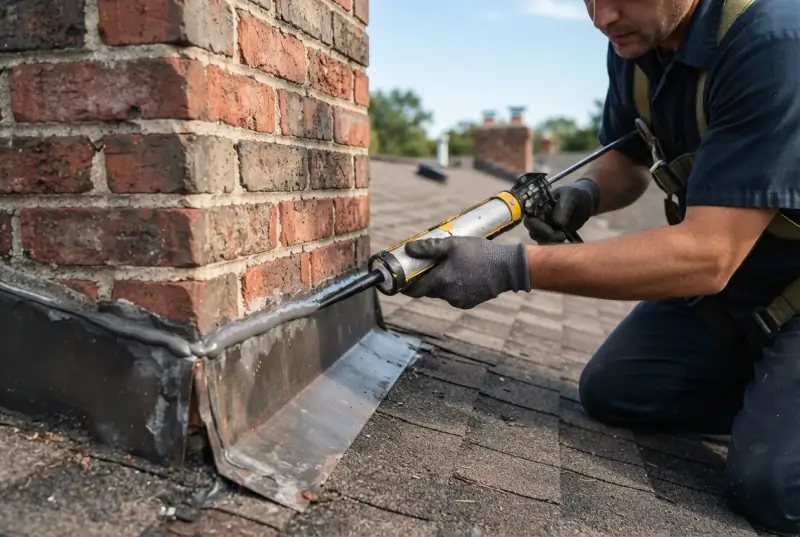
Rubber pipe boots dry out and split well before the shingles fail. Chimney counterflashing pulls out of failing mortar joints. Both are common repair calls on roofs that are otherwise sound.
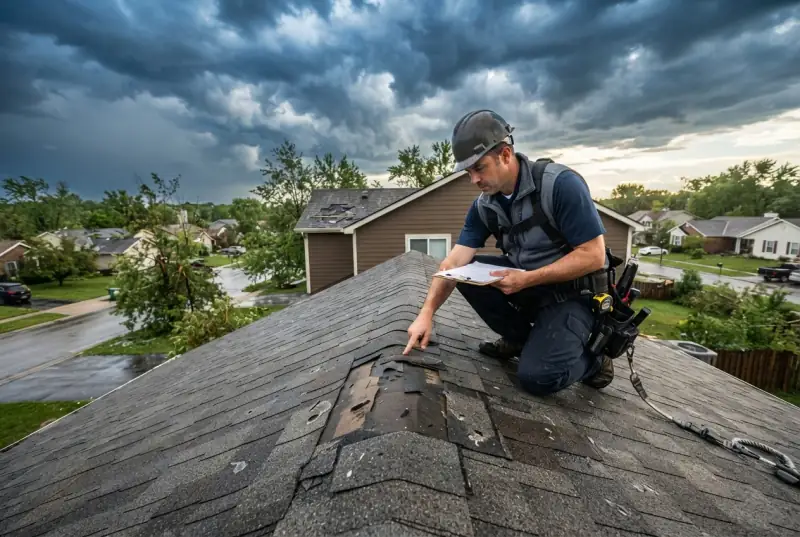
Storm and wind damage
Localized damage from a single storm event (lifted shingles, punctures from debris, torn ridge caps) repaired and documented.
Soffit and fascia rot
Overflowing gutters and poor edge detailing let water sit against the fascia. Left alone it moves into the roof deck at the eave.
Ice dam water penetration
Water backing up under shingles at the eave during a Chicago thaw. The roofer deals with the roofing side of the problem and flags the ventilation and insulation issues driving it.
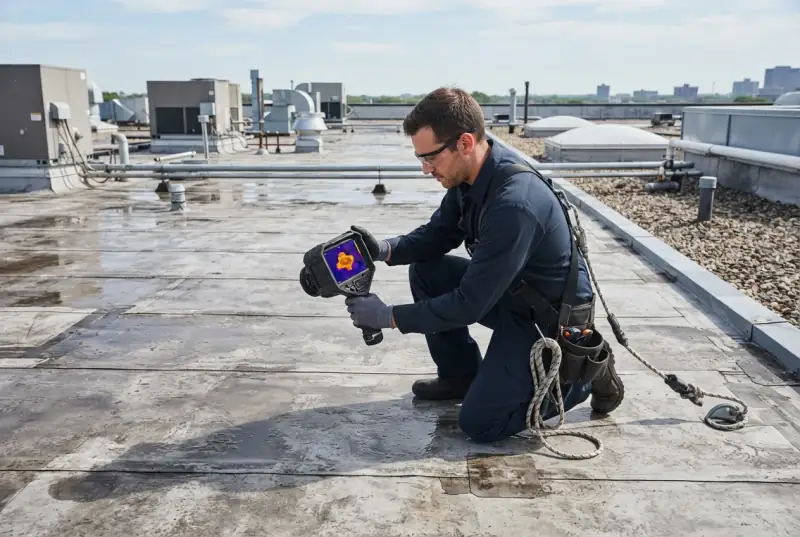
Repairs, close up
The details that decide whether a roof reaches its rated life, most of them invisible once it is finished.
Where repair stops making sense
Most roofs can be repaired more often than people expect. These are the signs that the money is better spent on a new roof.
- One leak, sound roof
- A single failure on a roof that is otherwise in good shape is a repair. A cracked boot, a lifted shingle or a failed flashing at one chimney is exactly what repairs are for.
- Leaks in new places every season
- When fixing one leak is followed by another somewhere else, the roof is failing generally and each repair is buying months, not years.
- Wear across whole slopes
- Bare patches where the granules have gone, curling or cracking across a whole slope, and granules piling up in the gutters all mean the shingles themselves are at the end.
- Two layers already on the roof
- If the roof is already overlaid once, building codes generally require a full tear-off before the next roof. A large repair on a two-layer roof is often money better put toward that.
- Soft or sagging deck
- Water that has been getting in for a long time rots the decking. Once the deck is soft across an area, a surface repair does not hold and the roof needs opening up.
What moves the price of a repair
No two repairs cost the same. These are what decide the number.
- What failed
- A pipe boot is a small job. Rebuilding chimney flashing, or redoing step flashing along a whole wall, is a larger one.
- Access and pitch
- Steep roofs and tall houses need more setup to work safely, which adds labour.
- Material match
- Finding a shingle that matches a weathered or discontinued roof takes time, and slate or tile costs more again.
- Hidden deck damage
- If water has been getting in, the deck under the leak may need replacing too, and that is unknown until it is opened.
- How many spots
- Several small repairs done in one visit cost less than the same repairs spread across several visits.
What a repair estimate should tell you
- What failed, by name
- Not "repair leak" but the actual component: the boot, the step flashing, the valley.
- What will be done
- Replacing the failed part, or sealing over it. Replacement lasts; sealant usually does not.
- Deck repair
- Whether it is included, and what happens to the price if rotten decking turns up.
- Photos
- Pictures of the failure before the work, so you can see what you are paying to fix.
- Any workmanship guarantee
- What the roofer stands behind and for how long, in writing.
Roof Repair in the city itself
City repairs are mostly low-slope work: parapet coping joints that have opened up under freeze-thaw, membrane terminations against a taller adjacent wall, and internal roof drains that have quietly stopped draining. On the bungalow belt it flips entirely, to ice dam damage at the eaves and the finished-attic ventilation problem underneath it that no amount of surface repair will fix.
Coping joints on two-flats and three-flats
A century of freeze-thaw opens the joints in masonry coping, and water goes into the wall rather than into the building, so the leak shows up at an interior corner, well away from the actual failure.
Terminations against a taller neighbour
Where buildings sit inches apart at different heights, the membrane termination against the taller wall is the leak source. It needs counterflashing cut into the masonry, not sealant.
Alley access decides the plan
On most city lots there is no front approach for materials or a dumpster. Staging, debris control and protecting a neighbour gangway should be settled before the work is quoted, not on the morning of it.
Roof stock changes by neighbourhood across the city. The Chicago area page covers the bungalow belt, the two-flats and three-flats, and the greystones block by block.
Roof repair questions
More questions are answered on the main FAQ page.
How much does roof repair cost?
It depends on the size of the affected area, the roof pitch, how accessible the location is, and whether the deck underneath is sound. A single pipe boot is a different job from a rebuilt chimney flashing. Expect a free on-site estimate with the full scope priced before any work begins.
Can you repair just part of my roof?
Yes. Sectional repairs are routine when the rest of the roof still has service life. What you do not want is a patch over a roof that is failing across the board, because it costs money without fixing anything. A straight roofer will tell you which one you have.
Will the repair match my existing shingles?
The roofer matches profile and color as closely as current stock allows. On older roofs an exact match is not always there, because shingle lines get discontinued and the existing shingles have weathered. Ask what to expect before the work starts.
How quickly can you get out to look at a leak?
Active leaks are prioritized. If water is coming in right now, say that first when you call, so it is handled as urgent. A roofer then gets out as soon as one is available. They will talk you through protecting the interior in the meantime.
Is it worth repairing a roof that is 20 years old?
It depends on condition more than age. A 20-year-old roof that is sound with one failed flashing is worth repairing. One that is worn across whole slopes and leaking in several places is worth replacing, because the repairs will keep coming. Ask the roofer to show you photos that support whichever they recommend.
Why does my repaired leak keep coming back?
Usually because the repair treated the symptom rather than the source. Sealant over a failed flashing, or new shingles above a stain when the water was entering somewhere else, will not last. A repeat leak is a sign the true entry point was never found. Ask for it to be traced again.
Can a repair be done in winter?
Yes, though some repairs work better in warmer weather because shingles seal best when warm. An active leak should not wait for spring. In cold weather the roofer may hand-seal shingles or do a temporary repair, then finish it properly when conditions allow.
Roof repair, town by town
Roofers cover Chicago and the surrounding suburbs across Cook, DuPage, Lake, Will, Kane and McHenry Counties.
Related Roofing Services
Got a leak? Get it traced
Call with the address and where the water shows inside. A licensed roofer traces it to the source and prices the fix in writing.