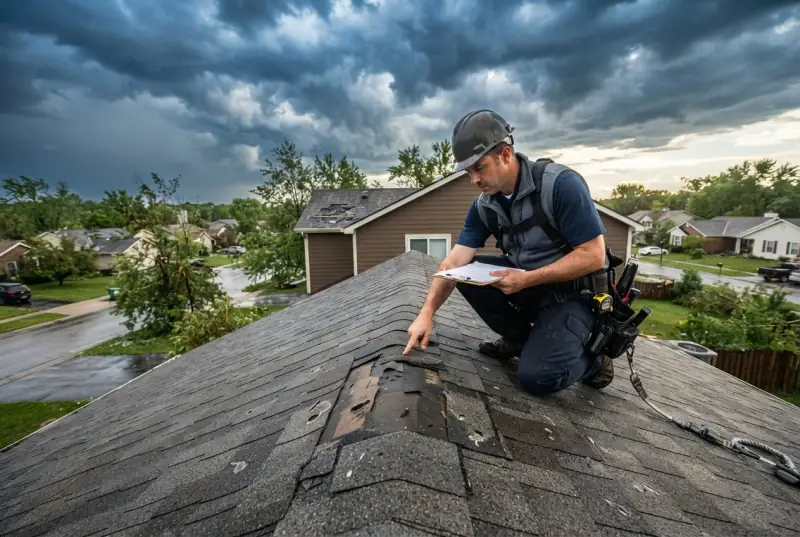
A roof inspection is the cheapest thing in roofing and the most frequently skipped. It is also the item most often used as a pretext for a sales call, which has made a lot of people reasonably suspicious of it. Both things are true, and the difference comes down to what actually gets done and what you receive at the end.
What a real inspection covers
Someone should be on the roof, or at minimum have close visual access to every slope. A walk around the perimeter with binoculars is a courtesy check, not an inspection. The scope should include:
- Surface condition on every slope: granule loss, curling, cracking, blistering, evidence of hail or wind damage. Slopes age at different rates, so one being fine tells you little about another.
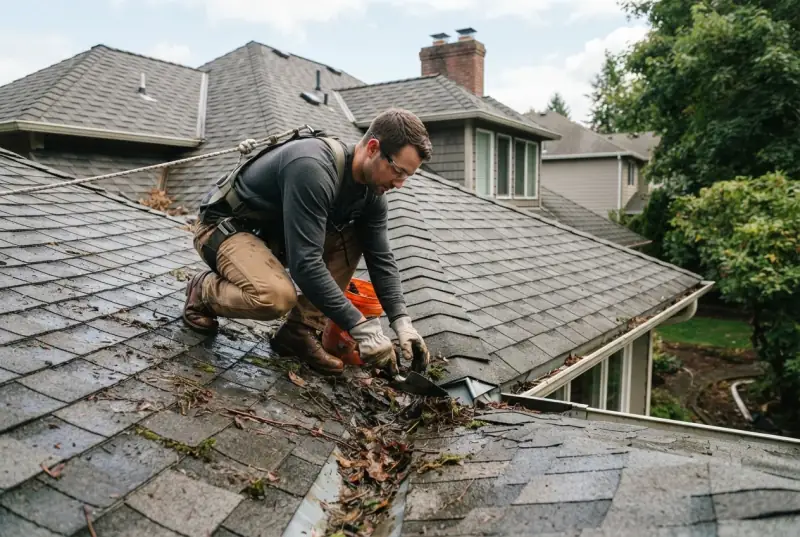
- All flashings and penetrations: chimneys, pipe boots, vents, skylights, wall transitions, valleys. This is where most leaks start, so it should be where most of the time goes.
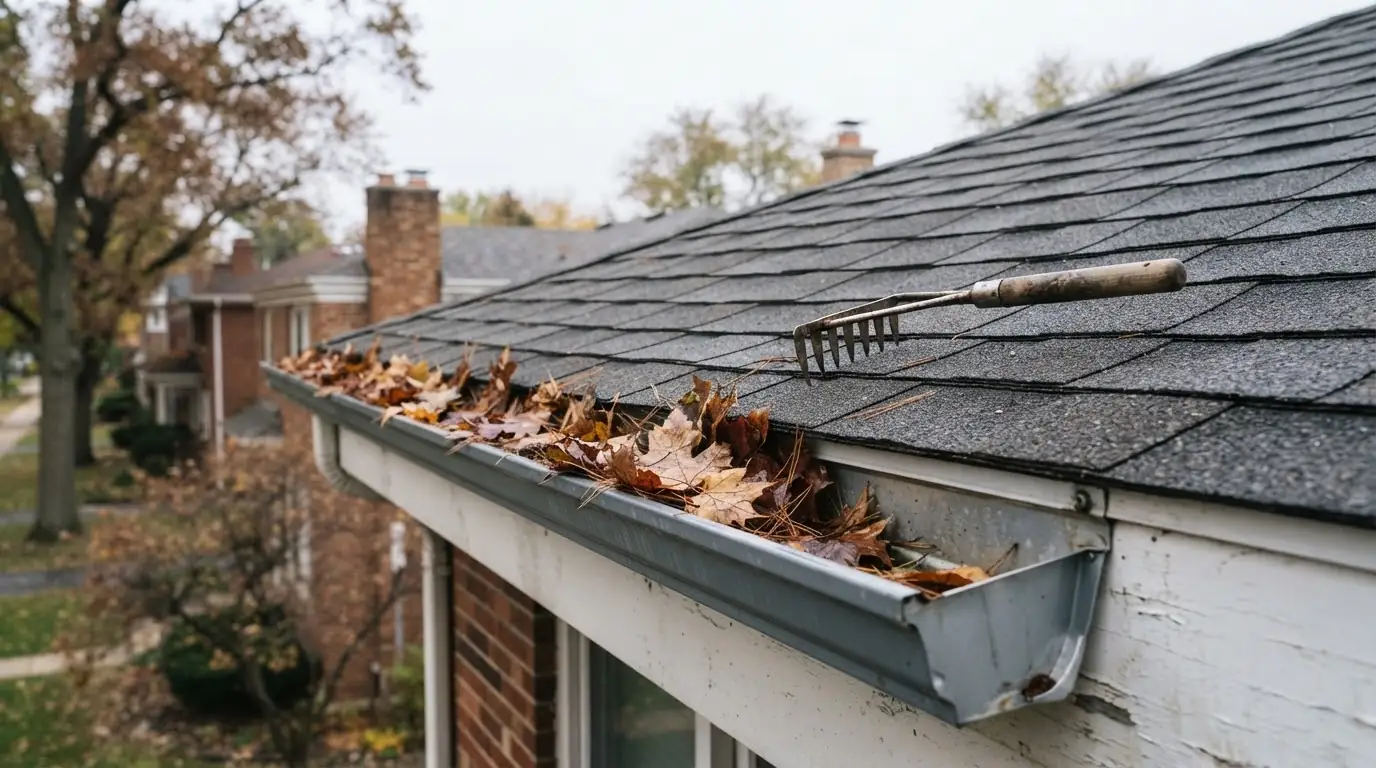
- Edge details and drainage: drip edge, fascia and soffit condition, gutter attachment and slope, whether water is leaving the roof properly.
- The attic, where access allows: the underside of the deck, staining, insulation condition, and whether the ventilation intake is open.
- Ventilation balance: intake versus exhaust. Deficient here and the roof will not reach its rated life regardless of the shingle.
What the report should contain
A verbal summary at the truck is not a report. What you should get:
- Photographs of every condition noted, so you can see it rather than take it on faith.
- Findings prioritized. What needs attention now, what to plan for, what to monitor.
- A realistic remaining service life estimate.
- A clear statement of overall condition, including when that statement is "this roof is fine."
That documentation has uses beyond the immediate decision. It is a dated record of condition, which matters for insurance, for warranty questions, and for a property sale.
How often
Annually for most properties. Twice a year, spring and fall, for roofs past fifteen years, and for properties under heavy tree cover. Plus after any significant hail or high-wind event, whether or not damage is visible from the ground, because hail damage frequently is not.
Home inspection versus roof inspection
A general home inspection covers the roof at a high level, usually from the ground or the edge, as one of dozens of systems. It will catch obvious problems and will not catch subtle ones. If you are buying a house and the roof is a material part of the decision, a roofing-specific inspection gives you remaining service life and a scoped repair estimate: the things you can actually use in a negotiation.
When it is worth paying for one immediately
- Before buying or selling a property.
- After a hail or high-wind event in your area.
- When a roof passes fifteen years, to establish a baseline and a plan.
- Before a large interior project, so you are not finishing a ceiling under a roof that is about to leak on it.
- On commercial property, ahead of budget season: a documented condition report is what capital planning runs on.
This article is general guidance for Chicago-area property owners. Roofing problems are specific to the building, so nothing here substitutes for having your own roof looked at. Call (844) 596-0711 to get yours looked at.