
Winter does not create most roofing problems here. It finds the ones that were already there (the open sealant joint, the blocked soffit vent, the gutter full of leaves) and turns them into leaks. Which means the useful work happens in October, not January.
Clear the gutters, then clear them again
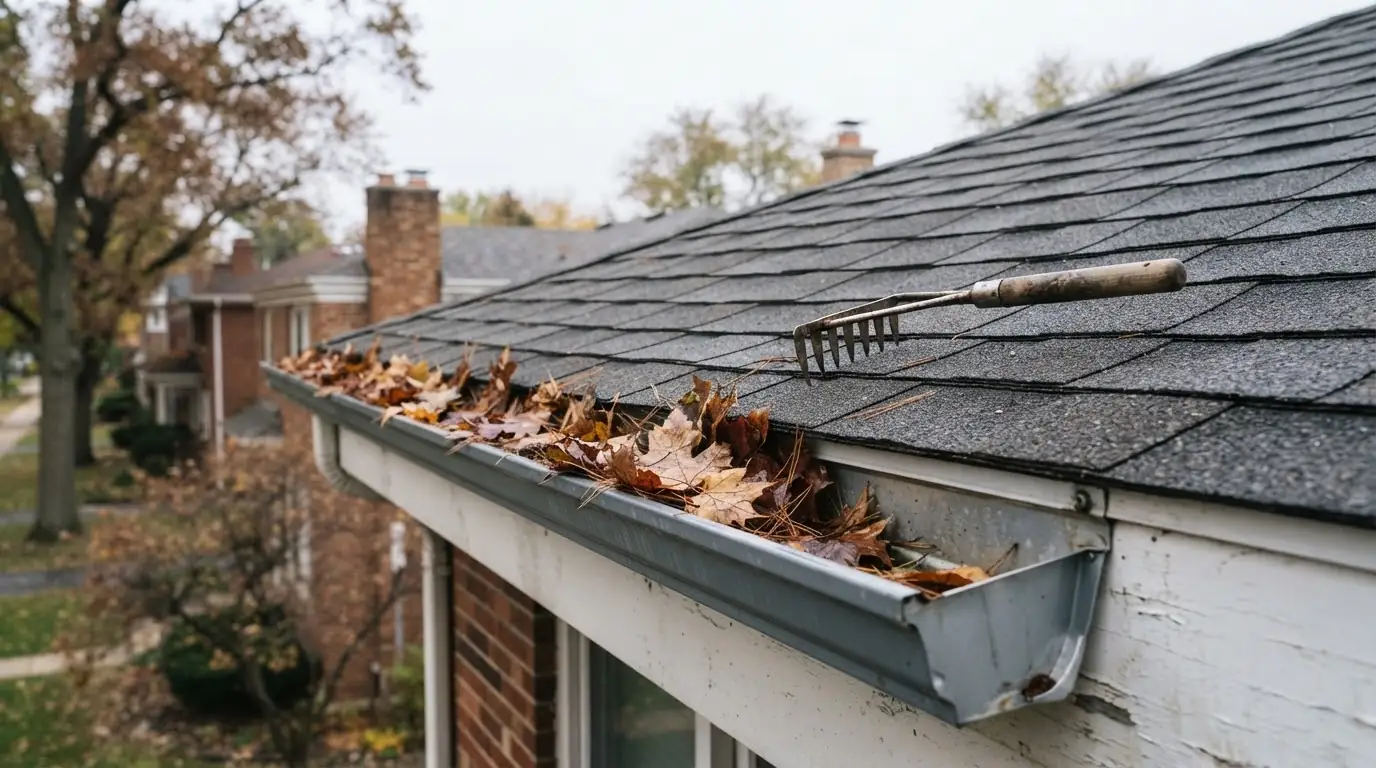
This is the highest-value item on the list and the one most often half-done. Clearing gutters in early October and calling it finished does not work in neighborhoods with mature trees, because a large share of the leaves have not fallen yet. In heavily wooded areas such as Northbrook, Palatine, Glen Ellyn and most of the North Shore, plan on two passes, with the second after the trees are actually bare.
A gutter full of wet debris freezes into a solid mass. That blocks the drainage path completely and gives ice dams a foundation to build on. It also puts real weight on the gutter and the fascia behind it.
Clear the valleys too
Gutters get attention; valleys do not. Debris packed into a valley holds water against the roof surface and, in winter, becomes an ice obstruction in the exact place carrying the most water volume. On complex roofs with a lot of valley footage, like the newer subdivision homes in Naperville or Orland Park, this matters as much as the gutters do.
Go into the attic
Fifteen minutes with a flashlight before winter is worth more than most roof inspections. What you are checking:
- Is the soffit intake actually open? Look at where the roof deck meets the exterior wall. If insulation has been pushed into that space, the intake is blocked and the ventilation path does not work. Baffles fix this and they are inexpensive.
- Is there enough insulation, and is it even? Thin or compressed spots let heat reach the deck. Gaps around light fixtures, bathroom fans and the attic hatch are common heat leaks.
- Any daylight? Anything that is not a vent is a hole.
- Old or new water staining on the sheathing? Note where it is. That is a map of where the roof has leaked before.
- Do bathroom and kitchen fans vent outside? A fan discharging into the attic dumps moisture directly onto the deck all winter. This is more common than it should be.
Look at the flashing and penetrations
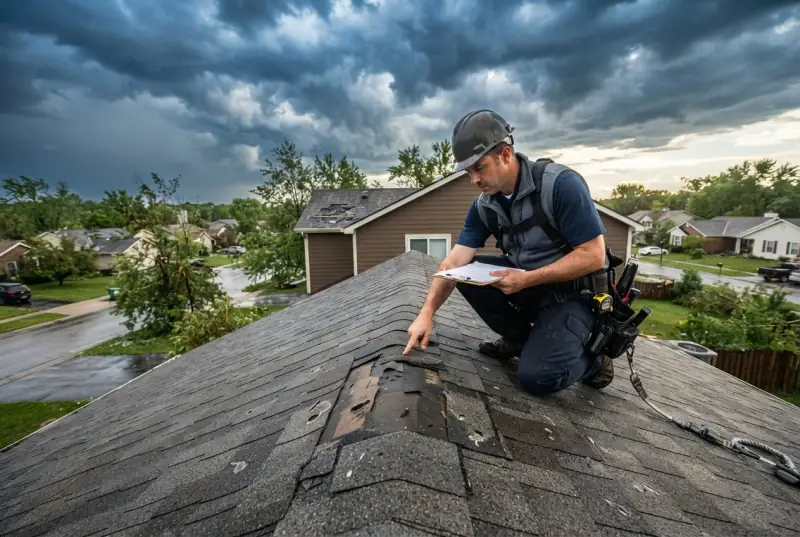
From the ground with binoculars, or from a ladder at the eave if you are comfortable and the ground is dry. Check chimney flashing for gaps where it meets the masonry, pipe boots for cracking, and ridge caps for lifted or missing pieces. Anything found now is a straightforward repair. The same thing found in January is an emergency call in bad conditions.
Trim back overhanging branches
Limbs over a roof abrade shingles in wind, drop debris continuously, and come down under ice and snow load. Getting them cut back in fall is cheaper than the repair after one comes through the deck.
On low-slope and flat roofs
For two-flats, three-flats and commercial buildings, the fall list is different but shorter: clear every drain and scupper, check that the overflow provision is not blocked, walk the perimeter looking at coping joints and terminations, and confirm there is no standing water sitting from the last rain. Water that is still there 48 hours after a rain will be ice in six weeks. See the flat roofing page for how these systems fail.
Get an inspection if the roof is over fifteen
Older roofs get through winter on their margins, and a small failure going into December becomes a large one by March. A pre-winter roof inspection tells you whether you are looking at a repair now or a comfortable season, which is worth knowing before the weather makes the decision for you.
This article is general guidance for Chicago-area property owners. Roofing problems are specific to the building, so nothing here substitutes for having your own roof looked at. Call (844) 596-0711 to get yours looked at.