
Residential and Commercial Roofing in Schaumburg, IL
Flat commercial roofs and late-century subdivision homes fail in different places. Describe yours when you call.
What each service runs into in Schaumburg
Commercial Roofing
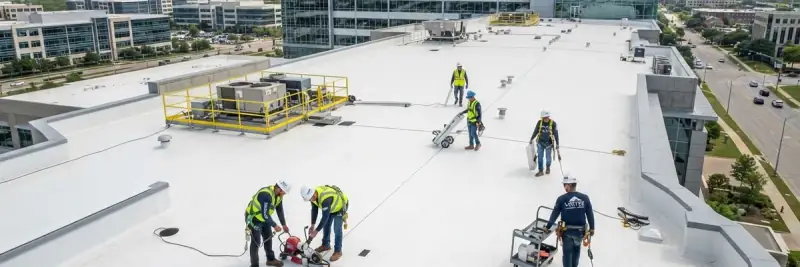
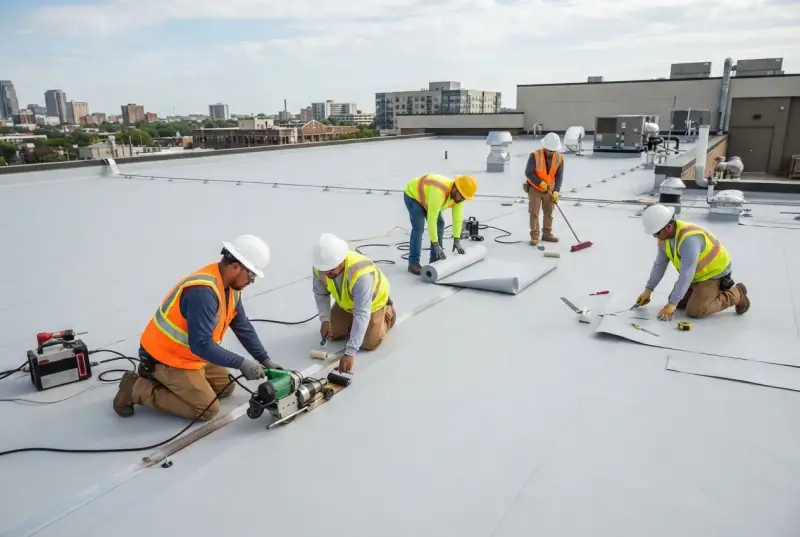
The Woodfield area and the surrounding office corridors represent one of the densest concentrations of low-slope commercial roof area in the metropolitan area. On roofs this size, drainage governs service life.
Drain maintenance is the whole game
A partly blocked drain on a large roof creates ponding that works at seams through every freeze-thaw cycle. Clearing them on a schedule is the cheapest thing available.
Heavy mechanical loading
The equipment volume on these buildings means curb flashing, pitch pockets and service traffic are permanent maintenance items rather than occasional ones.
Perimeter uplift on open sites
With no wind buffering across the village, membrane terminations at perimeters and corners take real load, and that is where large-roof failures start.
Storm Damage Roofing
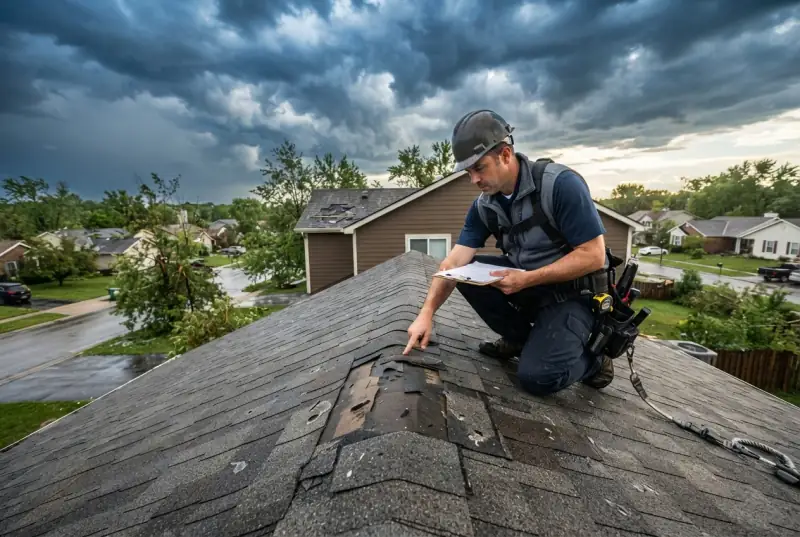
Schaumburg has taken damaging hail more than once, and the flat open terrain across the village offers essentially no wind buffering. Because whole subdivisions share a roof age, a single event can leave many similar roofs in similar condition.
Association-wide assessments
When a storm hits a townhome development, the assessment covers multiple buildings at once and the report has to be structured for a board rather than an individual owner.
Commercial roofs take it differently
On the large low-slope roofs around Woodfield, hail bruises membrane and wind attacks perimeters. Neither leaks immediately, and both shorten the roof materially.
Everyone getting a roof is not evidence
Hail cores are small and roof age varies. Your neighbours replacing their roofs tells you little about whether yours actually needs one.
Subdivision roofs at replacement age
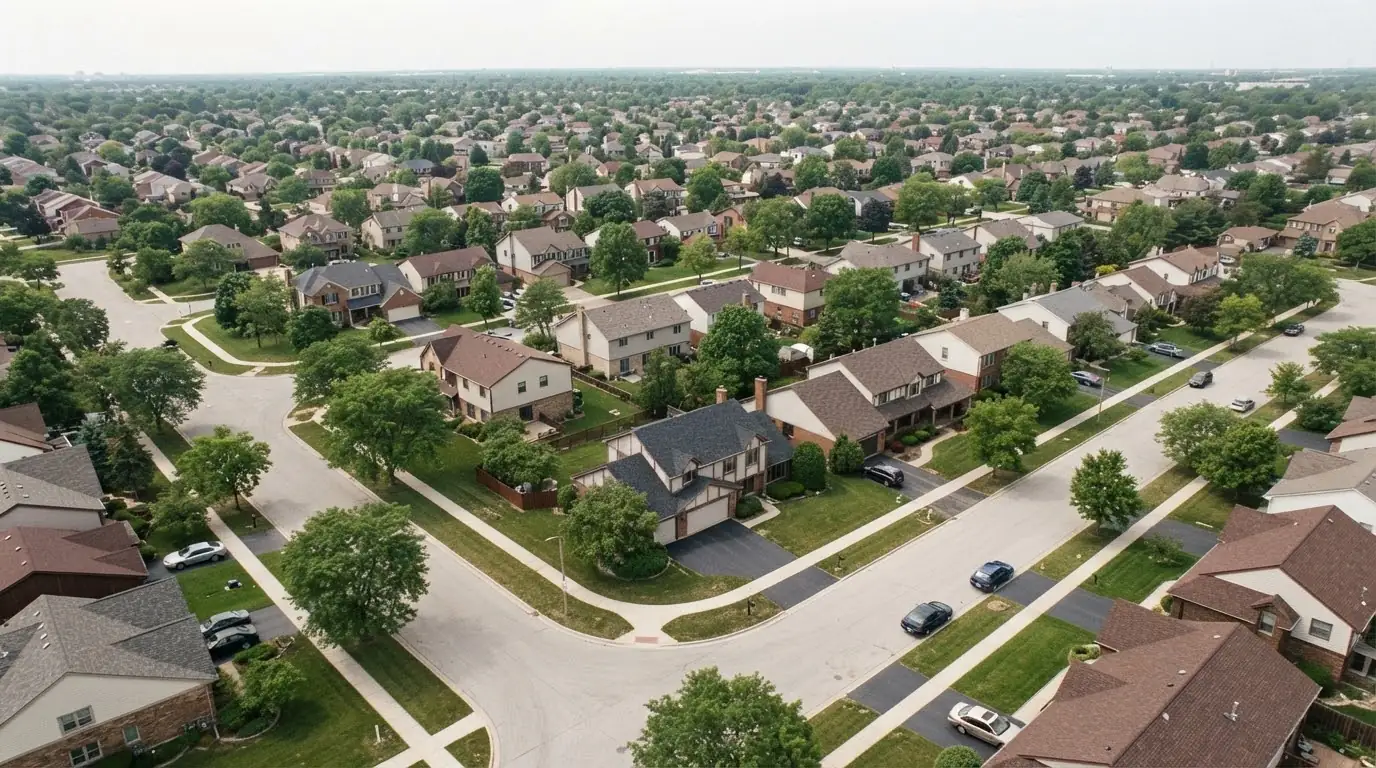
Schaumburg is two roofing markets in one village. On the residential side it is a study in late-century subdivision construction: large, coherent tracts built from the 1970s through the 1990s, now moving through their first and second replacement cycles more or less together. On the commercial side, the Woodfield area and the surrounding office and retail corridors represent one of the densest concentrations of low-slope commercial roof area in the metropolitan area.
The residential stock is predominantly 1970s to 1990s: two-story colonials, split-levels, quad-levels and ranches, along with substantial townhome and condominium development. Roof forms are moderately complex: multiple gables, attached garage transitions, and on the later builds, front-facing bump-outs that add valleys. Because these subdivisions were built in coherent phases, roofs across a whole neighborhood tend to reach end of life within a few years of each other, which is why a single street can turn over almost entirely in one or two seasons. Townhome and condo associations here typically manage roofing at the association level, which changes the scope and the process.
Services called in most here
What gets called in most around Woodfield area and Town Square, roughly in the order it comes up.
Commercial Roofing
The Woodfield area and the surrounding office corridors represent one of the densest concentrations of low-slope commercial roof area in the metropolitan area.
Learn more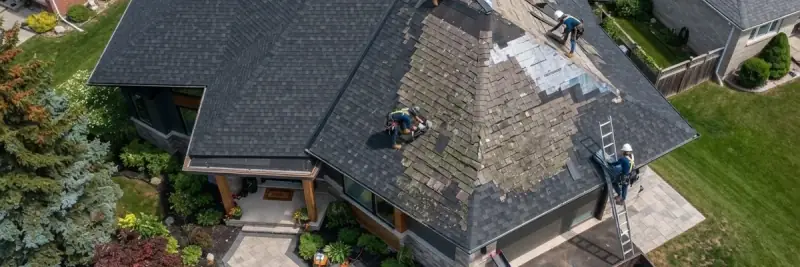
Roof Replacement
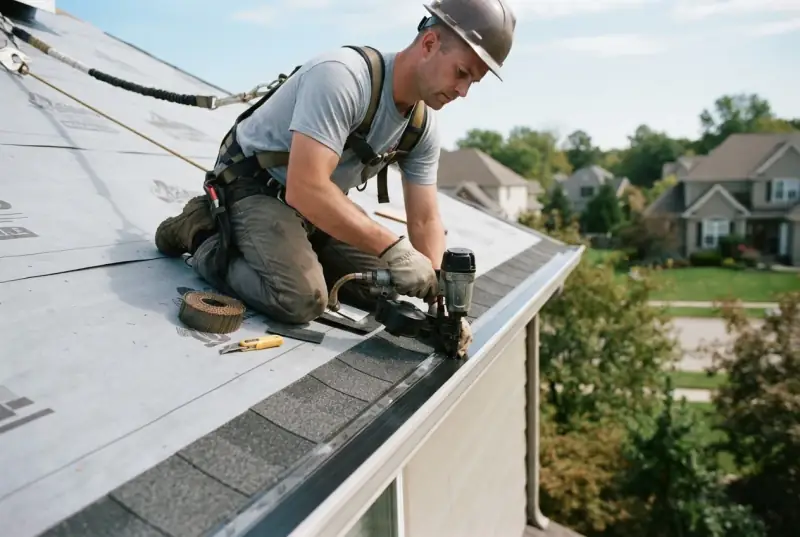
Schaumburg replacements come in phases because the subdivisions did. A street built in 1988 reaches end of roof life together, and it is common for most of it to turn over within two or three seasons.
Learn more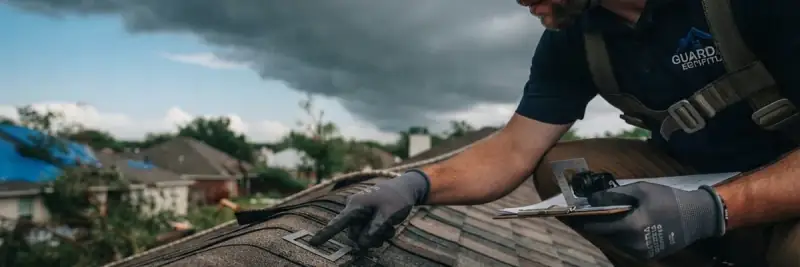
Storm Damage Roofing
Schaumburg has taken damaging hail more than once, and the flat open terrain across the village offers essentially no wind buffering.
Learn more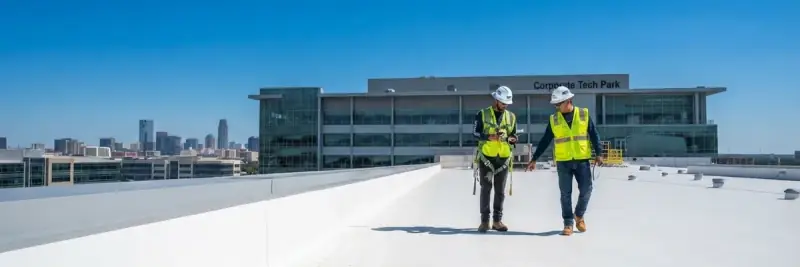
Flat Roofing
Learn moreStorms and what they take off these roofs
Flat, open terrain across most of the village means little wind buffering. Summer thunderstorm complexes moving through the northwest suburbs bring both straight-line wind and hail, and Schaumburg has taken damaging hail more than once. On the commercial side, large uninterrupted low-slope roof areas make drainage design and drain maintenance the difference between a 25-year membrane and a 12-year one.
Roofing questions from Schaumburg
Specific to Woodfield area, Town Square and the rest of Cook County, with everything else on the FAQ page.
I live in a Schaumburg townhome. Who is responsible for the roof?
In most townhome and condo developments the association is, but it varies. Check your declaration or ask the board. Association roofs are usually replaced building by building on a schedule, so if yours leaks, report it to the association first. A roofer can still inspect and document it for your own records.
Why do the bump-outs on newer homes leak?
A front-facing bump-out adds valleys and roof-to-wall joints where it meets the main house. More valleys and more joints mean more places for water to get in when the flashing is not done well. If your leak sits near a bump-out, that intersection is the first place to look.
Does Schaumburg get much hail?
The northwest suburbs see hail with some regularity from summer storm complexes, and Schaumburg’s flat, open terrain leaves roofs exposed to it. After a hail storm, check your gutters and vents for dents from the ground. If they are dented, the shingles probably took hits as well.
What is a quad-level, and why does its roof matter?
A quad-level has four staggered floors, so it carries several separate roof sections at different heights, each one meeting a wall. That makes for a lot of roof-to-wall joints, and every one is a place where the flashing has to be right. They deserve a careful look on any older quad-level.
Getting a roofer out
Call with the address and a licensed, insured roofer working Schaumburg takes it from there: inspection, photographs, then the price in writing. Who does the work.
Retail and office roofs nearby
The Woodfield corridor, the Meacham Road and Golf Road office concentrations, and the surrounding retail and hotel properties add up to an unusually large stock of TPO, EPDM and modified bitumen roofs, most carrying substantial rooftop mechanical equipment. Preventive maintenance programs pay for themselves quickly on roofs of this size.
Nearby communities
Hoffman Estates, Palatine, Elk Grove Village, Bloomingdale, Des Plaines. Each has its own page covering local housing stock.
Start with a look at the roof
Call and describe the roof. A roofer who works Schaumburg can get out to look at it.