
Roofing in Chicago, From Bungalows to High-Rises
Seventy-seven community areas and a different roof on every block. Describe yours and a licensed local roofer comes out to look.
Dense blocks, tight lots, flat roofs behind parapets
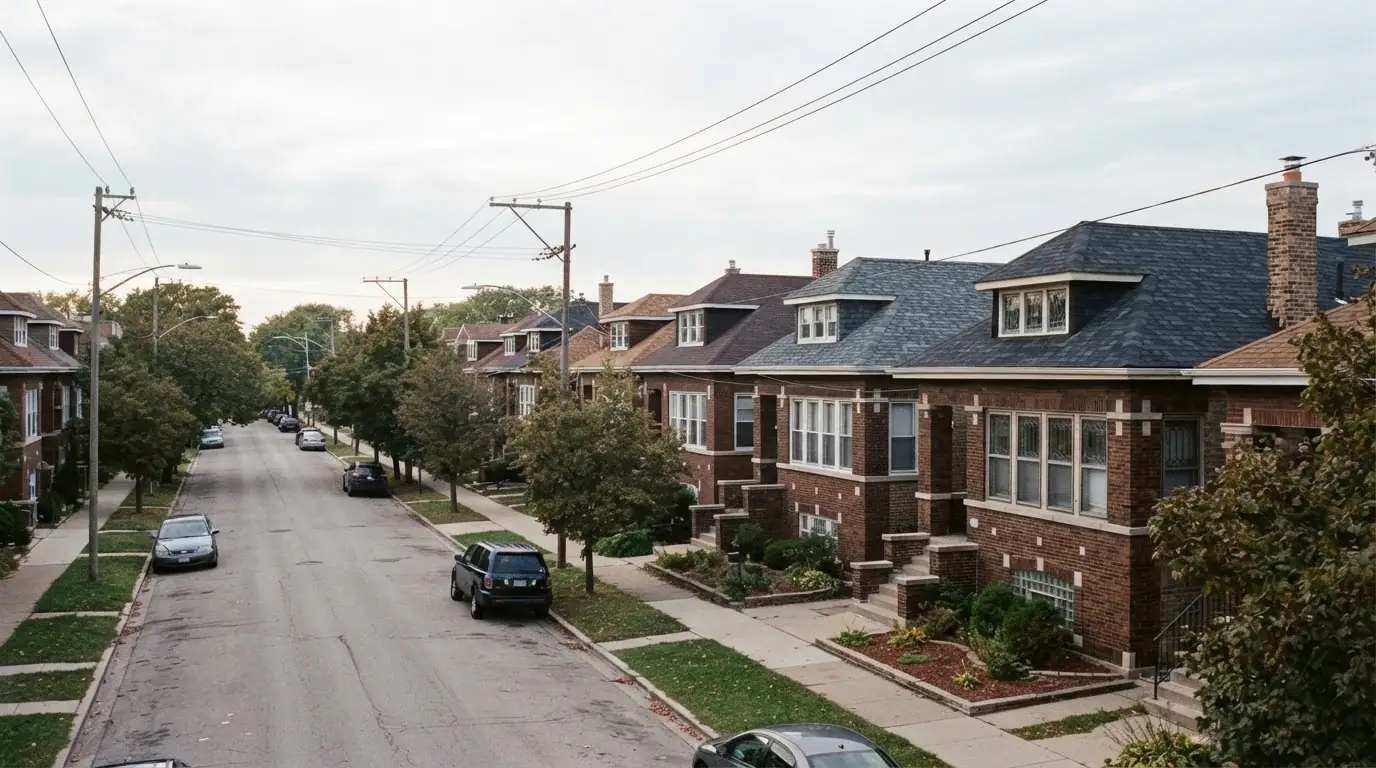
Chicago has more distinct roof types packed into one city than almost anywhere else in the country. Within a few miles you move from lakefront high-rises with fully adhered membrane roofs, to blocks of brick two-flats with parapet walls and low-slope rear additions, to the bungalow belt with its low-pitched hipped roofs and deep overhangs, to frame cottages that have been raised, dormered and re-roofed four times since 1910. Working here means knowing which of those you are standing on before you quote it. Roof repair, replacement, flat roof work and storm damage restoration all come up across the city, on everything from single-family homes to courtyard buildings and mixed-use commercial properties.
The city roughly divides into three roofing worlds. The bungalow belt, the broad arc through the Northwest and Southwest Sides, is dominated by 1910s to 1930s brick bungalows with shallow hipped roofs, wide eaves and, often, an original attic that was finished at some point without anyone reworking the ventilation. The two-flat and three-flat corridors through the North and West Sides bring parapet walls, low-slope roofs, and rear porches and additions with their own separate roof sections. The lakefront and downtown add mid-rise and high-rise buildings on single-ply and modified bitumen systems. Older frame housing on the South and West Sides frequently carries multiple layers of shingles and decking that needs attention once the tear-off starts.
What freeze-thaw does to masonry and roofs
Chicago roofs take the full freeze-thaw cycle plus lake-effect moisture, and the dense urban form adds its own problems. Alley access constrains staging and dumpster placement on most city jobs. Attached and near-attached buildings mean party walls and shared parapets where flashing details matter enormously. Ice dams are a chronic issue on bungalows and older frame homes with finished attics and blocked soffit intake, and summer heat on dark low-slope roofs drives thermal cycling that opens seams.
Roofing by Chicago neighborhood
Roof types change block to block in this city. Each of these pages covers the housing stock and the problems that turn up in that area.
Lincoln Park
North Side
Greystones, frame two-flats and rowhouses on narrow lots with heavy roof-deck activity.
Lakeview
North Side
Three-flats, courtyard buildings and frame cottages in one of the city’s densest areas.
Logan Square
Northwest Side
Boulevard greystones and dense two-flat blocks with masonry parapets throughout.
Wicker Park
West Side
Victorian workers cottages and mansion-scale homes with elaborate historic detail.
Bucktown
West Side
Frame cottages and two-flats interleaved with dense modern infill construction.
Avondale
Northwest Side
Brick bungalows and two-flats with a working-class building stock and heavy rehab activity.
Albany Park
Northwest Side
Dense vintage courtyard buildings and bungalows with heavy multi-unit roof area.
Irving Park
Northwest Side
Old Irving Park Victorians alongside classic bungalow blocks: two different roofs.
Portage Park
Northwest Side
The heart of the bungalow belt: block after block of 1920s brick bungalows.
What each service runs into in Chicago
Roof Repair
City repairs are mostly low-slope work: parapet coping joints that have opened up under freeze-thaw, membrane terminations against a taller adjacent wall, and internal roof drains that have quietly stopped draining. On the bungalow belt it flips entirely, to ice dam damage at the eaves and the finished-attic ventilation problem underneath it that no amount of surface repair will fix.
Coping joints on two-flats and three-flats
A century of freeze-thaw opens the joints in masonry coping, and water goes into the wall rather than into the building, so the leak shows up at an interior corner, well away from the actual failure.
Terminations against a taller neighbour
Where buildings sit inches apart at different heights, the membrane termination against the taller wall is the leak source. It needs counterflashing cut into the masonry, not sealant.
Alley access decides the plan
On most city lots there is no front approach for materials or a dumpster. Staging, debris control and protecting a neighbour gangway should be settled before the work is quoted, not on the morning of it.
Roof Replacement
A city replacement is as much a logistics plan as a roofing scope. Alley-only access, dumpster placement, shared parapets and neighbouring walls inches away all get worked out before the first shingle comes off.
Ventilation is the real upgrade
On bungalows the highest-value part of the job is not the shingle. It is restoring soffit intake and adding ice-and-water shield so the new roof does not ice dam exactly like the old one did.
Layers and deck condition
Older city housing often carries more than one layer, and what is under them is unknown until tear-off. The deck contingency is priced per sheet and called out separately.
Party walls and shared parapets
On attached buildings the new roof has to terminate correctly against a wall you do not own. That detail is agreed before the work rather than improvised on the roof.
Residential Roofing
Residential work in the city means knowing which of three worlds you are in before quoting: the bungalow belt with its shallow hipped roofs and finished attics, the two-flat corridors with parapets and low-slope roofs, or frame housing that has been raised and added onto for a century.
The bungalow attic question
Most of these attics were finished at some point without the ventilation being reworked. That single fact explains most of the roofing problems on the bungalow belt.
Two-flats are low-slope buildings
They need membrane, parapet and drainage work rather than anything a shingle crew does, and the rear porch roof is a separate scope again.
Additive frame housing
A cottage raised in 1915, dormered in 1960 and extended in 1998 has several roofs joined at transitions of wildly varying quality. The joints are where the water is.
Commercial Roofing
City commercial work runs from storefront and mixed-use buildings on the neighborhood retail corridors to warehouse and industrial property on the South and West Sides and institutional buildings downtown. Almost all of it is low-slope.
Parapet terminations dominate
On masonry commercial buildings the membrane termination at the parapet, and the coping above it, are among the most common leak sources.
Internal drains on older buildings
Undersized or partly blocked drains, and failed drain bowl seals, put water straight into the building rather than onto the roof surface where it is visible.
Restaurant exhaust penetrations
Kitchen exhaust curbs and grease contamination degrade membrane in a way nothing else on a roof does, and they need their own maintenance attention.
Storm Damage Roofing
Storm response in the city is mostly wind and debris rather than hail. Ridge caps and rake edges on the pitched stock, and on low-slope roofs, membrane damage at perimeters and corners where uplift concentrates.
Shared walls spread the damage
Water entering an attached building does not stay in one unit. Emergency access and mitigation have to be arranged quickly, sometimes across more than one owner.
Perimeter uplift on low-slope roofs
Membrane failures concentrate at the edges and corners rather than the field, which is also where a tarp is hardest to secure and easiest to lose overnight.
Debris punctures on flat roofs
Wind-driven material on a low-slope roof punctures rather than lifts, and the entry point can be small enough that it is only found by looking for it deliberately.
Services called in most here
What gets called in most around Lincoln Park and Lakeview, roughly in the order it comes up.
Roof Repair
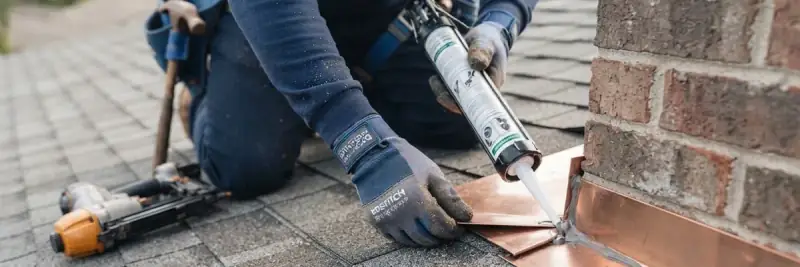
City repairs are mostly low-slope work: parapet coping joints that have opened up under freeze-thaw, membrane terminations against a taller adjacent wall, and internal roof drains that have quietly st
Learn more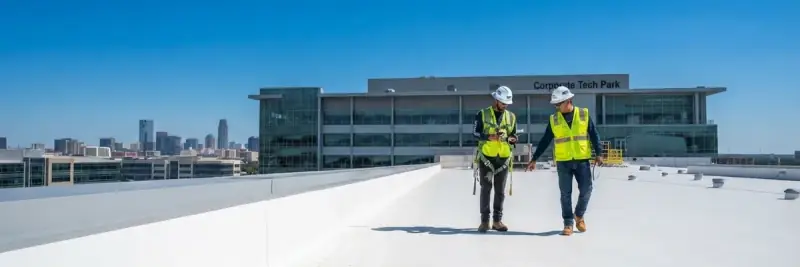
Flat Roofing
Learn more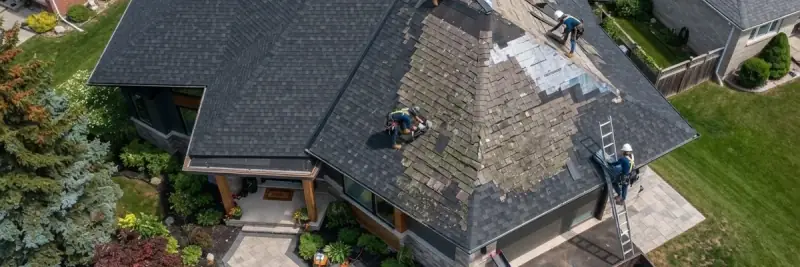
Roof Replacement
A city replacement is as much a logistics plan as a roofing scope.
Learn more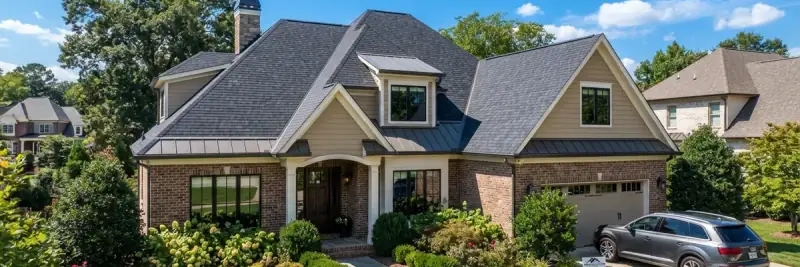
Residential Roofing
Residential work in the city means knowing which of three worlds you are in before quoting: the bungalow belt with its shallow hipped roofs and finished attics, the two-flat corridors with parapets an
Learn more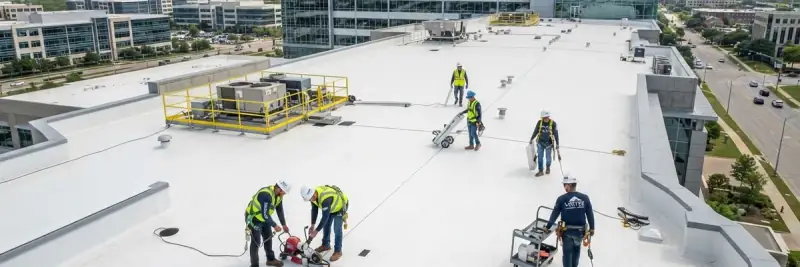
Commercial Roofing
City commercial work runs from storefront and mixed-use buildings on the neighborhood retail corridors to warehouse and industrial property on the South and West Sides and institutional buildings down
Learn more
Storm Damage Roofing
Storm response in the city is mostly wind and debris rather than hail.
Learn moreGetting a roofer out
Call with the address and a licensed, insured roofer working Chicago takes it from there: inspection, photographs, then the price in writing. Who does the work.
Roofing questions from Chicago
Specific to Lincoln Park, Lakeview and the rest of Cook County, with everything else on the FAQ page.
Do I need a permit to replace a roof in Chicago?
Roof replacement in Chicago generally needs a city building permit, and the roofer normally pulls it. Ask whether the permit is included in the estimate. A roofer who suggests skipping it is telling you something about how they will handle the rest of the job.
Why does my two-flat have a sloped front and a flat roof behind it?
Many Chicago two-flats and greystones have a steep decorative front, sometimes a mansard, with a low-slope roof over the main building behind a parapet. They are two different roofing systems, often needing different materials and skills. A leak can come from either, so the roofer should check both.
Who fixes a leak where my building meets the one next door?
Chicago buildings often sit inches apart at different heights, and where your roof meets a taller neighbour’s wall is a classic leak point. The fix is counterflashing cut into the masonry. If the wall belongs to the neighbour, the work may need their cooperation, so raise it early.
Is a Chicago bungalow roofed differently from a suburban house?
Usually. The classic Chicago bungalow has a low-pitched hipped roof, a front dormer and often a finished attic, sitting on a tight lot. The finished attic drives ventilation and ice dam problems, and the tight lot affects access and where debris goes. A roofer used to the bungalow belt knows both.
How do I find the page for my part of the city?
The neighbourhood pages below cover the main residential areas, each written around its own building types. If your neighbourhood is not listed, call with the address. Coverage is not limited to the neighbourhoods that have a page, and a roofer working your area can tell you what to expect on your street.
Nearby communities
Evanston, Oak Park, Skokie, Cicero, Berwyn. Each has its own page covering local housing stock.
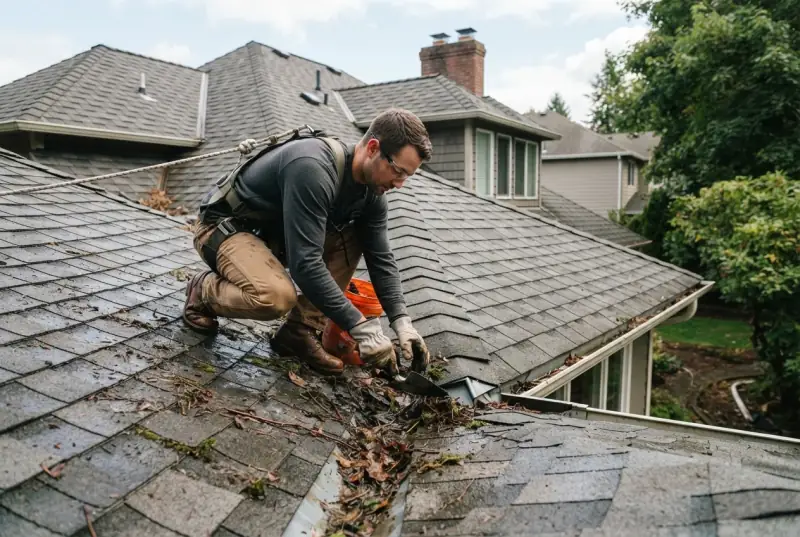
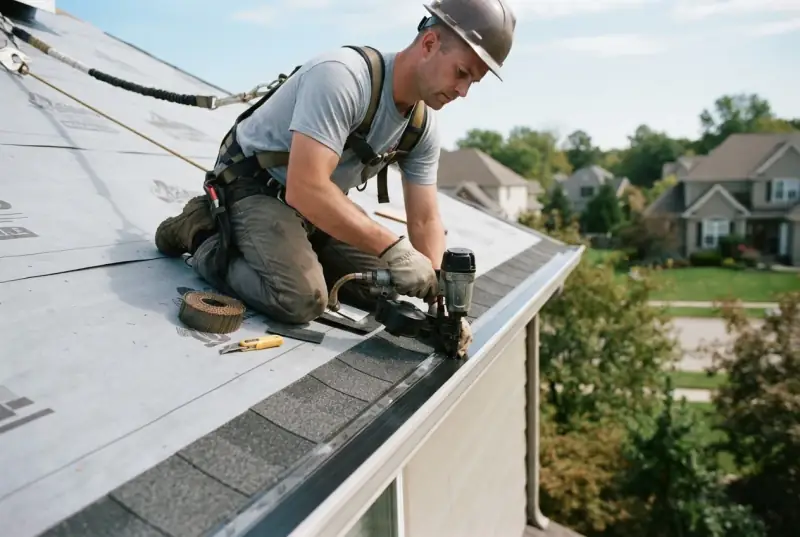
Chicago roof estimates
Have the address ready and tell us what you have noticed. Lincoln Park through to 60601, the estimate costs nothing.