
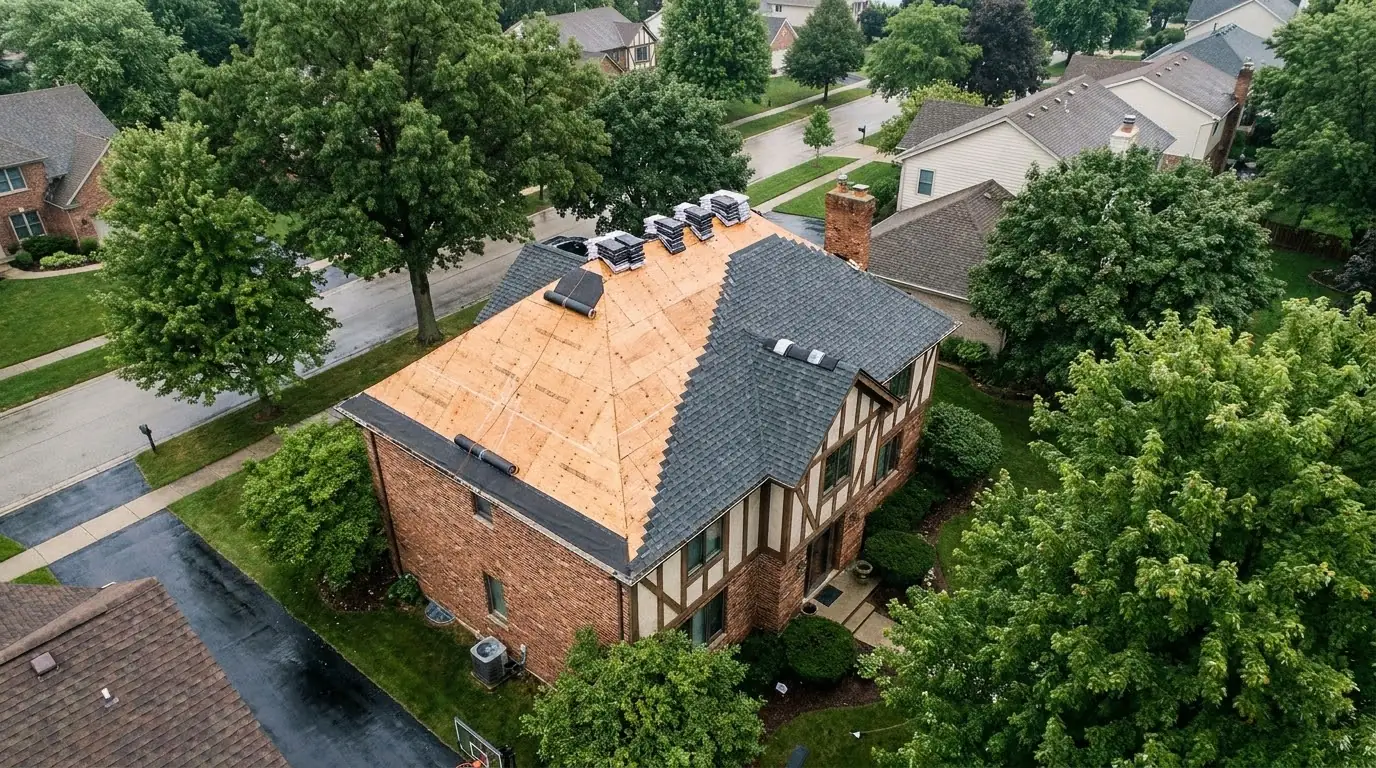
Roof Replacement in Chicago and the Suburbs
Get a written, line-by-line estimate before any shingle comes off, so you can compare it, question it or wait.
About roof replacement
A replacement is the right call when the roof has stopped being a maintenance item and started being a recurring expense. Widespread granule loss, shingles curling across whole slopes, leaks appearing in new places each season. At that point every repair is buying months, not years.
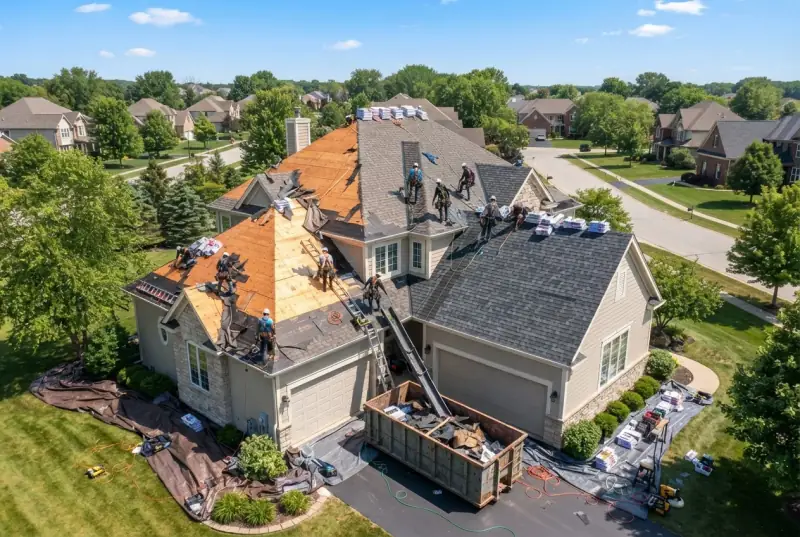
Most roofers worth using do full tear-offs rather than layovers on residential work. Going over an existing layer hides deck damage, shortens the life of the new shingles by trapping heat, and makes any future repair harder. The exception is a sound single-layer roof where a layover serves the property. Ask which one yours is.
Roof Replacement by area
What moves the price of a new roof
A replacement is priced from the roof itself. These are the factors that decide it.
- Size, in squares
- Roofs are priced by the square, which is 100 square feet. More squares, more material and more labour.
- Pitch
- Steep roofs need more safety setup and the crew works slower, so labour goes up.
- Layers to remove
- Taking off two layers costs more in labour and disposal than one.
- Deck repair
- Usually unknown until tear-off. A per-sheet allowance in writing protects you from surprises.
- Flashing and complexity
- Valleys, dormers, chimneys, skylights and wall transitions are all labour, and complex roofs carry a lot of them.
- Ventilation
- Correcting a poorly ventilated attic is extra, and skipping it shortens the new roof.
- Shingle line
- Architectural shingles cost more than three-tab; designer lines more again.
- Permit and disposal
- The building permit and the cost of hauling the old roof away.
How to read a replacement estimate
Each of these should be its own line. A single lump sum hides what you are paying for and makes quotes impossible to compare.
- Tear-off and disposal
- How many layers come off, and the cost of hauling them away.
- Underlayment
- The type laid over the deck under the shingles.
- Ice and water shield
- Where it goes: at minimum the eaves and the valleys in this climate.
- Flashing
- New step flashing, valley flashing and pipe boots, not the old ones reused.
- Ventilation
- Any intake or exhaust work, and what it corrects.
- Deck allowance
- A price per sheet of decking replaced, so a soft deck has a known cost.
- Shingle and warranty
- The exact product line, and what warranty covers it and the installation.
- Permit and cleanup
- Who pulls the permit, and the nail sweep and cleanup at the end.
Why most roofers recommend a full tear-off
- It shows the deck
- Rot and soft spots can only be found and fixed once the old roof is off.
- It replaces the flashing
- An overlay keeps the old flashing, which often fails long before the new shingles do.
- It allows ice and water shield
- In this climate, a membrane at the eaves and valleys is one of the most useful things on a roof, and it goes on the deck.
- It respects the layer limit
- Building codes generally cap a roof at two layers, so an overlay uses up the last one.
When replacement is the right call
Past its expected service life
Asphalt shingle systems in this climate generally run 15 to 25 years depending on grade, ventilation and exposure. Age alone is not a reason to replace, but age plus symptoms usually is.
Widespread curling or granule loss
Granules protect the asphalt from UV. Once they are gone across large areas, the mat underneath degrades quickly and the roof will not hold a repair.
Chronic recurring leaks
When leaks keep appearing in new locations, the issue is systemic rather than a single failed detail.
Structural sagging
Deflection along the ridge or between rafters signals deck or framing problems that need to be addressed with the roof off.
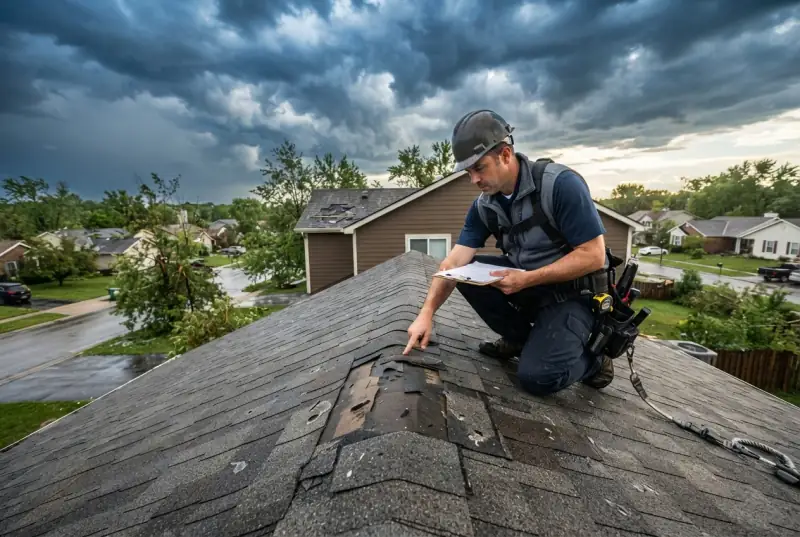
Severe storm compromise
Hail bruising or wind damage across enough of the roof that sectional repair is not a durable answer.
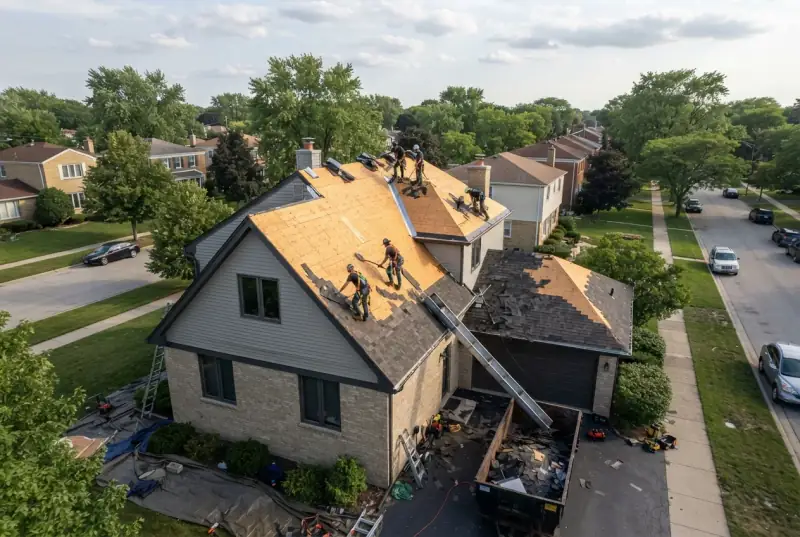
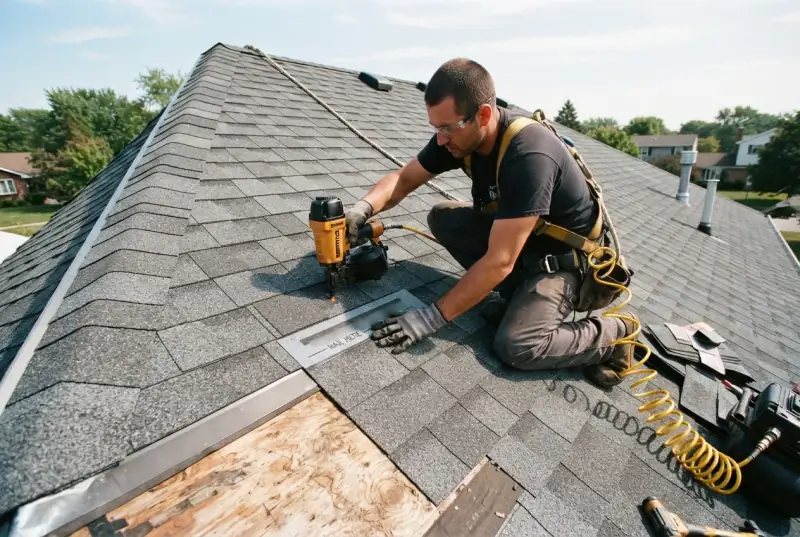
A replacement, step by step
The details that decide whether a roof reaches its rated life, most of them invisible once it is finished.
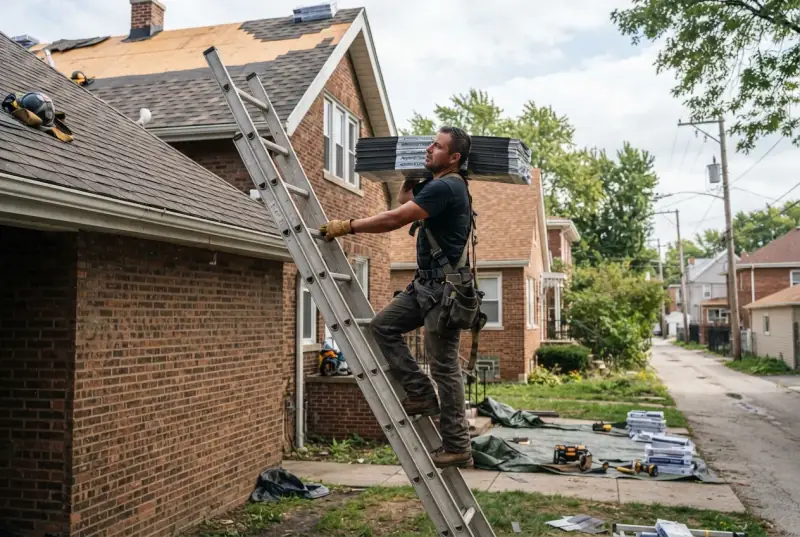
What goes into the work
Full tear-off to the deck
Existing layers removed so the sheathing can be inspected and any soft or delaminated sections replaced before new material goes on.
Ice-and-water shield at vulnerable areas
Self-adhering membrane at eaves, valleys and penetrations. In a freeze-thaw climate this is the layer that saves you during an ice dam.
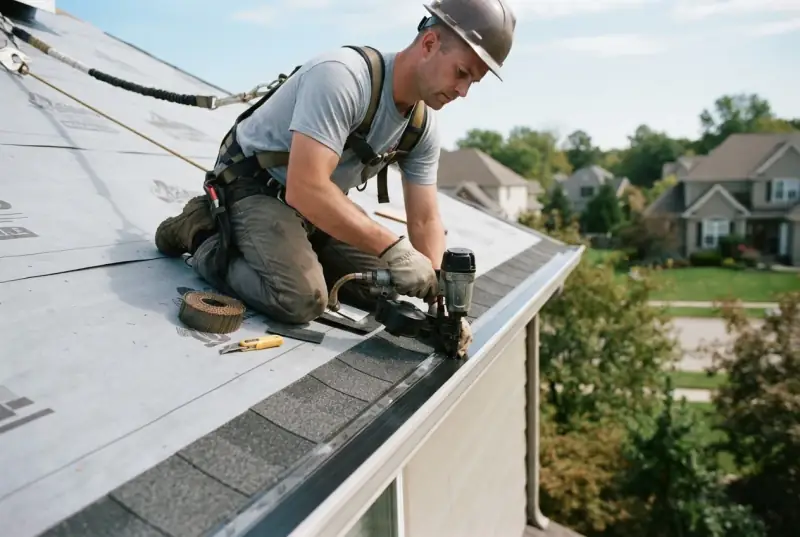
Synthetic underlayment
Across the remaining field, providing a secondary water barrier and a safer working surface than felt.
Architectural asphalt shingles
Laminated shingles with higher wind ratings and a heavier profile than 3-tab. 3-tab remains available where budget or matching requires it.
Balanced intake and exhaust ventilation
Ridge vent paired with adequate soffit intake. Ventilation is what determines whether the new roof reaches its rated life or falls short of it.
New flashings and edge metal
Drip edge, valley metal, step and counterflashing replaced rather than reused, because reused flashing is where new roofs leak.
Roof Replacement in the city itself
A city replacement is as much a logistics plan as a roofing scope. Alley-only access, dumpster placement, shared parapets and neighbouring walls inches away all get worked out before the first shingle comes off.
Ventilation is the real upgrade
On bungalows the highest-value part of the job is not the shingle. It is restoring soffit intake and adding ice-and-water shield so the new roof does not ice dam exactly like the old one did.
Layers and deck condition
Older city housing often carries more than one layer, and what is under them is unknown until tear-off. The deck contingency is priced per sheet and called out separately.
Party walls and shared parapets
On attached buildings the new roof has to terminate correctly against a wall you do not own. That detail is agreed before the work rather than improvised on the roof.
Roof stock changes by neighbourhood across the city. The Chicago area page covers the bungalow belt, the two-flats and three-flats, and the greystones block by block.
Roof replacement questions
More questions are answered on the main FAQ page.
How much does a roof replacement cost?
Cost is driven by square footage, pitch, number of layers to tear off, material selection, and how complex the roof is: valleys, dormers, chimneys and skylights all add labor. Expect a free on-site estimate detailing every line before work begins. Nobody should quote a replacement over the phone without seeing the roof, because that number is not reliable enough to plan around.
Do I need to be home during the work?
No. Most of the job happens outside and does not need interior access. The roofer will tell you in advance if they need the attic for a ventilation detail.
What happens if you find rotten decking?
The roofer shows you. Deck replacement is priced per sheet and called out separately in the estimate as a contingency, because there is no way to know the condition of the sheathing until the old roof comes off. Ask to be billed only for sheets actually replaced.
Can you replace a roof in winter?
Asphalt shingles can be installed in cold weather, but the self-sealing strips need warmth to bond, so shingles installed in deep cold may not seal until spring. For an active leak in January that is an acceptable tradeoff. A planned replacement is better scheduled outside hard freezes.
How long does a roof replacement take?
Most single-family tear-offs take one to three working days once the crew starts, depending on the size, the pitch, the number of layers and how much decking needs replacing. Weather can push it. Ask the roofer what happens if rain arrives mid-job and how the house is protected overnight.
What warranty should a new roof come with?
Usually two: a manufacturer warranty on the shingles, and a workmanship warranty from the roofer on the installation. They cover different things, and material warranties often exclude installation errors. Get both in writing, and ask whether either transfers if you sell the house.
Should I get more than one replacement estimate?
Yes. Two or three written estimates, each with the job broken into line items, let you see whether a lower price leaves something out. Compare the underlayment, the ice and water shield, the flashing and the deck allowance, not only the total.
Roof replacement across the suburbs
Roofers cover Chicago and the surrounding suburbs across Cook, DuPage, Lake, Will, Kane and McHenry Counties.
Related Roofing Services
From the Roofing Education Center
Get a line-by-line replacement estimate
Call with the address. A licensed roofer measures the roof and puts every part of the job on its own line, before anything comes off.