
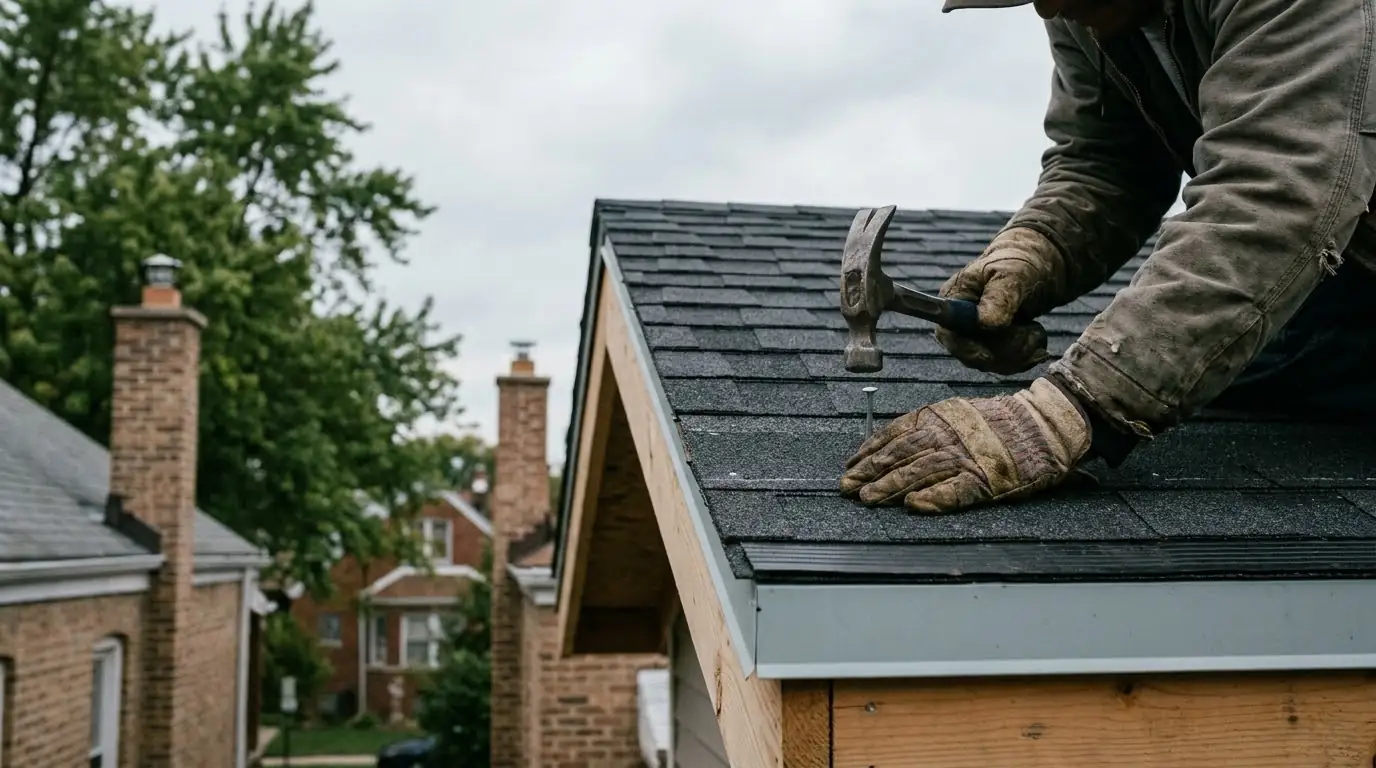
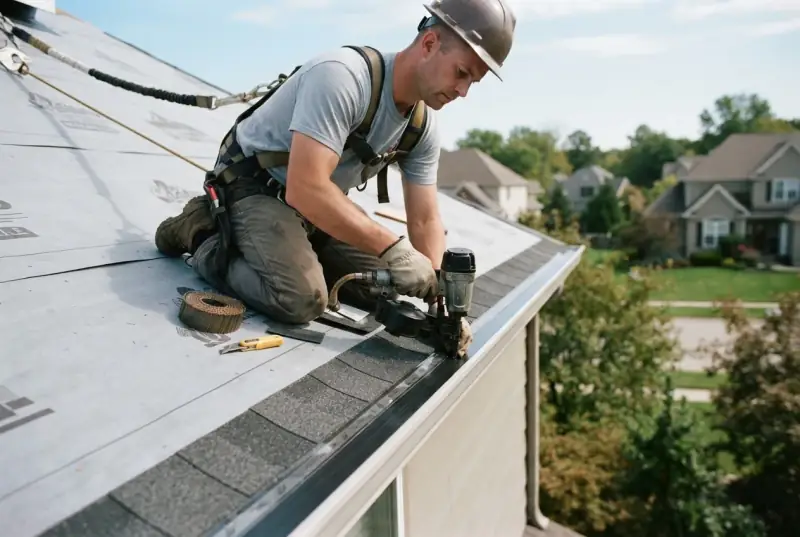
Almost every roofing conversation eventually reduces to this question, and it is answerable. Four things determine it: how the roof is failing, how old it is, what the deck underneath is doing, and how long you intend to own the building.
Question one: is the failure isolated or systemic?
This is the one that does most of the work. Isolated failures happen on healthy roofs at any age: a split pipe boot, chimney counterflashing that pulled out of eroding mortar, valley metal that rusted through, storm damage confined to one slope. Every one of those is a repair, on a five-year-old roof or an eighteen-year-old one.
Systemic failure looks different: curling across whole planes, granule loss over large areas, leaks appearing somewhere new each season. That is the roof itself giving out, and repairs stop working because there is nothing sound to repair to.
Question two: how old is it, really?
Asphalt shingles in this climate run 15 to 25 years, with ventilation and installation quality determining where in that range a given roof lands. A ten-year-old roof with a leak is a repair, close to always. A twenty-two-year-old roof with a leak is a conversation. If you do not know the age, the deck and the attic will tell you more than the surface will.
Question three: what is the deck doing?
Sheathing that has been getting wet (even slowly, even in one area) is the factor that most often converts a repair into a replacement. You cannot properly evaluate a deck without pulling material off, which is why a thorough inspection includes looking at the underside from the attic. Soft, delaminated or stained decking under a small leak means the water has been working longer than the symptom suggests.
Question four: how long are you keeping the building?
This one is legitimate and often unspoken. If you are selling in eighteen months, a competent repair that makes the roof sound and documented may serve you better than a replacement whose value you will not capture. If you are staying fifteen years, deferring a replacement that is clearly coming just means paying for repairs on the way to paying for the roof anyway.
The cost-per-year test
When it is close, compare cost per year of service life rather than sticker price. A repair that costs a fraction of a replacement and buys eight years is excellent value. The same repair buying eighteen months is not, and the second repair is coming.
Cases where the answer is usually clear
Clearly repair
- A single failed penetration: pipe boot, vent, skylight curb.
- Chimney or wall flashing that has failed on an otherwise sound roof.
- Storm damage confined to one slope or one section.
- A roof under twelve years old with a localized leak.
Clearly replace
- Widespread curling, cupping or granule loss.
- Two existing layers already in place.
- Recurring leaks in new locations each season.
- Structural sagging, or decking that is soft across meaningful areas.
- Hail or wind damage across enough of the roof that sectional repair will not hold.
If yours does not fall cleanly into either list, that is normal, and it is exactly what an inspection is for. You should come out of it with photographs, a remaining service life estimate, and a recommendation you can see the reasoning behind.
This article is general guidance for Chicago-area property owners. Roofing problems are specific to the building, so nothing here substitutes for having your own roof looked at. Call (844) 596-0711 to get yours looked at.