
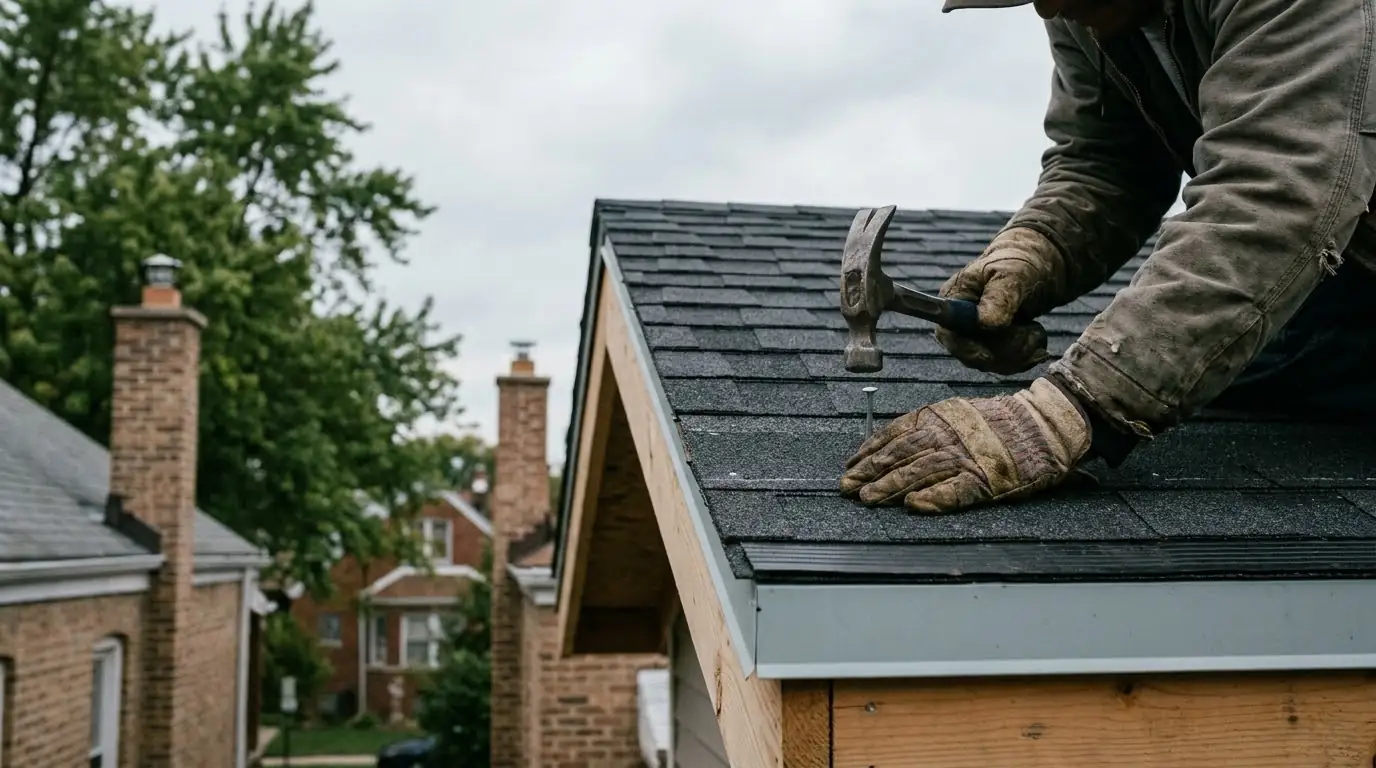
There is a point where repairing a roof stops making financial sense, and most people pass it by a year or two. The reason is that each individual repair looks reasonable in isolation. It is only when you add up three seasons of them, and notice that the leaks keep appearing somewhere new, that the picture becomes clear.
The test that actually settles it
Ask one question: are the failures isolated, or systemic? A failed pipe boot is isolated. A chimney flashing that pulled out of deteriorating mortar is isolated. Both are repairs, on any roof of any age. But shingles curling across whole slopes, granule loss over large areas, and leaks that keep showing up in new places are systemic. Systemic failures do not respond to repairs, because you are treating symptoms of a roof that is finished.
Age, and why it is only half the answer
Asphalt shingle roofs in this climate generally run 15 to 25 years. That range is wide for a reason: ventilation and installation quality move the number more than the shingle grade does. A well-ventilated architectural shingle roof can reach the top of that range and occasionally beyond it. A 3-tab roof over an attic with blocked soffit intake can fall short of the bottom.
So age alone is not a reason to replace. Age plus symptoms usually is. A twenty-year-old roof showing widespread curling is done. A twenty-year-old roof that looks sound and has no leak history has time left, and the right move is to inspect it annually and plan for the expense rather than pull it off early.
The specific signals
- Widespread granule loss. Granules are the shingle UV protection. Once large areas are bald, the asphalt underneath degrades quickly and will not hold a repair.
- Curling or cupping across whole slopes. Not one or two shingles: whole planes.
- Recurring leaks in new locations. The clearest systemic signal there is.
- Structural sagging along the ridge or between rafters. This needs the roof off to address properly.
- Multiple existing layers. If there are already two layers up there, most jurisdictions will not permit a third, and a layover was hiding whatever the deck was doing.
- Extensive storm damage. Hail bruising or wind damage across enough of the roof that sectional repair is not durable. Our storm damage page covers how that assessment works.
Running the numbers honestly
The useful comparison is not "repair cost versus replacement cost." It is "cost per year of service life bought." A one thousand dollar repair on a roof with eight years left is a good deal. The same repair on a roof with two years left is not. You are paying to defer, and you will pay again.
The other factor people underweight is what water does while you defer. Wet decking, saturated insulation and stained drywall are all costs that accumulate quietly during the year you spent thinking about it. That is usually where the real money goes, not into the roof itself.
What a replacement should actually include
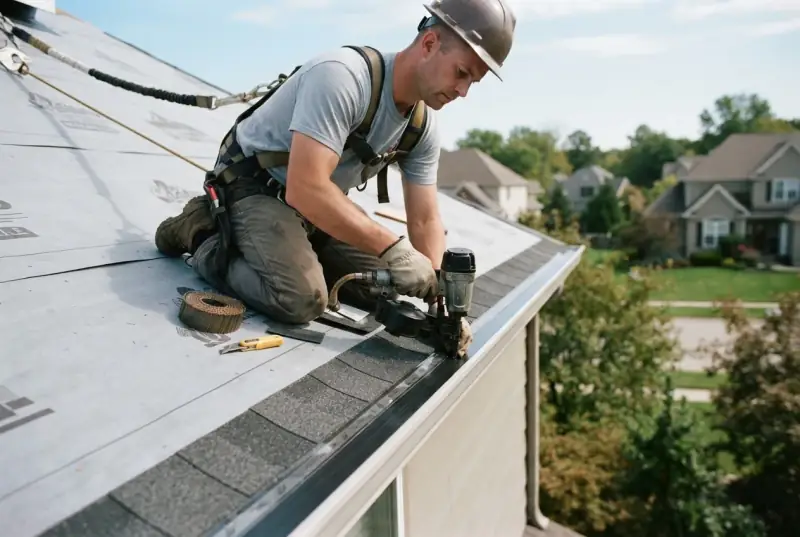
If you do replace, the scope matters as much as the shingle. A full tear-off so the deck can be inspected, ice-and-water shield at the eaves and valleys, new flashing rather than reused flashing, and a ventilation assessment. Those items are what determine whether the new roof reaches its rated life. The roof replacement page walks through each of them, including how deck repair should be priced so you are not billed for sheets nobody replaced.
This article is general guidance for Chicago-area property owners. Roofing problems are specific to the building, so nothing here substitutes for having your own roof looked at. Call (844) 596-0711 to get yours looked at.