Commercial low-slope roofs fail for a small number of reasons, and nearly all of them are visible and fixable months or years before they cause an interior loss. That is the entire case for a maintenance program: the failure modes are known, they progress slowly, and catching them is cheap relative to what they cost when they finish.
Drainage is the whole game
Water that leaves the roof does no harm. Water that stays does all of it. Ponding, water still standing 48 hours after rainfall, accelerates membrane degradation, adds structural load, grows biological material, and in winter freezes and works at every seam it touches.
Ponding is almost always a drainage problem rather than a membrane problem. The usual causes are blocked or partially blocked drains, undersized or poorly located scuppers, and insulation that has compressed over time into a low spot. Patching the membrane where the water sits treats the symptom while the cause continues.
- Clear every drain, strainer and scupper on a schedule. At minimum spring and fall, quarterly on roofs under tree cover or with heavy debris.
- Confirm overflow provisions are not blocked. They exist for the day the primary drain fails.
- Note and photograph ponding areas each visit. A pond that is growing is telling you the deck or insulation is moving.
Seams and terminations
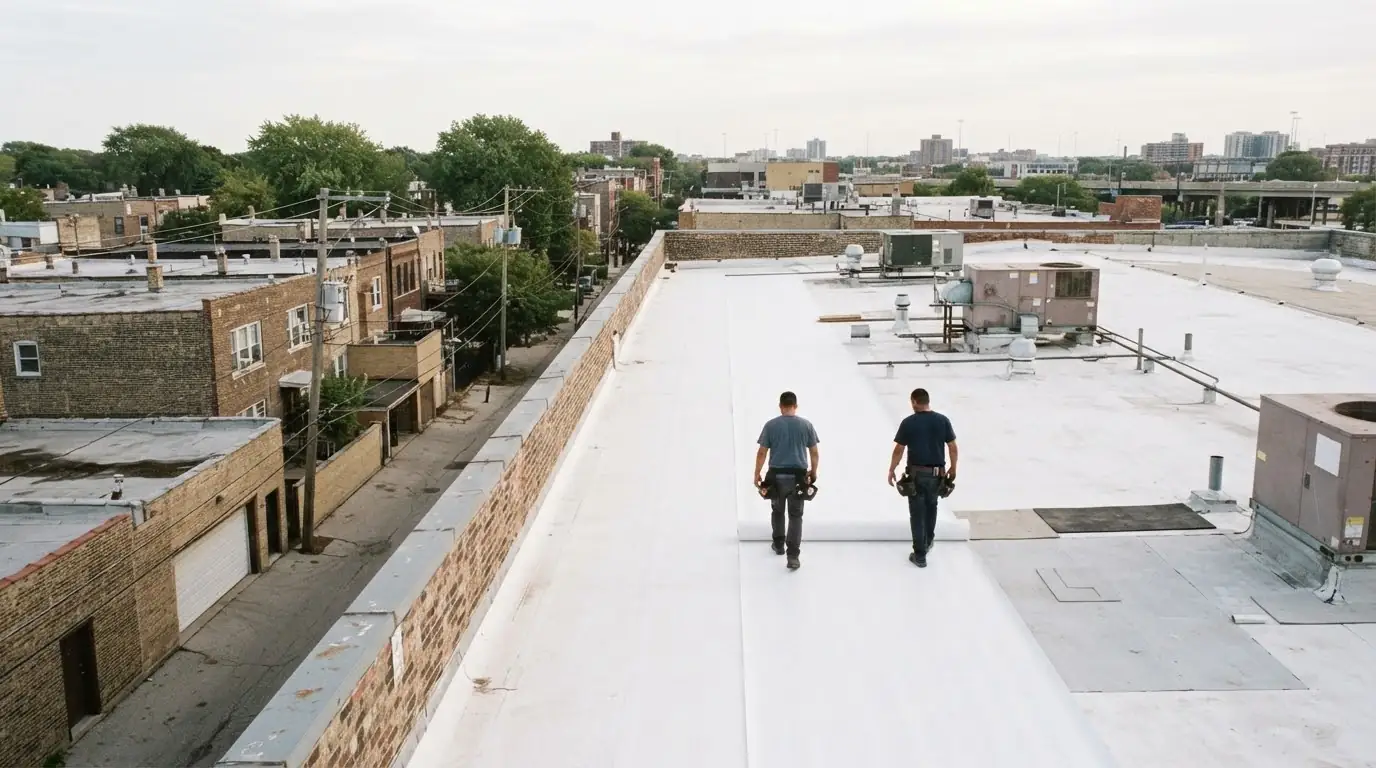
On single-ply systems the field of the membrane usually outlasts everything attached to it. What fails first: seams, perimeter terminations, and the flashing at every penetration and curb.
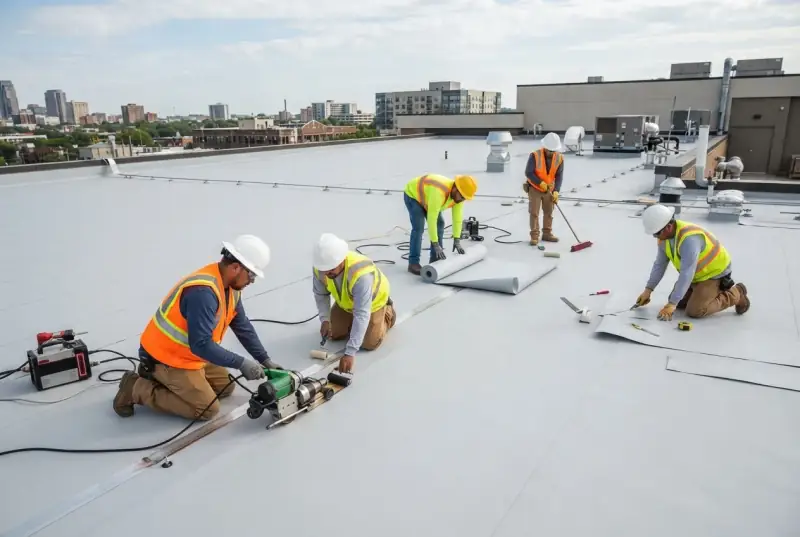
- Seams: on TPO these are heat-welded; on EPDM they are adhesive or tape. Both degrade at different rates and both should be inspected on a schedule rather than after a leak.
- Perimeter terminations: where the membrane turns up a parapet or terminates at an edge. Wind uplift concentrates at perimeters and corners, which is exactly where these are.
- Curb flashing: every rooftop unit, exhaust fan, skylight and pipe is a penetration with a flashing detail that can fail.
- Pitch pockets: if your roof has them, treat them as a scheduled maintenance item. They are sealant-dependent and sealant does not last.
Traffic damage is a real and underrated cause
On buildings with rooftop mechanical equipment, HVAC service technicians are on the roof several times a year. Dropped tools, dragged equipment, discarded fasteners and screws left on the membrane cause punctures that nobody reports because nobody noticed. On the industrial roofs in Elk Grove Village and along the Romeoville logistics corridor this is one of the more common sources of unexplained leaks.
The mitigation is straightforward: walkway pads on the routes to equipment, and a post-service roof check after major mechanical work.
A realistic schedule
- Spring: full inspection after the freeze-thaw season. Clear drains, inspect seams and terminations, document ponding, note winter damage.
- Fall: clear drains again, verify overflow provisions, address anything that should not go into winter open.
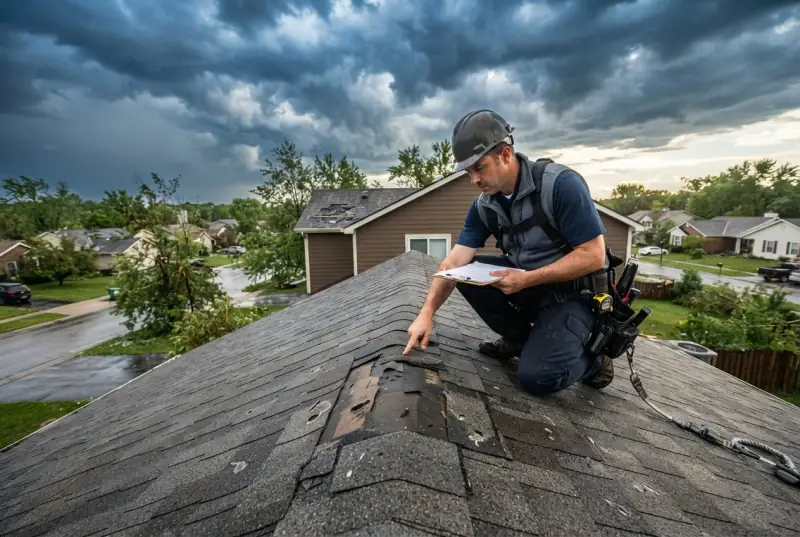
- After major storms: hail, high wind and heavy snow events all warrant a check, and hail in particular can compromise a membrane without leaking.
- After mechanical work: a short check following any significant rooftop equipment service.
- Quarterly: for roofs with heavy foot traffic, extensive equipment, or significant debris exposure.
When maintenance stops being the answer
Maintenance extends a roof; it does not resurrect one. Once insulation is saturated across meaningful areas, or the membrane is broadly degraded rather than failing at specific details, continued patching is spending money to defer. At that point the honest conversation is about replacement, and about correcting the drainage design at the same time, since that is usually what shortened the life of the last one.
This article is general guidance for Chicago-area property owners. Roofing problems are specific to the building, so nothing here substitutes for having your own roof looked at. Call (844) 596-0711 to get yours looked at.