
Roofing Across Hoffman Estates, East to West
Early ranches on the east side, complex custom rooflines west. Say which end you are on when you call.
Subdivision roofs at replacement age
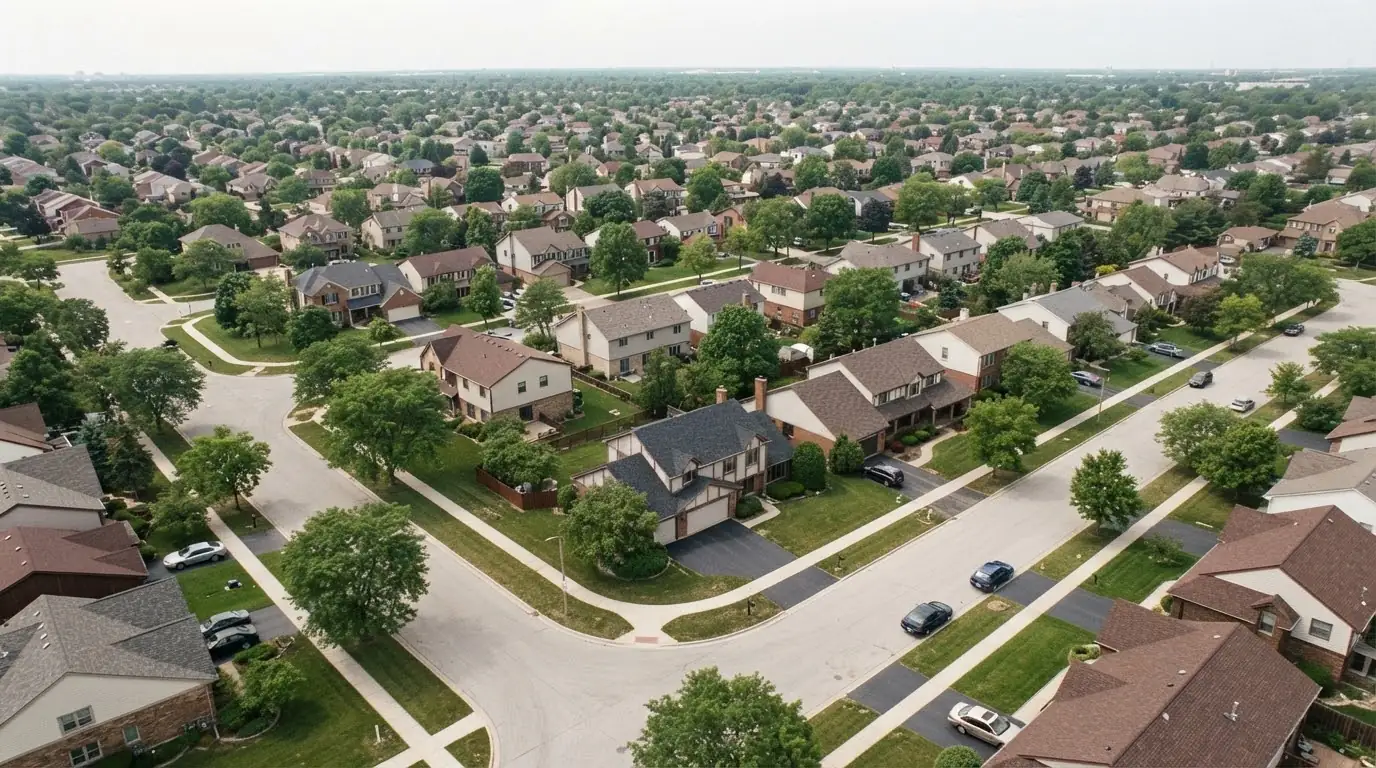
Hoffman Estates grew in distinct waves, and you can read them from the roofline. The original 1950s and 1960s sections in the east give way to 1970s and 1980s development in the middle of the village, and then to substantially larger 1990s and 2000s homes in the western sections. Layered on top is a significant corporate campus and commercial presence with large low-slope roof areas.
Eastern Hoffman Estates carries the earliest stock: ranches and split-levels on simple roof forms with the ventilation limitations typical of that era. The middle sections are dominated by 1970s and 1980s two-stories and quad-levels. The western growth areas brought larger homes with substantially more complex roofs: multiple gables, front-facing bump-outs, tray and vaulted ceilings that eliminate conventional attic space, and a lot more valley footage. That last point matters: a home with vaulted ceilings has no attic to ventilate conventionally, and the ventilation strategy has to be built into the roof assembly itself.
Services called in most here
What gets called in most around Barrington Square and Poplar Creek area, roughly in the order it comes up.
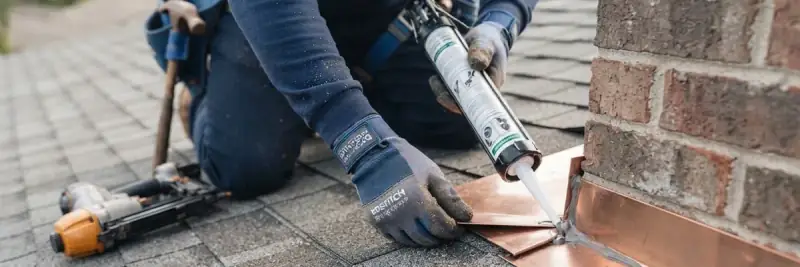
Storms and what they take off these roofs
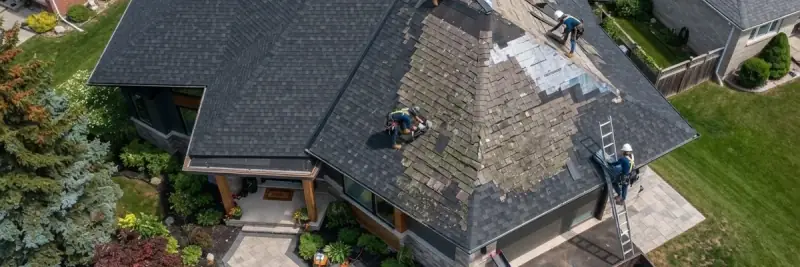
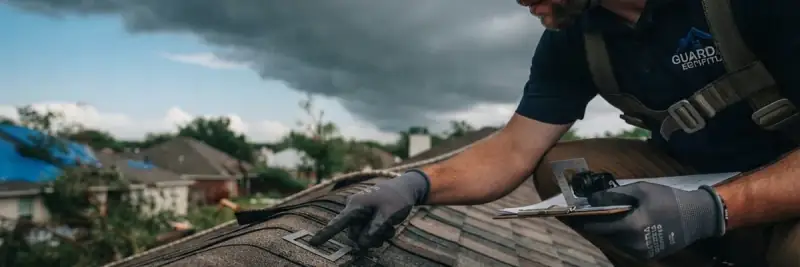
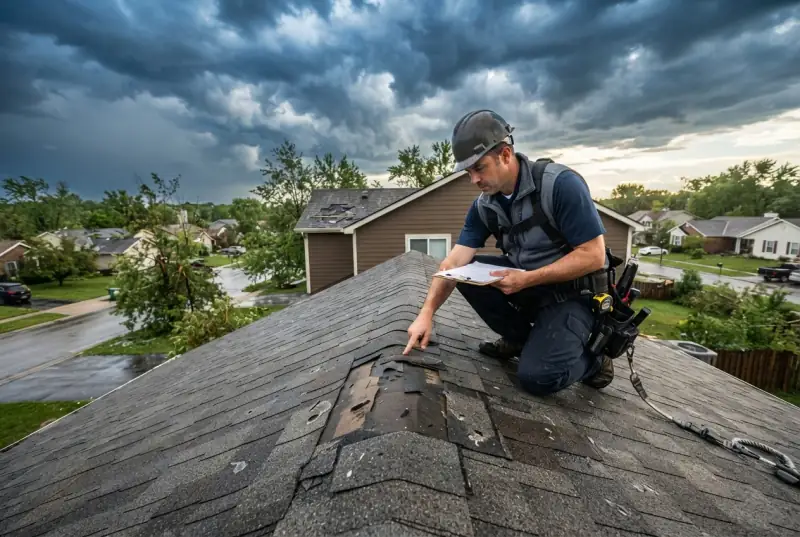
Open terrain on the western edge of the developed metro leaves these subdivisions exposed to full straight-line wind loading from summer storm complexes. The area has taken damaging hail in past seasons. Larger roofs with more valleys shed more concentrated water volume, which puts more demand on valley detailing and gutter sizing than the older, simpler roofs nearby.
Roofing questions from Hoffman Estates
Specific to Barrington Square, Poplar Creek area and the rest of Cook County, with everything else on the FAQ page.
Why do newer homes on the west side seem to have more roof problems?
They do not always, but they have more roof that can go wrong. Western Hoffman Estates homes carry multiple gables, bump-outs and valleys, and each is a place water collects or a joint that needs flashing. The simpler ranches on the east side have far fewer of those, so fewer places to leak.
My roof faces open fields. Is wind a real concern?
On the western edge of the metro, it is. Open terrain leaves subdivisions exposed to the full force of summer storm complexes, and wind lifts shingle edges and breaks their seal strips. Shingles installed to the manufacturer’s high-wind nailing pattern hold up much better, so ask about it on any replacement.
What is the seal strip on a shingle?
It is a band of adhesive on each shingle that bonds it to the one below once the sun warms it, and it is what stops the wind lifting the shingle. If wind breaks that bond, the shingle can lie flat again but no longer be attached. A roofer can spot unsealed shingles during an inspection.
Do the corporate campus roofs affect nearby homes?
Not directly. They are a separate commercial market with their own membrane roofs. The only overlap is the weather: the same storms hit both. If a big storm has damaged roofs across the campuses, it is a good reason to have your own home checked as well.
Getting a roofer out
Call with the address and a licensed, insured roofer working Hoffman Estates takes it from there: inspection, photographs, then the price in writing. Who does the work.
Retail and office roofs nearby
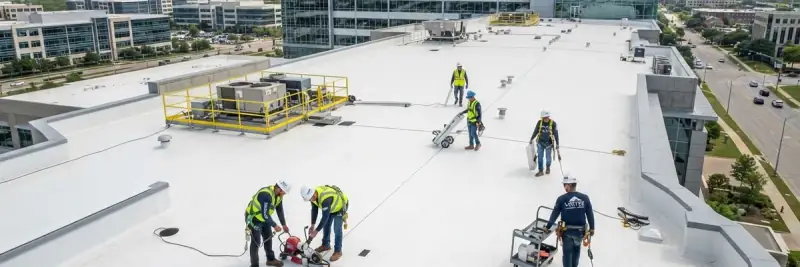
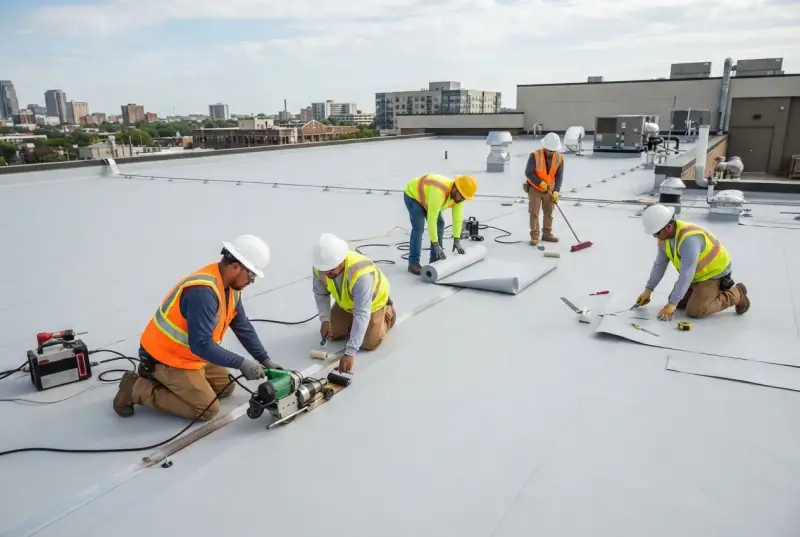
The Prairie Stone Business Park and the Barrington Road and Higgins Road corridors carry large corporate, retail and entertainment properties with substantial single-ply membrane roof areas and heavy mechanical loading.
Nearby communities
Schaumburg, Palatine, Elgin, Carol Stream, Barrington. Each has its own page covering local housing stock.
Talk to a roofer in Hoffman Estates
Give the address and what you are seeing, and a roofer who already works Barrington Square and knows the stock takes it from there.