
Lake in the Hills Roof Replacement
Coherent 1990s and 2000s subdivisions now in their first replacement cycle, often street by street.
Subdivision roofs at replacement age
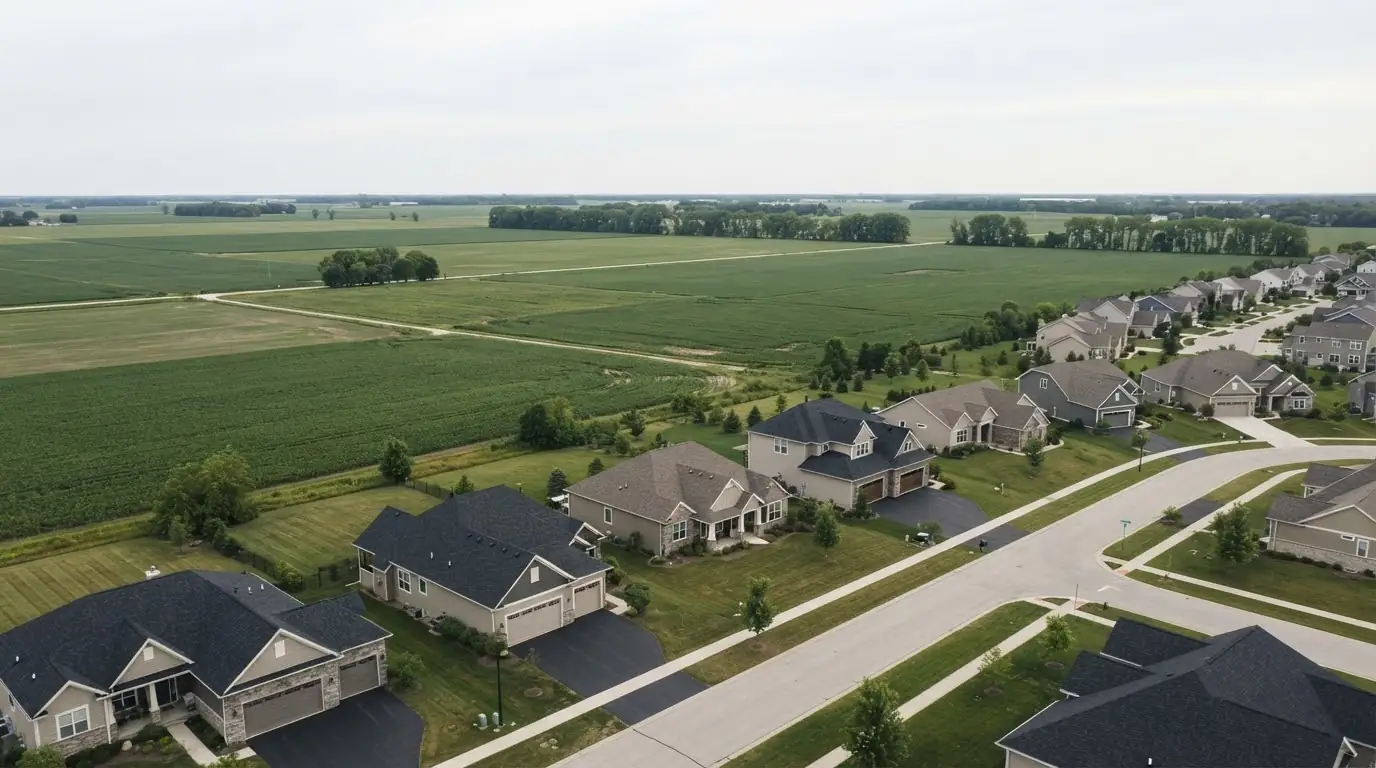
Lake in the Hills grew rapidly through the 1990s and 2000s, and the great majority of its housing dates from that period. The subdivisions were built in defined phases on rolling terrain, which means roofs across whole neighborhoods reach end of life together: first replacement demand here comes in concentrated waves rather than a steady trickle.
The rolling ground here is the defining feature. A large share of these houses were sited on grade changes with walkout lower levels, which puts roof sections at two or three different heights on the same structure and creates the transitions between them, and those transitions, not the field of the roof, are where nearly all the water problems start. Sunroom and deck-cover roofs tied into a main roof at an awkward height are common for the same reason. The housing is otherwise 1990s and 2000s subdivision construction with multi-gable elevations, built in defined phases around Woods Creek and the former airport property, with earlier ranches and split-levels in the first sections.
Services called in most here
What gets called in most around Woods Creek area and Boulder Ridge area, roughly in the order it comes up.
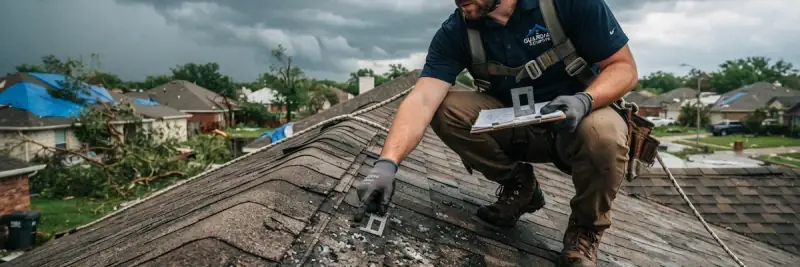
Storms and what they take off these roofs
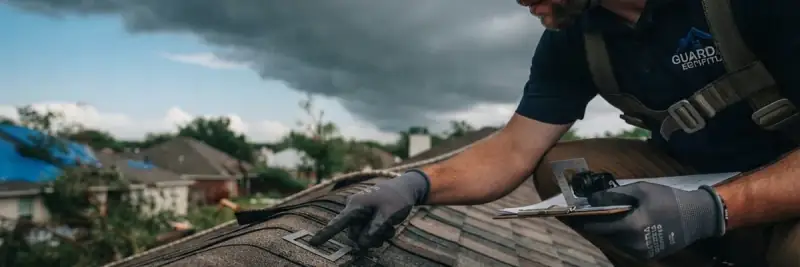
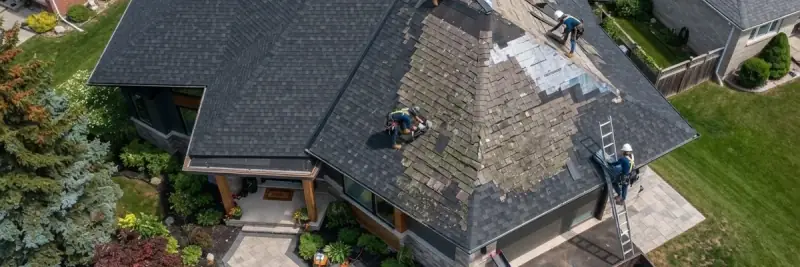
Exposure out here is unobstructed and straight-line wind is a serious recurring factor, but the terrain adds its own problem. Water and ice shedding from an upper roof section onto a lower one concentrates load and meltwater exactly at the junction, and on a walkout house that lower section is usually over living space rather than a garage. Winters are more severe than closer to the lake, which makes ice-and-water shield at those transitions load-bearing rather than a specification formality.
Roofing questions from Lake in the Hills
Specific to Woods Creek area, Boulder Ridge area and the rest of McHenry County, with everything else on the FAQ page.
My home has roofs at three different heights. Why does that matter?
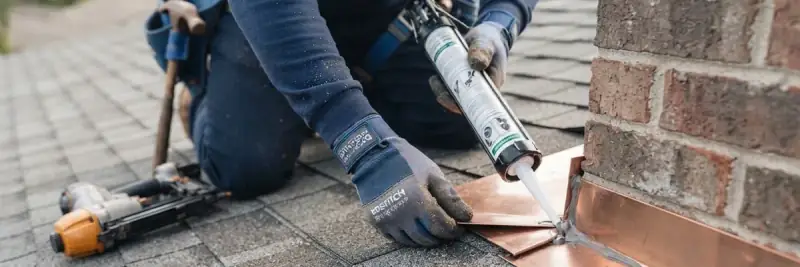
Homes built on the rolling ground here, often with walkout lower levels, carry roof sections at two or three heights. Each level meets a wall above it, and each meeting is a transition that needs proper flashing. Those transitions are where these roofs most often leak.
Why does water from my upper roof damage the lower roof?
An upper roof sheds onto the lower one in a concentrated stream, usually from a downspout or a valley, wearing that one spot far faster than the rest. A downspout extension or a diverter that spreads the water out fixes it. It is cheap to sort out before damage starts.
What happens to ice where two roof levels meet?
Snow and ice from the upper roof land and build up on the lower roof right where it meets the wall, which is already a weak spot. Ice and water shield laid along that transition, and proper flashing, stop the meltwater from getting in.
Does a walkout basement affect the roof?
Indirectly. Walkout homes are sited on a grade change, which is what puts the roof sections at different heights. That layout means more transitions and more places where one roof drains onto another, so the transitions deserve extra attention during any inspection.
Getting a roofer out
Call with the address and a licensed, insured roofer working Lake in the Hills takes it from there: inspection, photographs, then the price in writing. Who does the work.
Retail and office roofs nearby
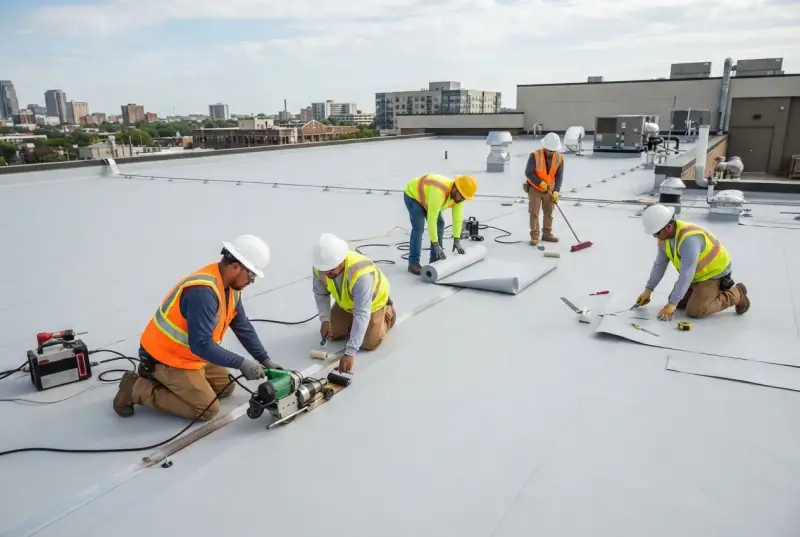
Along Randall Road and Algonquin Road, the shops, restaurants and small offices sit mostly under low-slope membrane.
Nearby communities
Algonquin, Crystal Lake, Huntley, Cary, McHenry. Each has its own page covering local housing stock.
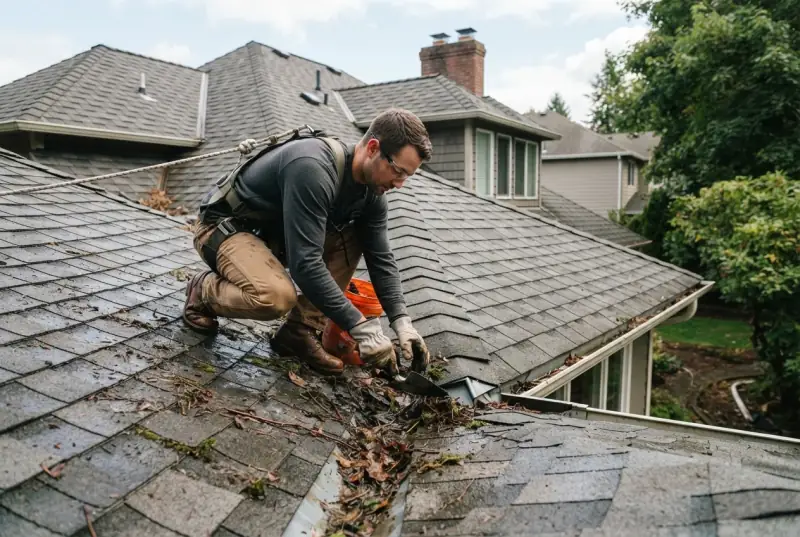
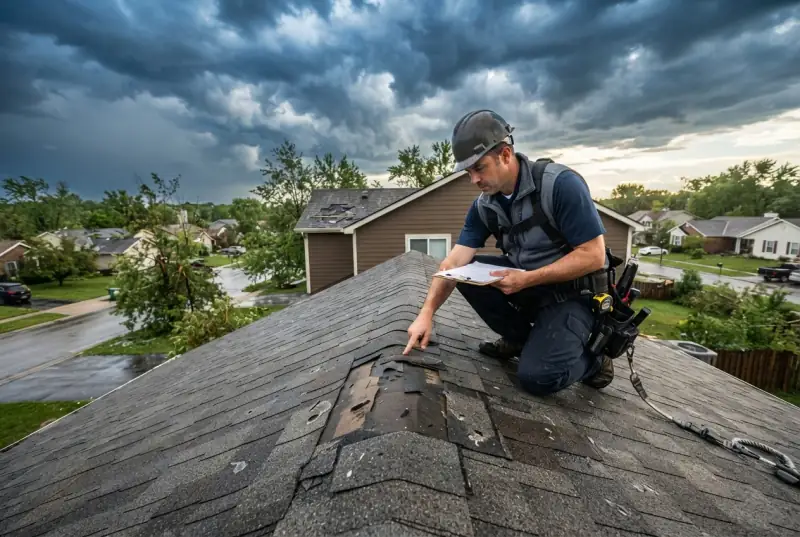
Request a roof estimate in Lake in the Hills
One call, and a licensed and insured roofer covering Lake in the Hills gets back to you. Estimates are free and carry no obligation.