
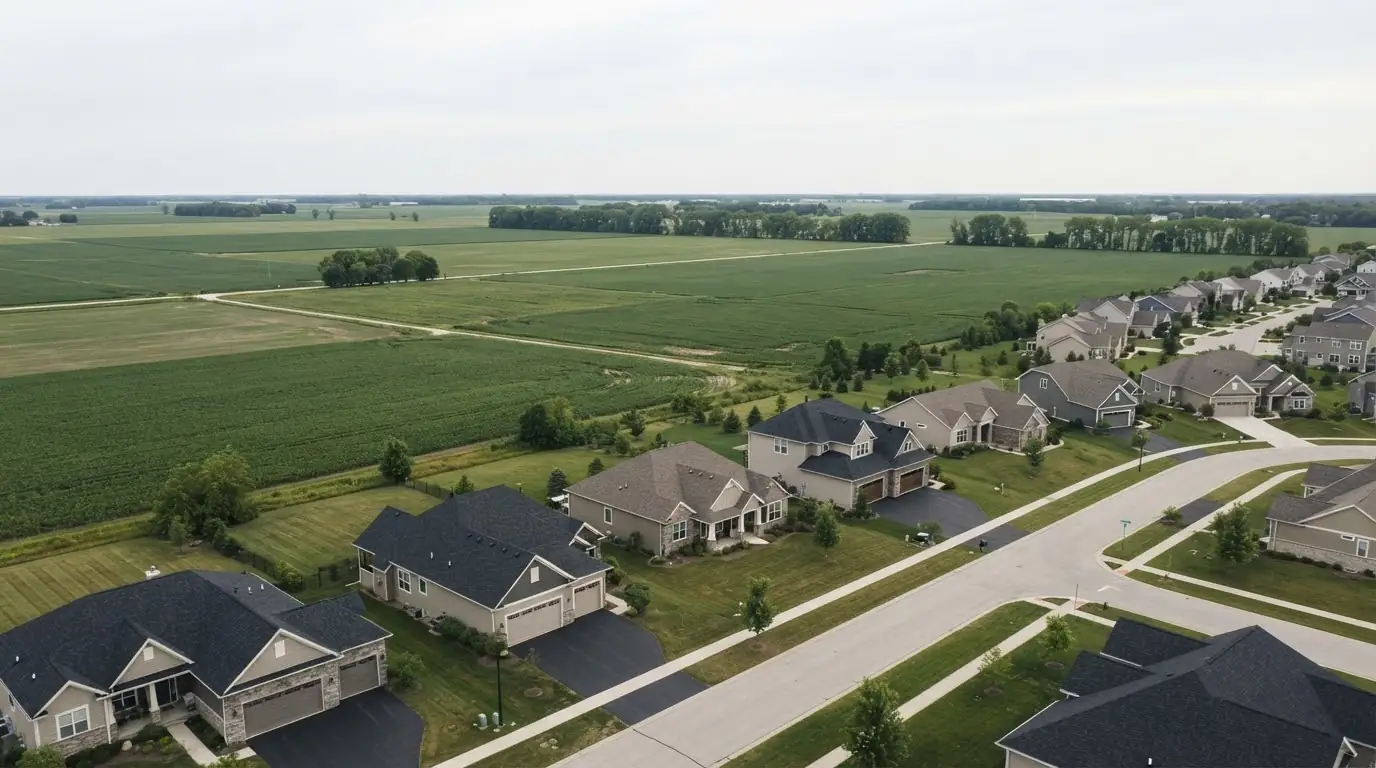
Roofing in Cary, Wooded and Rolling Terrain
Older village housing and newer subdivisions under heavy tree cover, which keeps debris in the valleys year-round.
Trees, debris and shade on these roofs
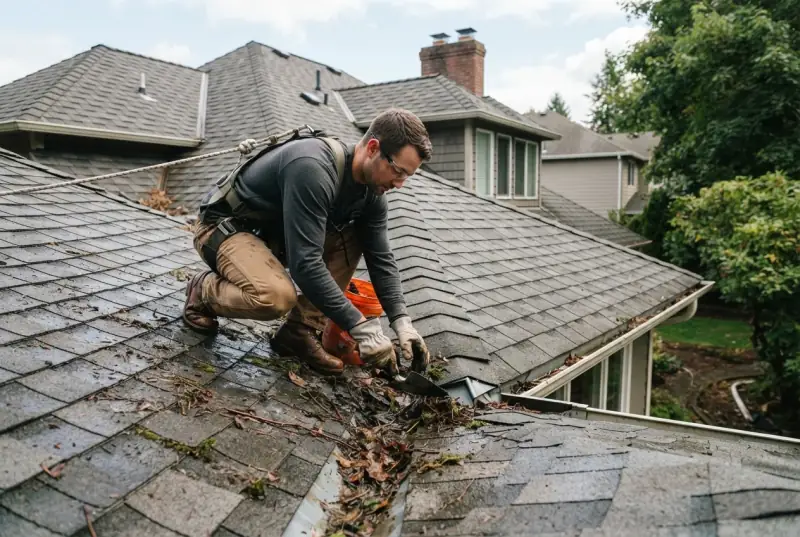
Heavy tree cover across much of the village drives constant debris accumulation in valleys and gutters and creates real limb-impact risk during the high-wind events that reach this part of the county with little obstruction. Winters bite harder this far from the lake, with sharper freeze-thaw swings, and a valley packed with leaves in that weather is a near-certain ice leak.
The houses under the canopy
Cary sits on rolling, wooded terrain in southeastern McHenry County, with an older village center and substantial newer subdivision development around it. The tree cover across much of the village is heavy, which makes debris management and limb exposure meaningful factors, and the rolling ground means more properties than usual have multi-level roof configurations.
The older village sections carry early- and mid-20th century frame homes on steeper, simpler roof forms, some on wooded, sloping lots. Mid-century development added ranches and split-levels. The newer subdivisions bring 1980s through 2000s two-story homes with multi-gable elevations, projecting garages and more valley footage, and the later construction frequently includes vaulted interior volumes that eliminate conventional attic ventilation in parts of the house. Wooded lots throughout mean shaded north slopes that hold moisture and grow algae, plus continuous organic loading in valleys and gutters.
Services called in most here
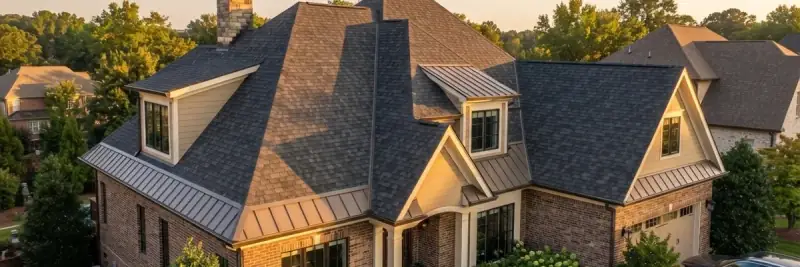
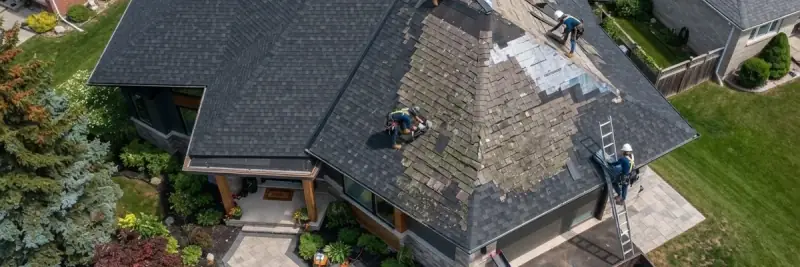
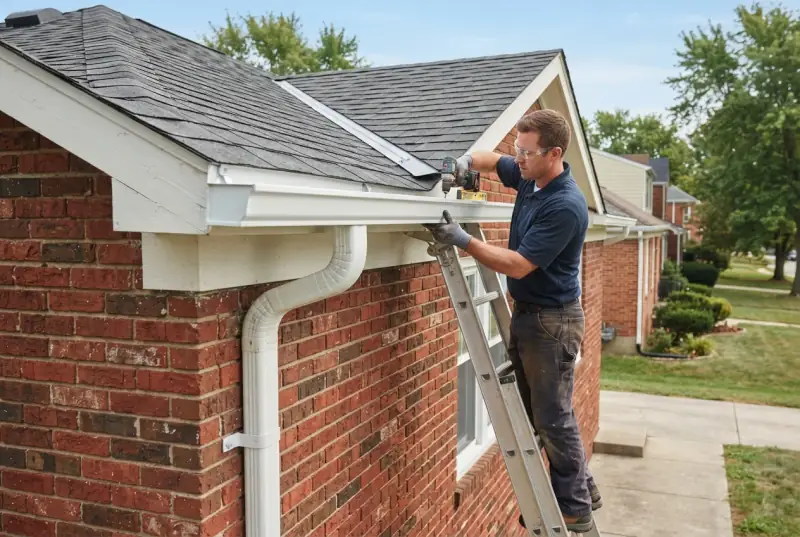
What gets called in most around Fox River border area and Trout Valley border, roughly in the order it comes up.

Roofing questions from Cary
Specific to Fox River border area, Trout Valley border and the rest of McHenry County, with everything else on the FAQ page.
My house sits on a sloping wooded lot. Does that affect the roof?
It does. Trees bring debris, shade and the risk of falling limbs, and a sloping lot changes where water runs once it leaves the roof. Keep the valleys and gutters clear, and make sure the downspouts send water downhill, away from the foundation.
Should I trim my trees before the roof is replaced?
Yes. Trim overhanging limbs first, so the crew has clear access and the new roof is not scraped or hit by branches straight away. It also cuts the debris that would otherwise start collecting in the valleys of a brand-new roof.
Are the older frame homes in Cary’s village harder to roof?
Different more than harder. They tend to have steeper but simpler roofs, and sometimes older decking that needs checking once the shingles come off. The work is straightforward once the roofer knows what is underneath. Expect the estimate to carry an allowance for any decking that turns out to be soft.
How do I protect a new roof from falling branches?
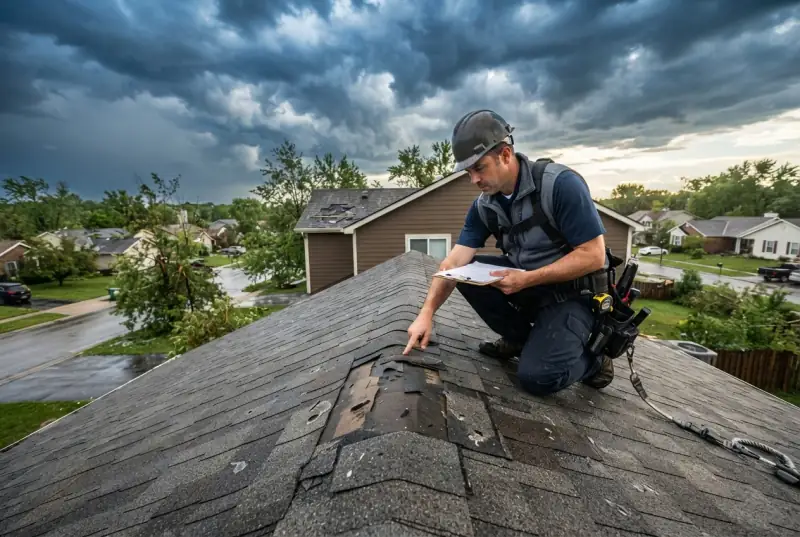
Keep limbs trimmed back from the roof and have an arborist look at any trees that seem weak. After a storm, check for broken shingles and debris. If a heavy branch has landed on the roof, have it inspected even if nothing is leaking yet.
Getting a roofer out
Call with the address and a licensed, insured roofer working Cary takes it from there: inspection, photographs, then the price in writing. Who does the work.
Office and commercial roofs
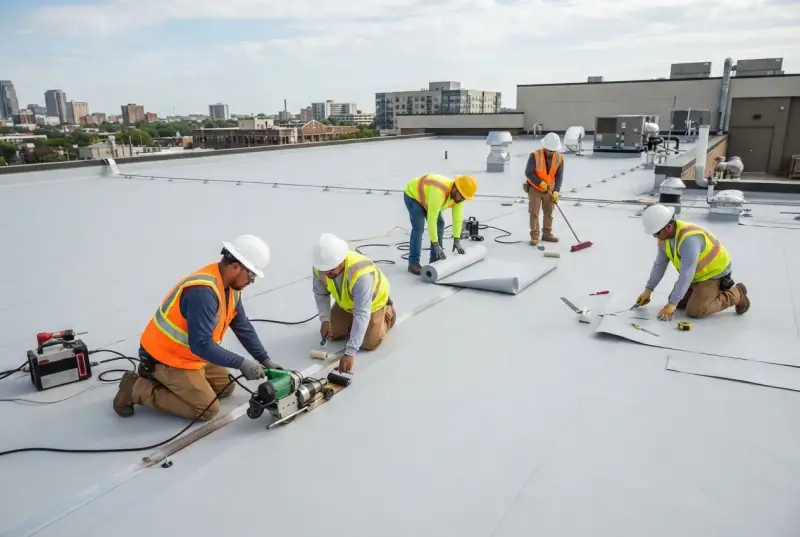
Downtown Cary and the Route 14 corridor carry retail, restaurant and small office property, with light industrial near the rail line, mostly on low-slope roofs.
Nearby communities
Crystal Lake, Algonquin, Barrington, McHenry, Woodstock. Each has its own page covering local housing stock.
Talk to a roofer in Cary
Give the address and what you are seeing, and a roofer who already works Fox River border area and knows the stock takes it from there.