
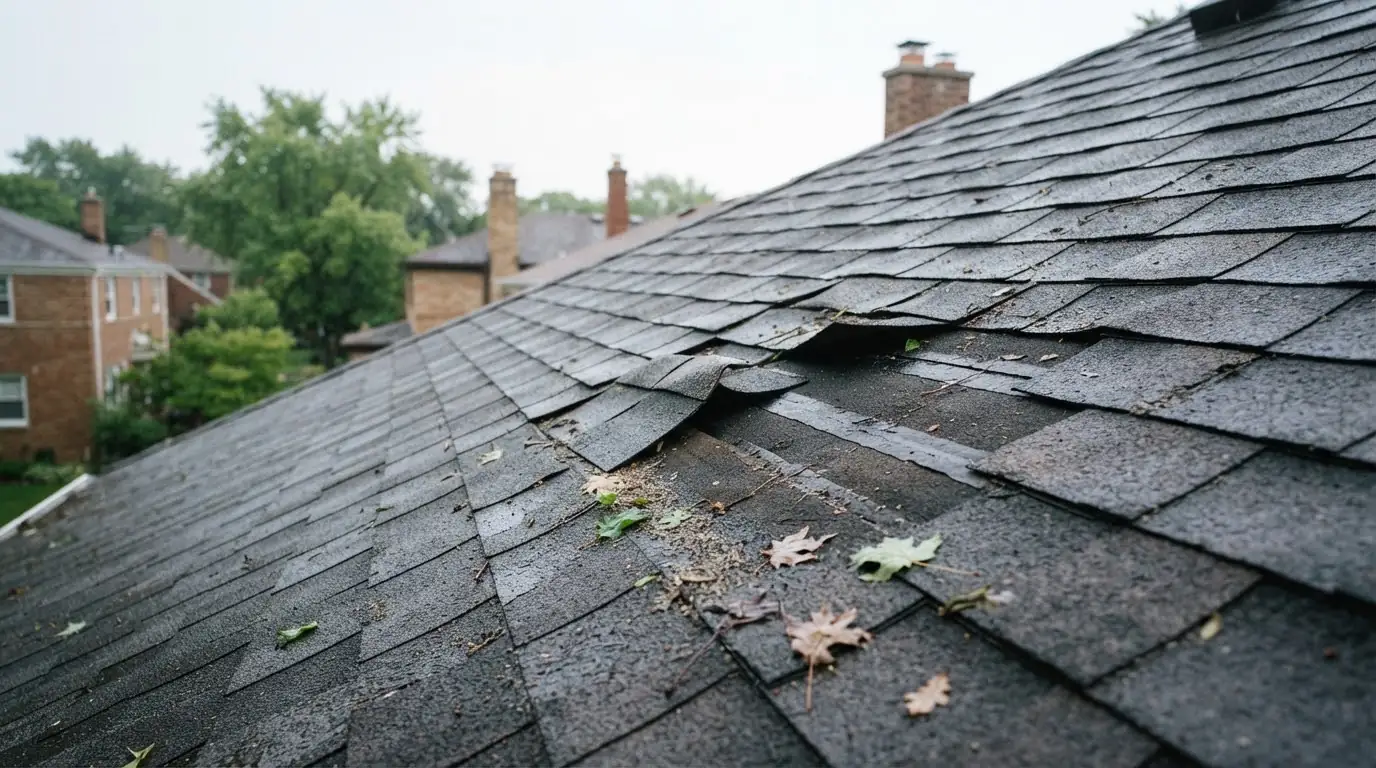
Storm Damage Roof Repair in Naperville
Hail bruising hides on a valley-heavy roof until it fails in patches. Get it photographed before you open a claim.
Before you call
- The date the storm came through
- Any damage visible from the ground: dented gutters, missing shingles
- Your insurer, and whether you have already opened a claim
- Any active leaks inside
What storm damage roofing usually involves in Naperville
DuPage County takes recurring high-wind thunderstorm complexes, and Naperville subdivision roofs show it at the ridges and rake edges first. Hail affects the area periodically and is the damage type most often missed here.
Bruised roofs that do not leak
Hail damage on a 2001 house still sheds water perfectly. It gives no symptom until the roof starts failing in patches years later, by which point the storm date is long gone.
Slope-by-slope inspection
Hail is directional. It is routine to find one elevation significantly damaged and another untouched on the same house, which a look from the street will never show.
Documentation regardless of a claim
Dated photographs and measurements establish the condition of the roof on a known date. That is worth having whether or not you decide to file anything.
More on Naperville
Historic downtown housing alongside decades of large-scale south-side subdivision growth.
Roofing in Naperville, ILMore on storm damage roofing
Full Storm Damage Roofing details, process and FAQsOther roofing services in Naperville
Related services
Where most people reading this are
After a hail or wind storm moves through DuPage, a lot of Naperville roofs look fine from the yard and are not. If a storm has just come through and neighbours are getting roofers out, the useful thing is to get your own roof looked at and photographed before you decide anything about a claim.
What the roofer does, in order
Inspect after the storm
The roofer looks for hail bruising, cracked or creased shingles, lifted tabs and damaged vents, gutters and soft metals.
Document
Photos of the damage, with test squares marked where hail hits are counted. That record is useful whether or not you file.
Talk through the claim
If there is damage worth a claim, you decide whether to file. Some roofers will meet the adjuster on site.
Temporary protection if needed
Any active leak gets covered while the claim or estimate is sorted.
Repair or replace
Work done to the scope agreed, with the estimate itemised.
What moves the price
These are what decide the number on the estimate. Ask for each one to be on its own line.
- Extent of damage
- A few damaged shingles versus a whole roof of hail bruising are very different jobs.
- Roof size and complexity
- The valley-heavy roofs common here take more labour to replace.
- What insurance covers
- If a claim is approved, your out-of-pocket is often your deductible plus anything not covered. Check your own policy.
- Collateral damage
- Gutters, vents, siding and screens damaged in the same storm add to the scope.
What insurance usually covers
How storm claims generally work. Your own policy decides what applies to you, so check it or ask your agent.
- Most homeowner policies cover sudden storm damage like hail and wind. They generally do not cover wear and tear or a roof that was failing before the storm. Your own policy decides what applies, so read it or ask your agent.
- There is usually a deadline for filing after a storm. Check yours, and do not wait for a leak to appear before you look, because hail damage often does not leak for months.
- An adjuster from the insurer inspects the roof. Having your own roofer’s photos and, where possible, the roofer present helps make sure nothing is missed.
- Your deductible comes out of any payout. Be wary of anyone who offers to cover or waive your deductible: in many places that is insurance fraud, and it puts you at risk.
Storm Damage Roofing questions from Naperville
How do I know if hail damaged my roof?
Often you cannot tell from the ground. Hail leaves dark bruises where granules are knocked off and the mat is cracked underneath. Dented gutters, vents and downspouts are a good sign the roof took hits too. A roofer can check and photograph it so you have evidence.
Should I call my insurer or a roofer first?
Getting the roof inspected first lets you see whether there is damage worth claiming before you open a claim. Some people prefer to call the insurer straight away. Either way, check your policy’s deadline for reporting and do not leave it too long.
My roof does not leak. Why would I file a claim?
Because hail damage often does not leak right away. A bruised shingle has a cracked mat that fails over time, sometimes years later, and by then a claim may be out of time. If there is real damage, get it documented while the cause is still clear.
What should I do if a roofer knocks on my door after a storm?
Be cautious. Storm chasers follow hail through an area, do fast work and leave. Ask for local references and an address, check licensing and insurance, and never sign anything on the spot. Get your own inspection and compare. A roofer who will still be around when a warranty question comes up is worth more than a fast one.
Will a storm claim raise my premium?
It depends on your insurer and policy. A weather claim affecting a whole area is often treated differently to a claim caused by neglect, but that varies. Ask your agent directly before you file if it is a concern. Get the answer in writing if you can.
Talk to a Naperville roofer
Give us the address and what the roof is doing. Downtown Naperville through to 60540, and the estimate costs nothing.