
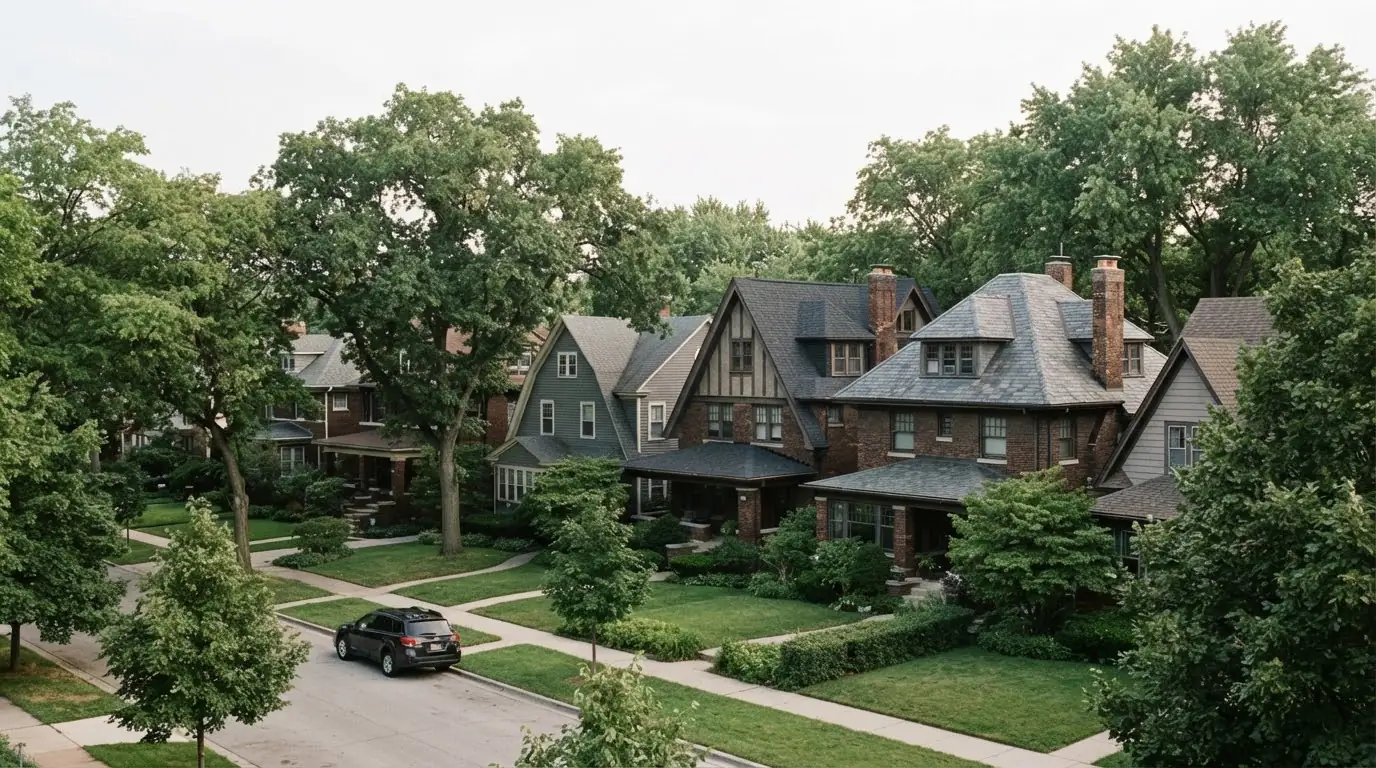
Roofing in Wheaton, IL, Pre-War and Later
Older housing under a mature canopy, plus institutional property with flat roofs. Both need a different eye.
Older roofs and what keeps them watertight
Wheaton is an older, established DuPage community with a large stock of pre-war and early postwar housing, substantial mature tree cover, and a significant institutional presence including the college and the county complex. The combination of older, steeper roofs and heavy canopy makes maintenance and debris management a bigger part of the picture here than in the newer communities to the south and west.
The neighborhoods around downtown and the historic districts carry Victorian, foursquare, Craftsman and Colonial Revival homes from the 1890s through the 1930s, with steep pitches, dormers, and complex valley and chimney flashing. Postwar development added ranches, Cape Cods and split-levels through the 1950s and 1960s. Later subdivision growth on the edges brought larger two-stories with more contemporary roof geometry. Homes with converted or finished attics are common in the older stock and carry the ventilation problems that come with that conversion when it was done without reworking the intake and exhaust.
What the weather does to an older roof
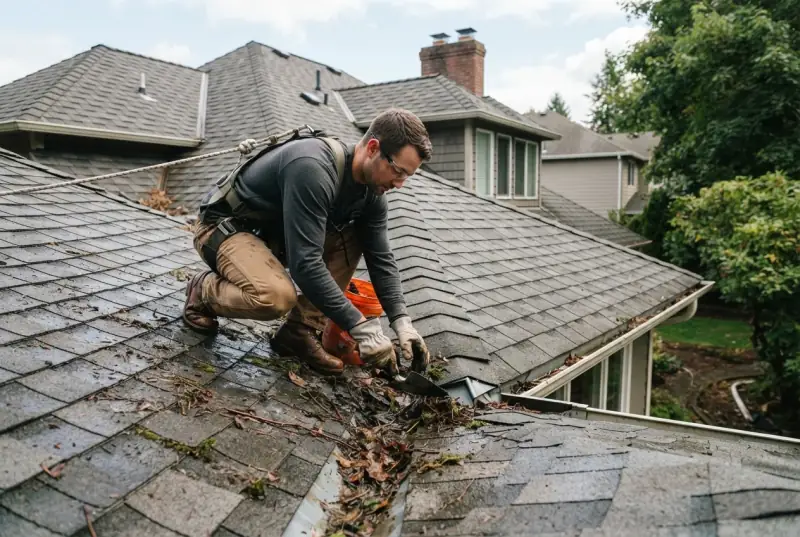
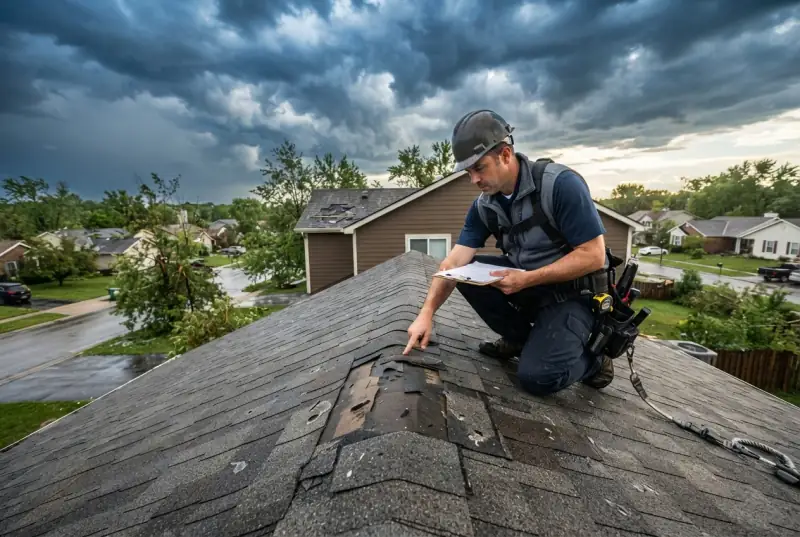
Heavy mature canopy over most of the older neighborhoods loads valleys and gutters with organic debris and shades north-facing slopes into holding moisture. DuPage County takes recurring high-wind thunderstorm complexes in spring and summer, and limb impact under this much tree cover is a real cause of storm damage calls here.
What each service runs into in Wheaton
Roof Repair
Wheaton repairs centre on steep older roofs with dormers, complex valleys and masonry chimneys that need counterflashing cut into aging mortar. The heavy canopy over these neighborhoods keeps valleys loaded year-round.
Dormer flashing on the pre-war stock
Each dormer adds two valleys and a set of wall transitions. On a house with three of them, the flashing is most of the roof risk.
Converted attics
Finishing the attic removed the ventilation path on a lot of these homes. The result is ice damming that repeated surface repairs cannot resolve.
Limb impact under the canopy
With mature trees over the roofs, storm damage here frequently means a branch through the deck rather than lifted shingles, and the repair scope changes accordingly.
Roof Replacement
Wheaton replacements on the pre-war stock bring steep pitches, dormers, complex valleys and masonry chimneys where the counterflashing has to be cut into the mortar rather than surface-sealed.
Converted attics change the scope
Finishing the attic removed the ventilation path on a lot of these homes. If the replacement does not resolve that, the new roof inherits the old roof ice damming.
Dormers multiply the flashing
Each one adds valleys and wall transitions. On a house with several, the flashing work is a larger share of the project than the shingle installation.
Canopy protection during the work
With mature trees over most of these roofs, staging, tarping and protecting landscaping take real planning rather than being an afterthought.
Services called in most here
What gets called in most around Cantigny area and Northside Park area, roughly in the order it comes up.
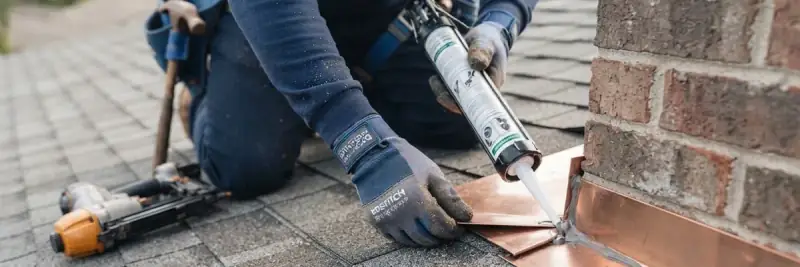
Roof Repair
Wheaton repairs centre on steep older roofs with dormers, complex valleys and masonry chimneys that need counterflashing cut into aging mortar.
Learn more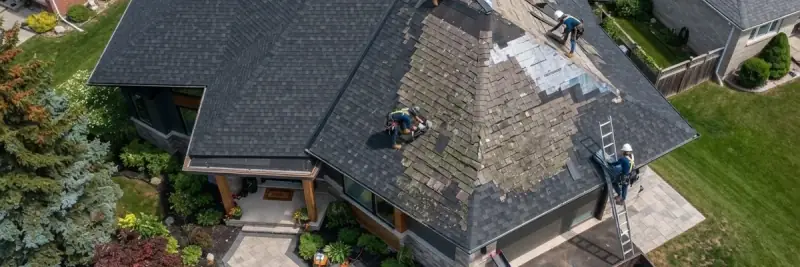
Roof Replacement
Wheaton replacements on the pre-war stock bring steep pitches, dormers, complex valleys and masonry chimneys where the counterflashing has to be cut into the mortar rather than surface-sealed.
Learn more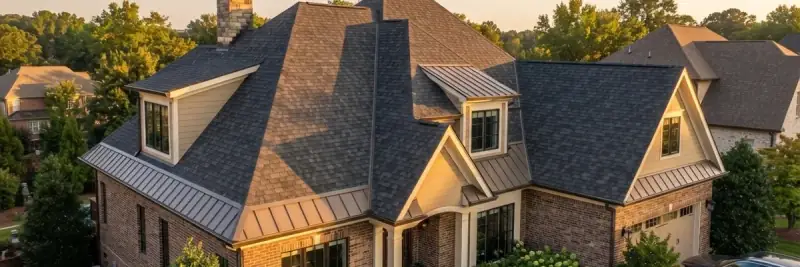
Roof Maintenance
Learn more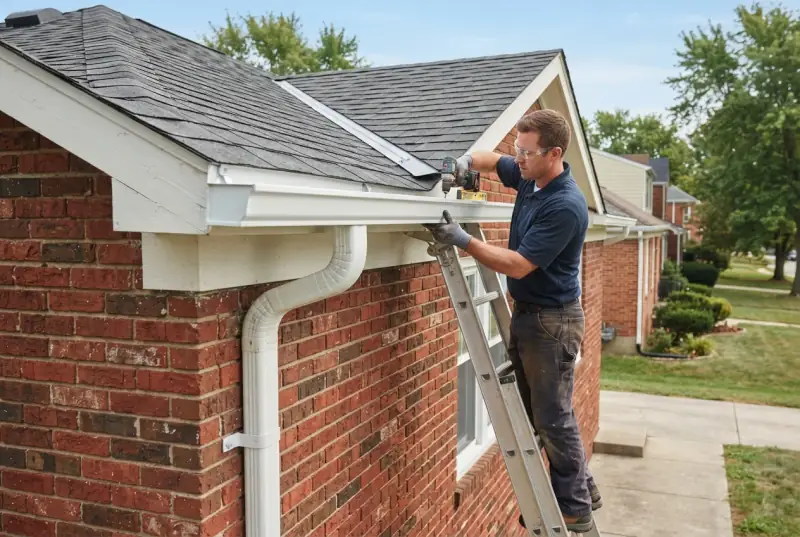
Gutter Services
Learn moreOlder commercial buildings
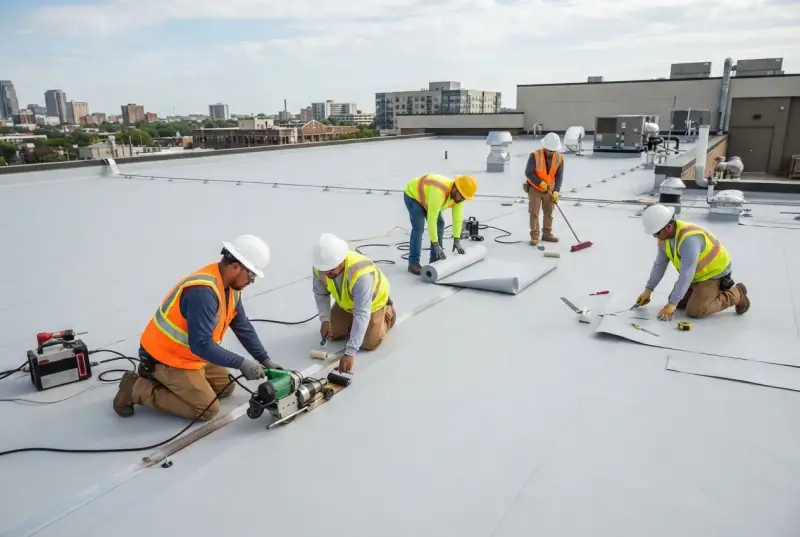
Downtown Wheaton, the county government complex area and the Roosevelt Road corridor bring mixed-use, office and institutional property on low-slope systems.
Getting a roofer out
Call with the address and a licensed, insured roofer working Wheaton takes it from there: inspection, photographs, then the price in writing. Who does the work.
Roofing questions from Wheaton
Specific to Cantigny area, Northside Park area and the rest of DuPage County, with everything else on the FAQ page.
My Wheaton Victorian has a lot of dormers. Why do they leak?
Each dormer has two side walls of step flashing plus an apron across its front, so one dormer can mean dozens of joints. Several dormers multiply that. On an older roof, any of those joints can open up, and it is usually the flashing rather than the shingles that has failed.
What is a cricket behind a chimney?
A small peaked section built on the uphill side of a wide chimney to split the water and send it around the chimney instead of letting it pool against the back. Many older chimneys in Wheaton were built without one. If the back of your chimney leaks, a missing cricket is worth asking about.
Do church and school roofs in Wheaton need a commercial roofer?
Usually, yes. Institutional buildings often have low-slope membrane roofs, sometimes alongside steep slate or tile sections, which is a different trade from house roofing. Ask any roofer you are considering whether they have worked on that type of building before, and to show you an example.
Does shade from big trees shorten a roof’s life?
It can. Shaded slopes stay damp longer after rain, grow moss and algae, and dry out slowly in spring. Trees also drop debris that holds water in the valleys. The fix is not removing the trees but keeping the valleys and gutters clear and trimming any limbs that touch the roof.
Nearby communities
Glen Ellyn, Carol Stream, Lombard, Naperville, West Chicago. Each has its own page covering local housing stock.
Book a roof inspection in Wheaton
Call with the address. Around Cantigny area it is usually roof repair, but any roof question is worth the call.