
Roofing in Lombard, Postwar Tracts and Core
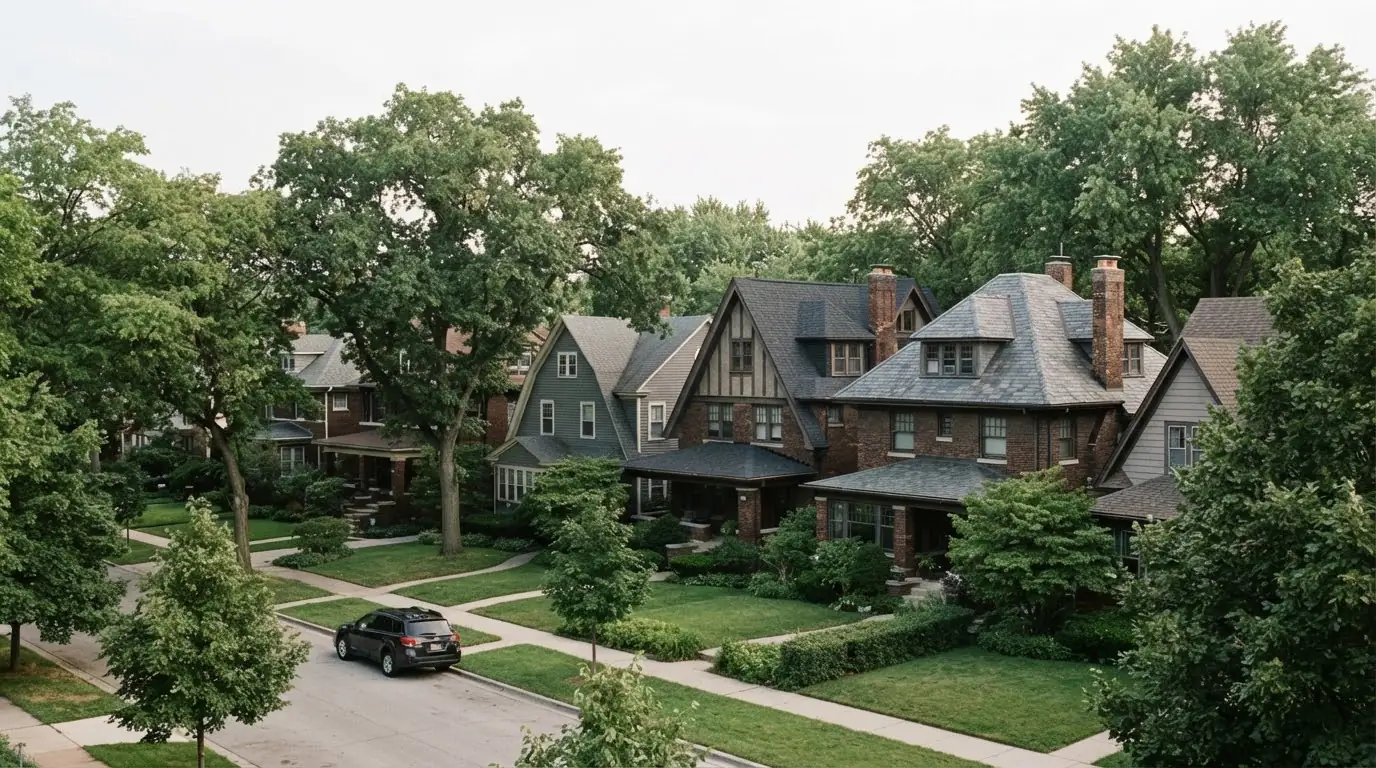
Consistent postwar housing with a walkable older centre and a commercial strip behind it.
Postwar houses and their weak points
Lombard is a settled DuPage village built mostly between the 1920s and the 1970s, with an older walkable core near the Metra station and larger postwar tracts spreading out from it. The village also carries a substantial commercial corridor along Butterfield and Roosevelt Roads, which adds a steady base of low-slope work alongside the residential.
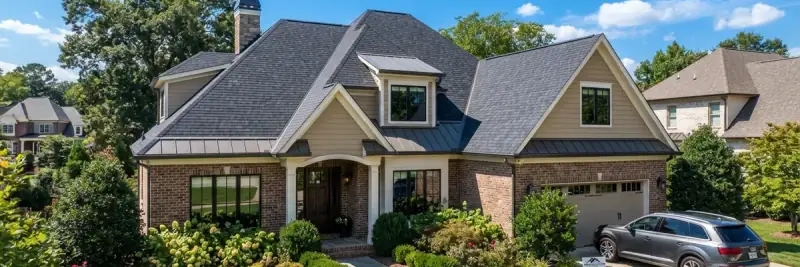
The core neighborhoods carry 1920s and 1930s bungalows, foursquares and Colonial Revivals with moderately steep roofs and dormers. Postwar development brought ranches, Cape Cods, split-levels and Georgians through the 1950s and 1960s, which make up the bulk of the housing. Split-level roof-to-wall transitions and Cape Cod knee-wall ventilation are the two recurring technical issues on this stock. Later construction and infill added two-stories with more complex forms, and there is meaningful townhome and condominium development near the commercial corridors, generally handled through associations.
Services called in most here
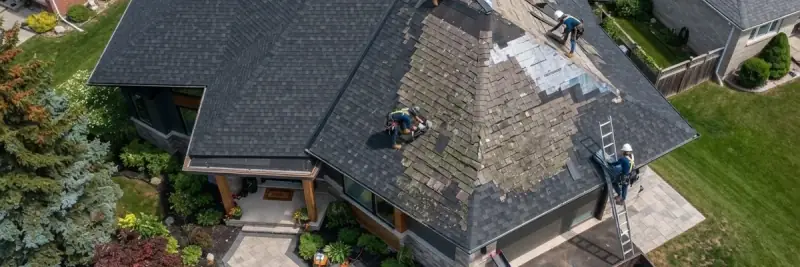
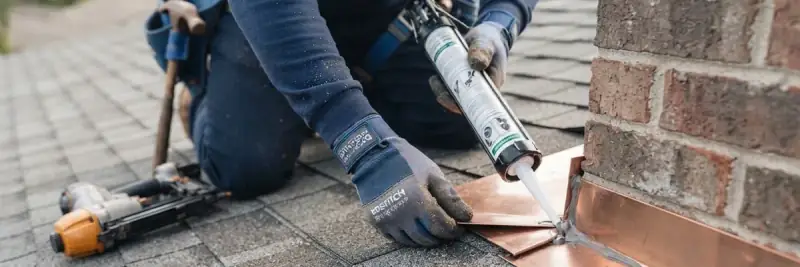
What gets called in most around Lilacia Park area and Butterfield corridor, roughly in the order it comes up.
Weather, and the attic underneath it
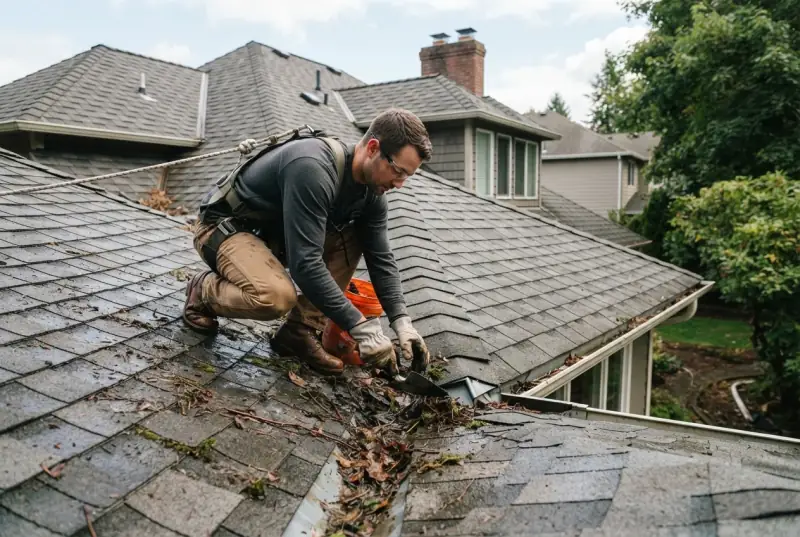
Standard DuPage exposure: recurring severe thunderstorm complexes with straight-line wind and periodic hail, and full winter freeze-thaw cycling. The older, less-ventilated stock in the core neighborhoods sees the most ice damming, and the mature trees in those same neighborhoods keep valleys and gutters loaded through fall.
Roofing questions from Lombard
Specific to Lilacia Park area, Butterfield corridor and the rest of DuPage County, with everything else on the FAQ page.
How can I tell whether my roof is worn out or just dirty?
Dark streaks running down the roof are usually algae, which is mostly cosmetic. A worn roof shows different signs: bare patches where granules have gone, shingles curling or cracking, and granules piling up in the gutters. A roofer can tell the two apart quickly, so you do not replace a roof that only needs cleaning.
Is a Cape Cod harder to roof than a ranch?
Somewhat. A Cape Cod has a steeper pitch and dormers, which means more flashing and more setup to work safely, while a ranch is low and simple. The dormer flashing is the part to watch on a Cape Cod, because that is where these homes most often leak as they age.
What does straight-line wind do that a tornado does not?
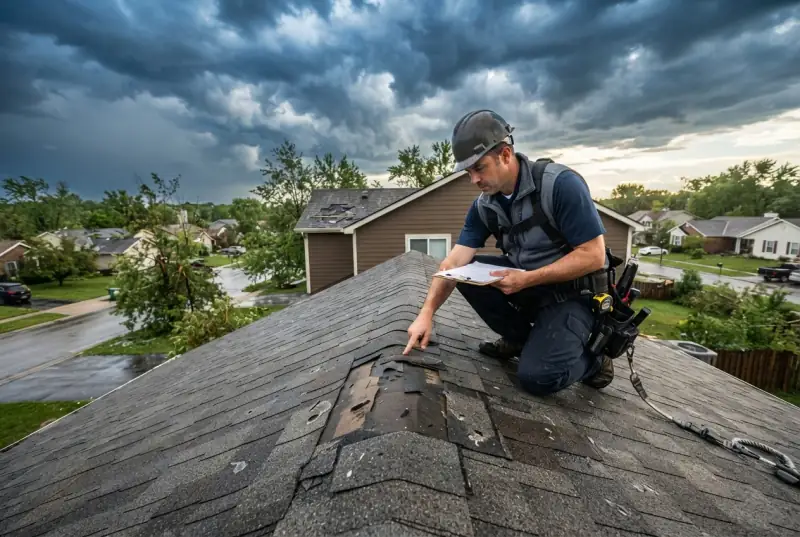
Straight-line wind from a summer storm complex sweeps across a wide area with sustained gusts, so it can lift shingles across whole neighbourhoods at once. It is far more common here than a tornado. It tends to take ridge caps, rake edges and the first rows above the gutter.
Should I repair or replace a roof that is about 18 years old?
It depends on condition, not age alone. If the roof is sound and the problem is in one spot, repair it. If shingles are worn across whole slopes and leaks keep appearing in new places, put the money toward replacement. Ask for photos that support whichever the roofer recommends.
Flat roofs on the commercial strips
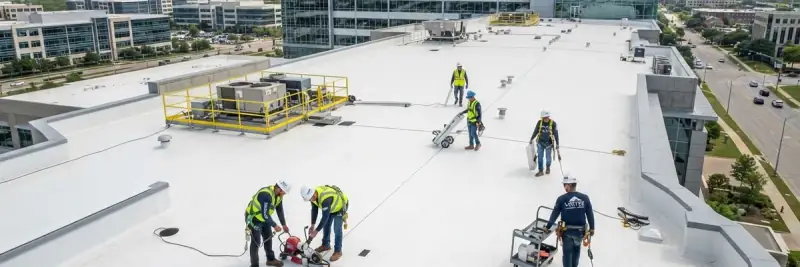
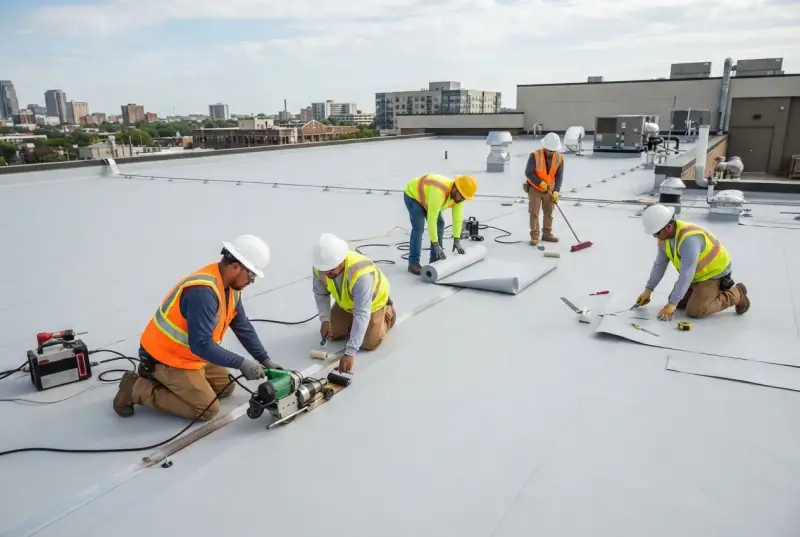
The Butterfield Road office corridor, the Yorktown retail area and the Roosevelt Road corridor bring a substantial volume of retail, hotel and multi-tenant office property on low-slope membrane systems.
Getting a roofer out
Call with the address and a licensed, insured roofer working Lombard takes it from there: inspection, photographs, then the price in writing. Who does the work.
Nearby communities
Villa Park, Glen Ellyn, Elmhurst, Downers Grove, Addison. Each has its own page covering local housing stock.
Need a roofer in Lombard?
Say where the property is and what the roof is doing. Coverage runs across Lombard and the rest of DuPage County.