
Roof Repair and Stormwater Issues in Elmhurst
Pre-war stock and recurring stormwater problems, so gutters and drainage matter as much as the shingles here.
Older roofs and what keeps them watertight
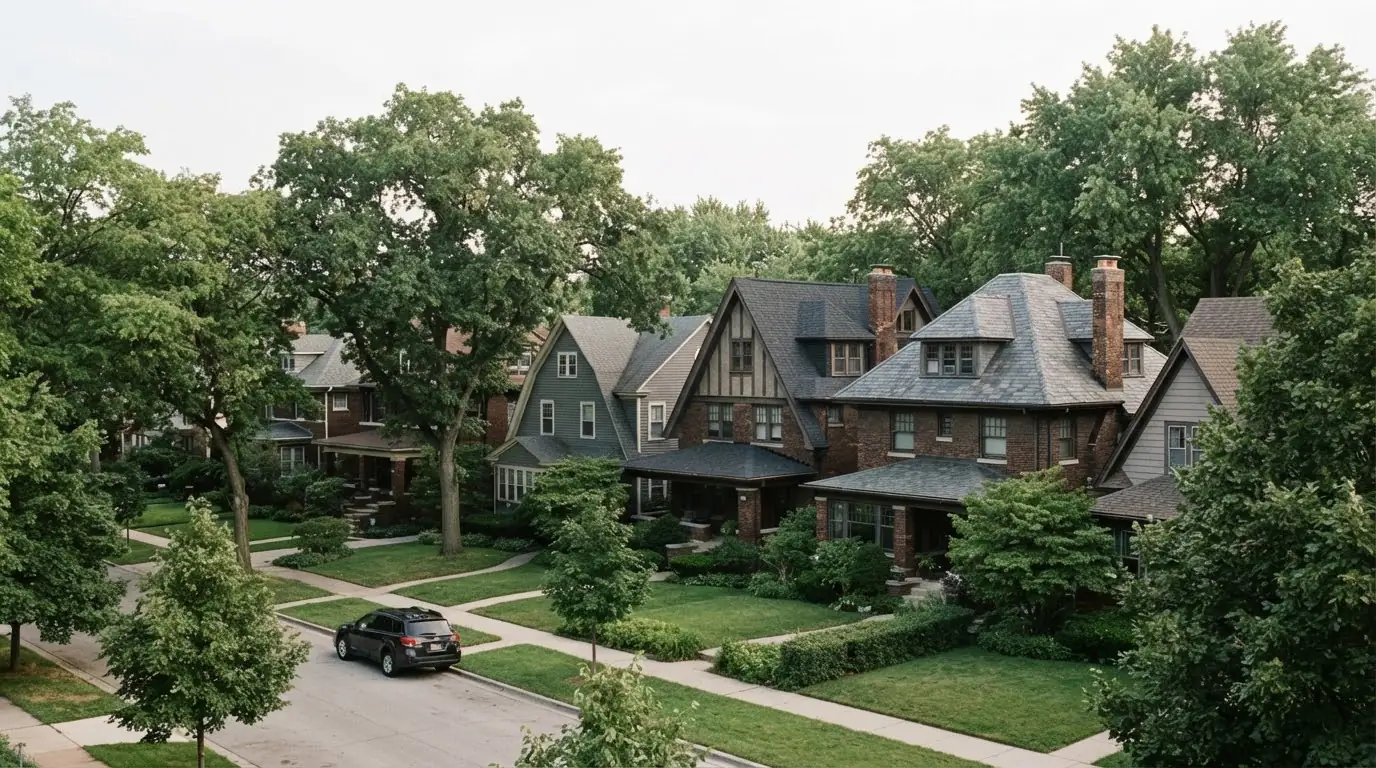
Elmhurst is an established near-west DuPage city with a large pre-war housing stock and one of the more active teardown-and-rebuild markets in the area. That combination puts two different roof types side by side: 1920s Tudors and Colonials with steep pitches and detail-heavy flashing, and new construction with large, complex rooflines. Elmhurst has also invested heavily in stormwater infrastructure over the years, and drainage handling is something property owners here take seriously.
The older stock centers on 1910s through 1940s Tudor Revival, Colonial Revival, Craftsman and foursquare homes, with steep roofs, prominent gables, dormers and masonry chimneys where counterflashing needs to be cut into the mortar joints properly. Postwar sections add ranches and split-levels. New construction, which is extensive, brings large two-story homes with multi-gable elevations, considerable valley footage and vaulted interior volumes. Near downtown, multi-unit and mixed-use buildings add low-slope membrane roofs.
What the weather does to an older roof
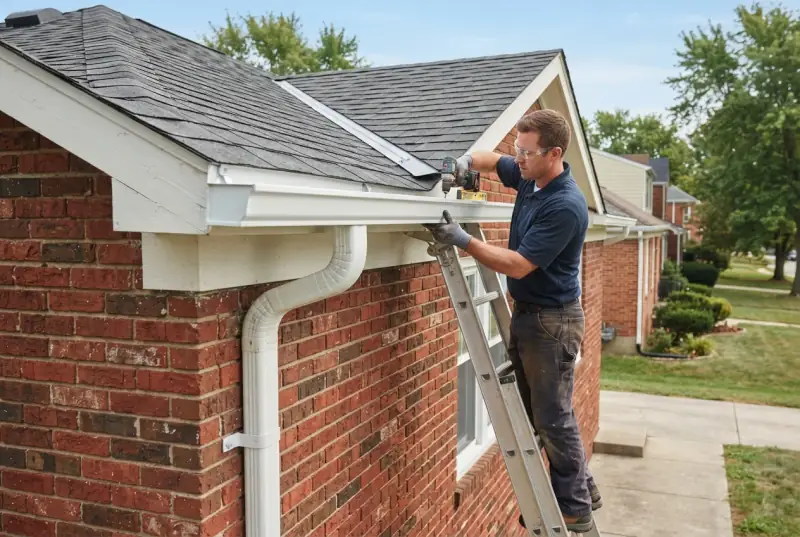
Given the city’s history with stormwater, roof drainage is not an afterthought here: correctly sized gutters, adequate downspout count and discharge that carries water away from the foundation all matter more than average. Mature canopy in the older neighborhoods loads valleys with debris. DuPage severe weather brings the usual straight-line wind and hail exposure.
What each service runs into in Elmhurst
Roof Replacement
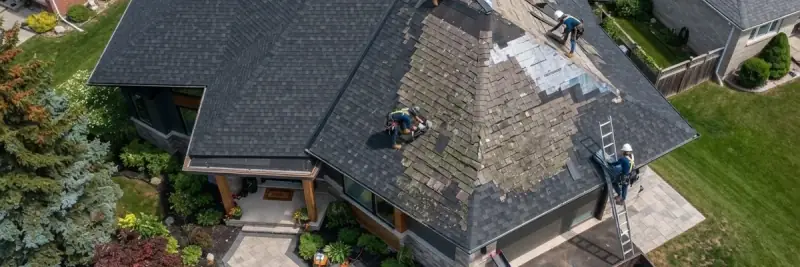
Elmhurst replacements run from 1920s Tudors and Colonials with steep, detail-heavy roofs to large new construction with elaborate multi-gable elevations. On the older housing, chimney and valley flashing is the bulk of the skilled work.
Drainage handled as part of the project
Given how seriously stormwater is taken in this city, gutter capacity and downspout discharge deserve resolving while the roof edge is open rather than later.
Tudor geometry drives the labour
Steep intersecting gables mean the transitions, not the field of the roof, determine the schedule and most of the cost.
New construction meeting older neighbours
Where a rebuild sits taller than the house beside it, the wall termination is designed into the replacement rather than sealed after the fact.
Roof Repair
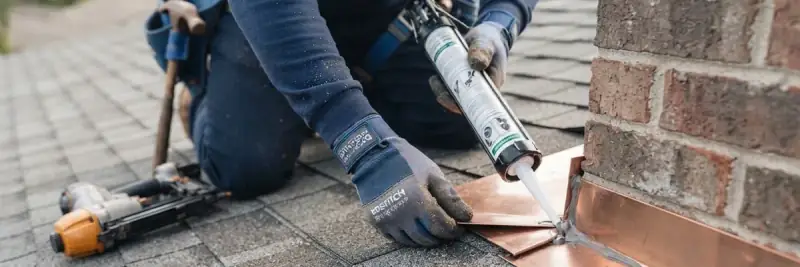
Two repair profiles run side by side in Elmhurst. On the pre-war Tudors and Colonials it is chimney counterflashing and complex valley work; on the extensive new construction it is step flashing at the transitions.
Tudor roof geometry
Steep intersecting gables generate a lot of valley and a lot of roof-to-masonry transitions, and both need doing properly rather than quickly.
Drainage taken seriously here
Given the city stormwater history, gutter capacity and downspout discharge are worth checking on nearly every eave leak before concluding the roof itself has failed.
New builds meeting old neighbours
Teardown rebuilds frequently sit taller than the house next door, and the junction between them is a flashing condition that needs designing rather than sealing.
Services called in most here
What gets called in most around Crescent Park and Van Auken area, roughly in the order it comes up.
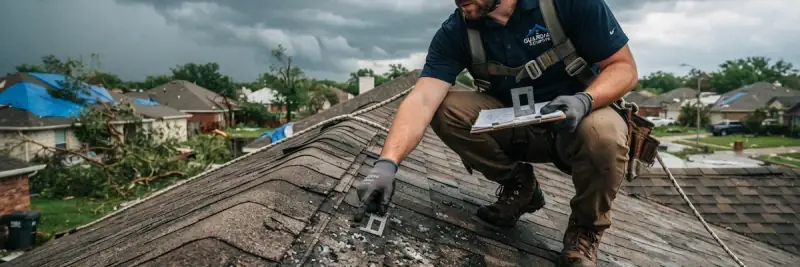
Older commercial buildings
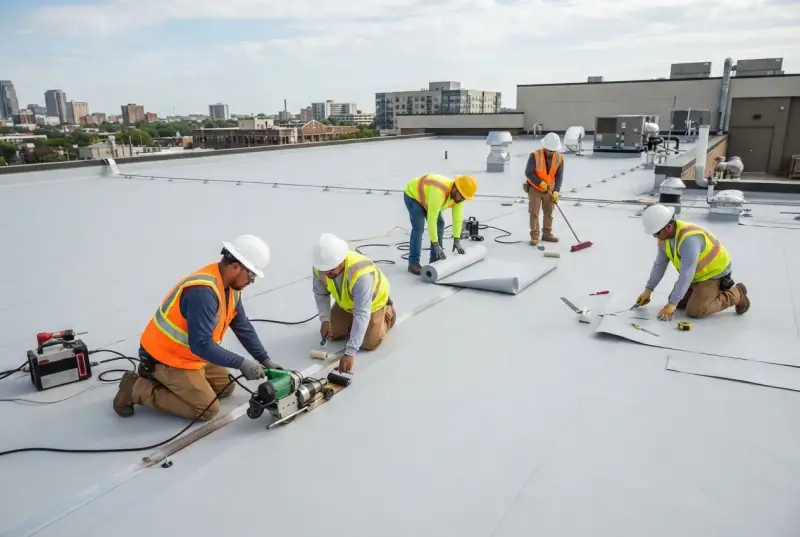
Downtown Elmhurst, the York Street corridor and the industrial and office property along North Avenue and Grand Avenue provide mixed-use, retail and light-industrial low-slope roofing work.
Getting a roofer out
Call with the address and a licensed, insured roofer working Elmhurst takes it from there: inspection, photographs, then the price in writing. Who does the work.
Roofing questions from Elmhurst
Specific to Crescent Park, Van Auken area and the rest of DuPage County, with everything else on the FAQ page.
Why does gutter sizing matter so much in Elmhurst?
The city has a history of stormwater problems, so where your roof sends its water matters more than it does in many places. Undersized gutters overflow in a heavy downpour and dump water at the foundation. Larger gutters and more downspouts move the same rain away from the house far more reliably.
How many downspouts does my house need?
It depends on the roof area and how hard the rain falls, but a common rule of thumb is a downspout for roughly every 30 to 40 feet of gutter. Long runs on a big roof often need more than the house was built with. A roofer can work out what yours actually needs.
Where should my downspouts send the water?
Well away from the foundation, several feet at least, with extensions or a buried line, and never onto a driveway that slopes back toward the house. Elmhurst may have rules about connecting downspouts to the storm sewer, so check before you reroute them.
Does a teardown on my block mean more water heading my way?
It can. Bigger new homes cover more of the lot with roof, which means more runoff, and how the new lot is graded decides where that water goes. After a big house goes up next door, it is worth watching how your own yard and gutters handle the next heavy rain.
Nearby communities
Villa Park, Lombard, Oak Brook, Addison, Oak Park. Each has its own page covering local housing stock.
Get a roof looked at in Elmhurst
Tell us the address and what the roof is doing. From Crescent Park out to the rest of DuPage County, the call takes a minute and the estimate is free.