
West Chicago Roofing, Rail Town to New Build
A historic rail town with industrial property and newer housing beyond it. Different roofs, different failure points.
Postwar houses and their weak points
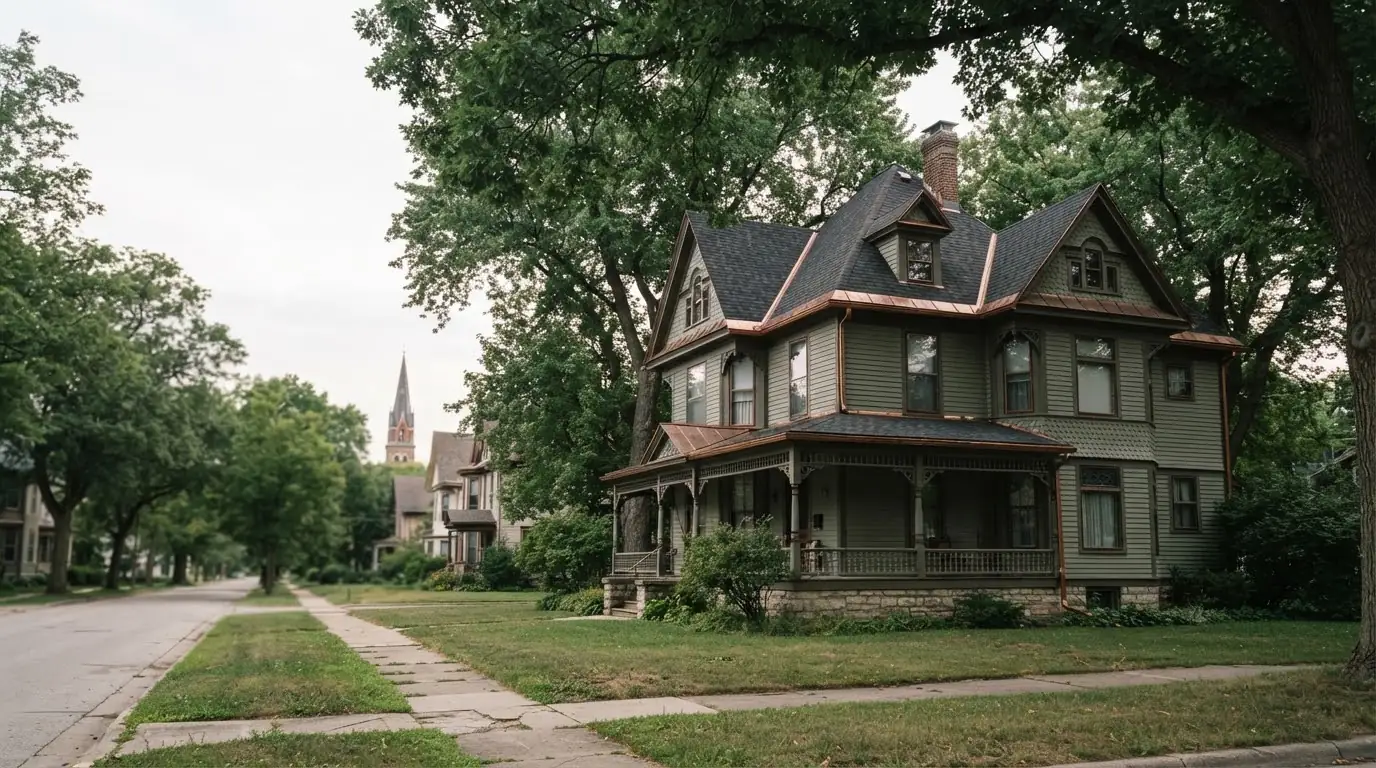
West Chicago grew up as a railroad town, and the older sections still read that way: a compact historic core with 19th and early 20th century housing built close to the rail lines. Around it sits substantial industrial and distribution property, and beyond that, newer residential subdivisions from the 1990s and 2000s. Three distinct roofing profiles inside one municipality.
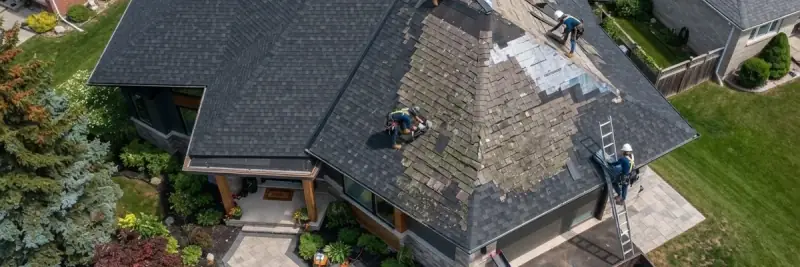
The historic core carries frame cottages, Victorians and early bungalows with steep pitches and simple to moderately complex forms, many with multiple accumulated roofing layers. Mid-century development added ranches and split-levels. The newer subdivisions on the outskirts brought two-story homes with contemporary multi-gable elevations, more valley footage, and vaulted interior spaces that complicate ventilation. The older housing frequently needs deck attention once tear-off begins, while the newer stock is mostly a straightforward first-cycle replacement.
Services called in most here
What gets called in most around Historic district and DuPage Airport area, roughly in the order it comes up.
Weather, and the attic underneath it
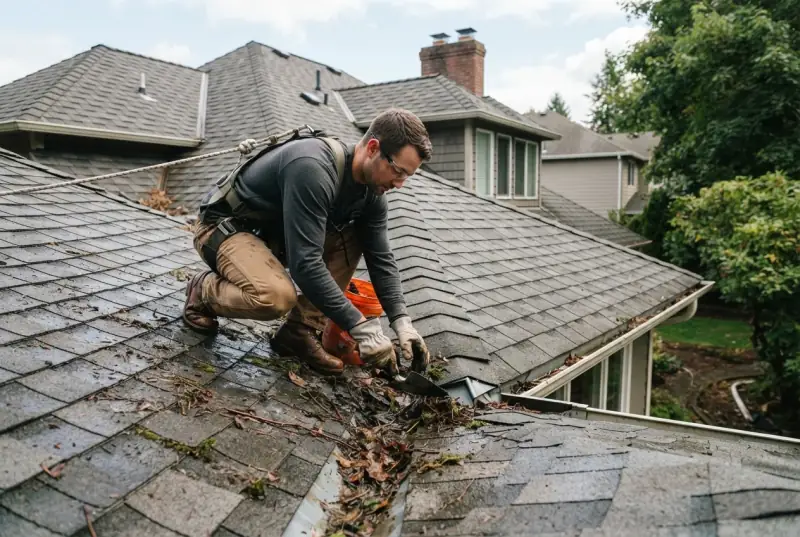
Western DuPage terrain is open, and the newer subdivisions in particular have little wind buffering. Straight-line winds from summer thunderstorm complexes and periodic hail are the main storm concerns. On the older housing near the rail corridor, accumulated layers and aging decking are the practical issue more than weather is.
Roofing questions from West Chicago
Specific to Historic district, DuPage Airport area and the rest of DuPage County, with everything else on the FAQ page.
My older house has several layers of roofing. Is that a problem?
Usually. Stacked layers add weight the framing was not built for, hide damage to the deck, and are past what building codes generally allow. Houses in the historic core often carry several. The next roof needs a full tear-off down to the deck, which also lets the roofer see what is underneath.
What is under all those old layers on a historic house?
Often the original plank decking, and sometimes old wood shingles beneath the asphalt. The roofer checks the condition once it is exposed. Gaps between planks may need covering with new sheathing so the new roof has a solid, even surface to fasten to.
Why is the newer side of town more exposed to wind?
The subdivisions on the outskirts sit on open ground with little to break the wind, so summer storms hit them at full force. That lifts shingle edges and ridge caps. Shingles fastened to the manufacturer’s high-wind nailing pattern hold up much better there.
Does a steep roof on a Victorian need special equipment?
Yes. Steep pitches need roof jacks, harnesses and more setup for the crew to work safely, and the work goes slower. That adds to the labour and the time. It is worth asking how a roofer plans to work your roof safely before you hire them.
Flat roofs on the commercial strips
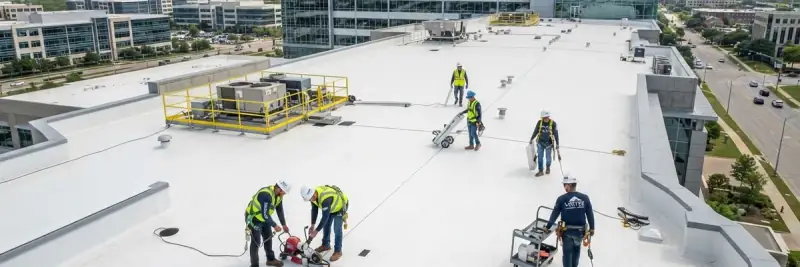
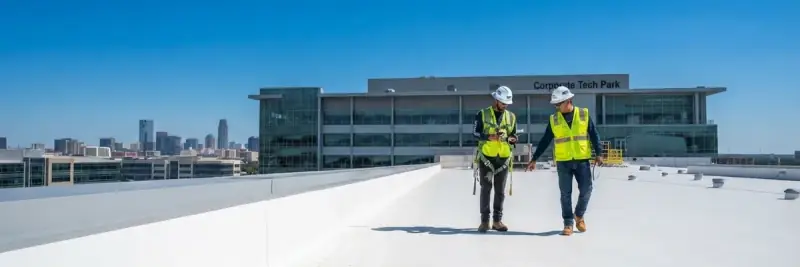
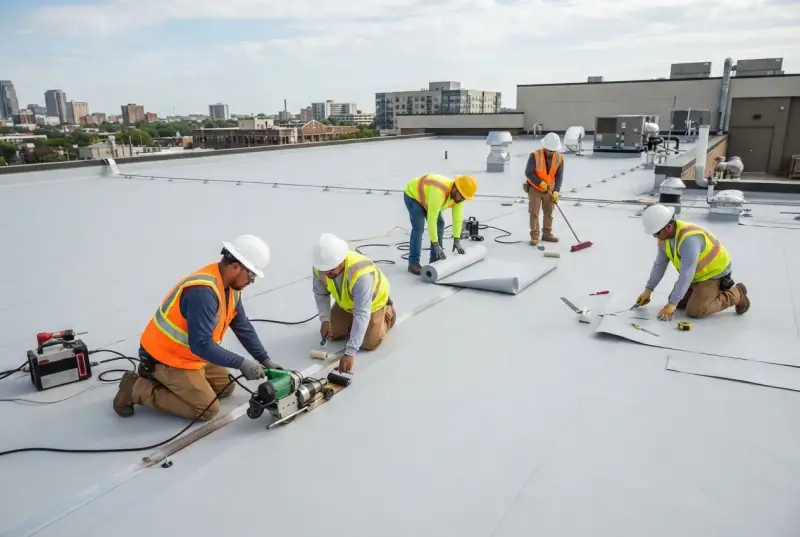
Industrial and distribution property around the rail corridor and the DuPage Airport area provides the bulk of local commercial roofing work, largely large-format low-slope systems.
Getting a roofer out
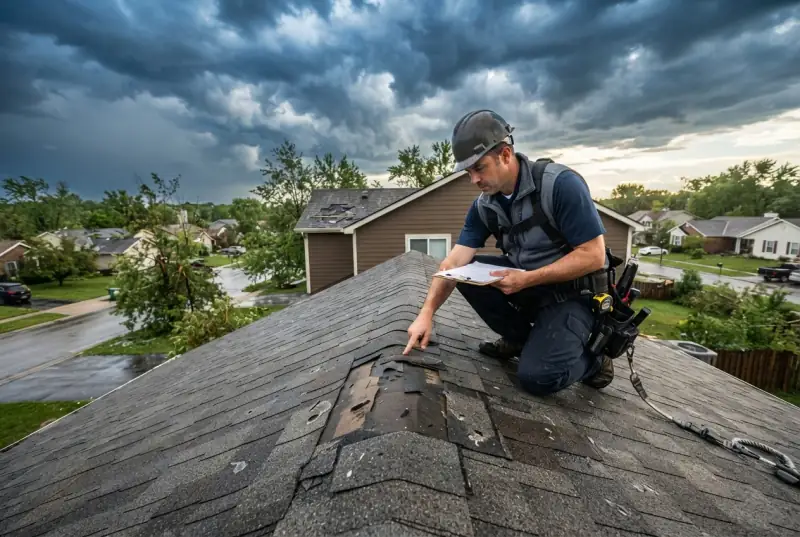
Call with the address and a licensed, insured roofer working West Chicago takes it from there: inspection, photographs, then the price in writing. Who does the work.
Nearby communities
Carol Stream, Wheaton, Geneva, St. Charles, Batavia. Each has its own page covering local housing stock.
Request a roof estimate in West Chicago
One call, and a licensed and insured roofer covering West Chicago gets back to you. Estimates are free and carry no obligation.