
Residential and Industrial Roofing in Wheeling, IL
Older housing, 1970s subdivisions and substantial industrial property, all failing in different places. Say which yours is.
Postwar houses and their weak points
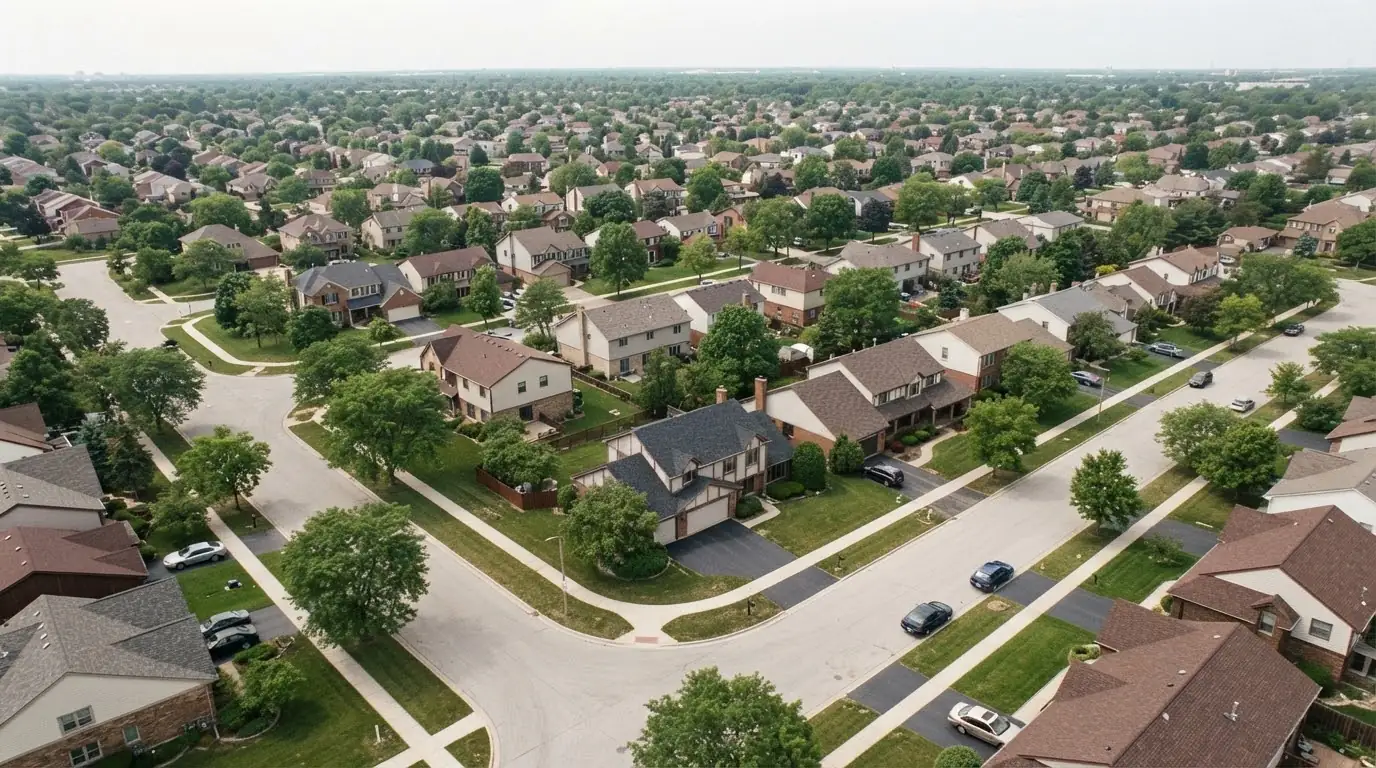
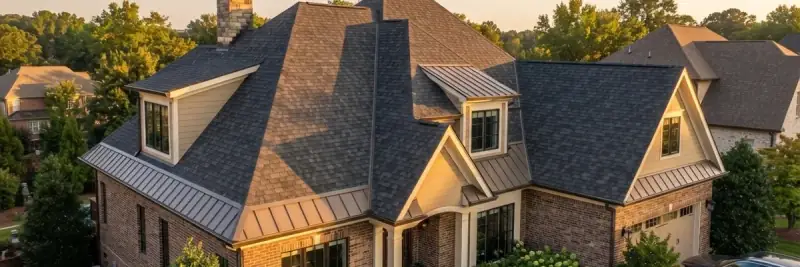
Wheeling combines older residential pockets, a large volume of 1970s through 1990s subdivision and multi-family development, a well-known restaurant corridor along Milwaukee Avenue, and a substantial industrial base. That last piece shapes a lot of the roofing work here: industrial buildings mean large low-slope roofs, and large low-slope roofs mean drainage, seams and terminations.
Residential stock ranges from older frame and brick homes near the historic center to extensive 1970s and 1980s ranches, split-levels and two-stories, plus a high proportion of townhome and condominium development managed by associations. The multi-family stock is worth noting: association-managed roofs are usually replaced building by building on a capital schedule, which is a different planning process than a single-family replacement. Newer construction in the western sections brings larger homes with more complex roof geometry.
Services called in most here
What gets called in most around Restaurant Row / Milwaukee Avenue and Chevy Chase area, roughly in the order it comes up.
Weather, and the attic underneath it
Open northwest-suburban terrain with standard wind and hail exposure from summer storm complexes. The Des Plaines River corridor runs along the eastern edge of the village, which makes proper roof drainage and downspout discharge more consequential for properties near the floodplain. Winter freeze-thaw affects the older stock in the usual way.
Roofing questions from Wheeling
Specific to Restaurant Row / Milwaukee Avenue, Chevy Chase area and the rest of Cook County, with everything else on the FAQ page.
My condo association is replacing roofs. When does mine get done?
Association-managed roofs here are usually replaced building by building on a schedule set by the board. Ask the association for the timetable and where your building sits on it. If yours is leaking before its turn comes, report it so it can be repaired in the meantime.
Is a house near the river at more risk?
The Des Plaines River runs along the eastern edge of the village, and properties near it need water handled well from the roof right down to the grade. Make sure gutters and downspouts carry water well away from the foundation. A roofer can check the drainage at the same visit as the roof.
My house is near the historic centre. What should I watch for?
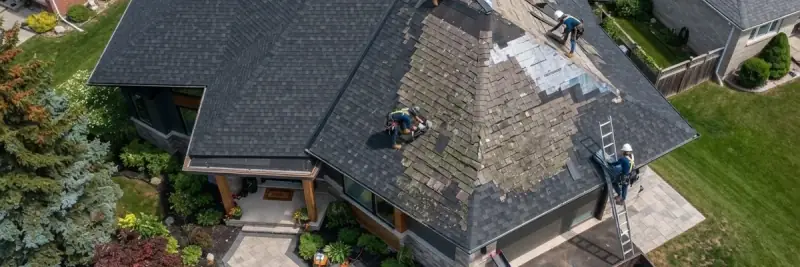
Older frame and brick homes near the centre often have simpler roofs but older decking, and sometimes earlier repairs that were not done well. Additions and patches pile up over the decades. An inspection sorts out what is original, what has been patched, and what now needs proper work.
Do the industrial buildings in Wheeling need a different roofer?
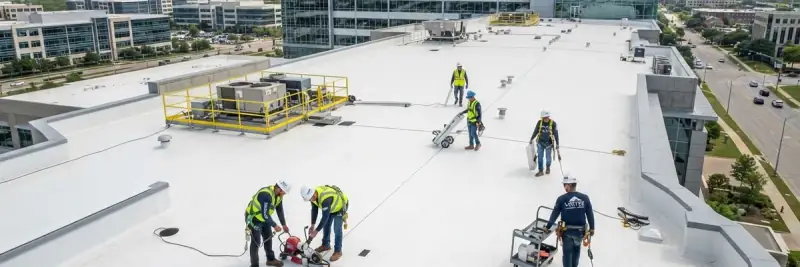
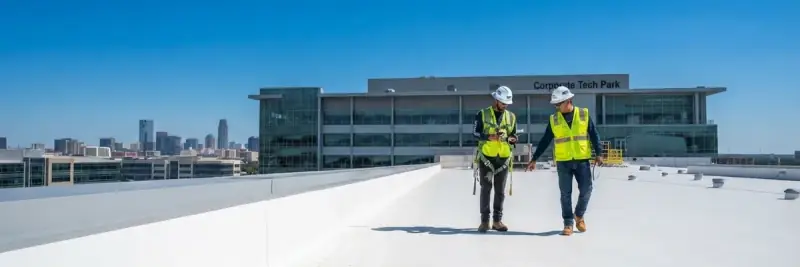
They need a commercial roofer. Industrial and warehouse buildings use low-slope membrane systems, which is a different trade from residential shingles. When you call, say that it is an industrial property, so you are matched with a roofer who does that kind of work regularly.
Flat roofs on the commercial strips
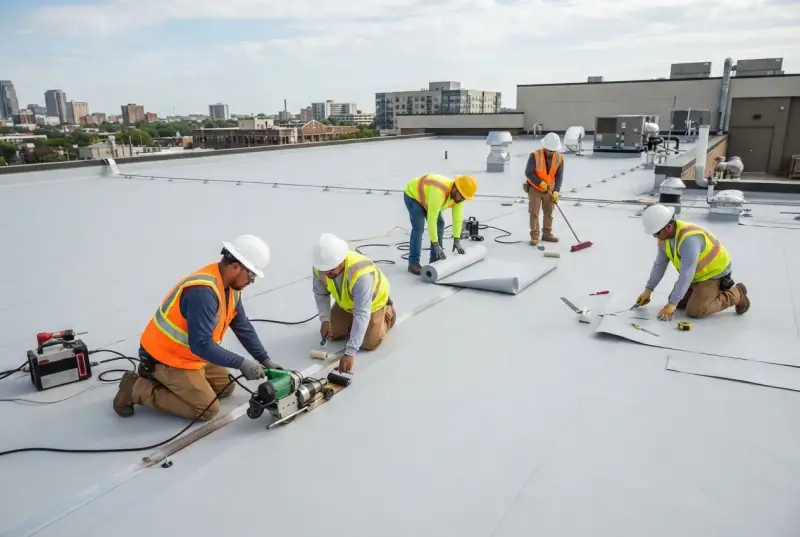
The Wheeling industrial area and the Milwaukee Avenue and Lake Cook Road corridors bring warehouse, manufacturing, restaurant and hotel properties, nearly all on low-slope membrane or modified bitumen systems with heavy rooftop equipment.
Getting a roofer out
Call with the address and a licensed, insured roofer working Wheeling takes it from there: inspection, photographs, then the price in writing. Who does the work.
Nearby communities
Buffalo Grove, Arlington Heights, Mount Prospect, Northbrook, Palatine. Each has its own page covering local housing stock.
Roof trouble in Wheeling?
Describe the problem and give us the ZIP. 60090 and the rest of Wheeling are covered, and nobody charges you for the look.