
Roofing in Gurnee, Subdivisions and Large-Format Retail
Late-century housing alongside entertainment and retail roofs measured in acres. Two different surveys entirely.
Subdivision roofs at replacement age
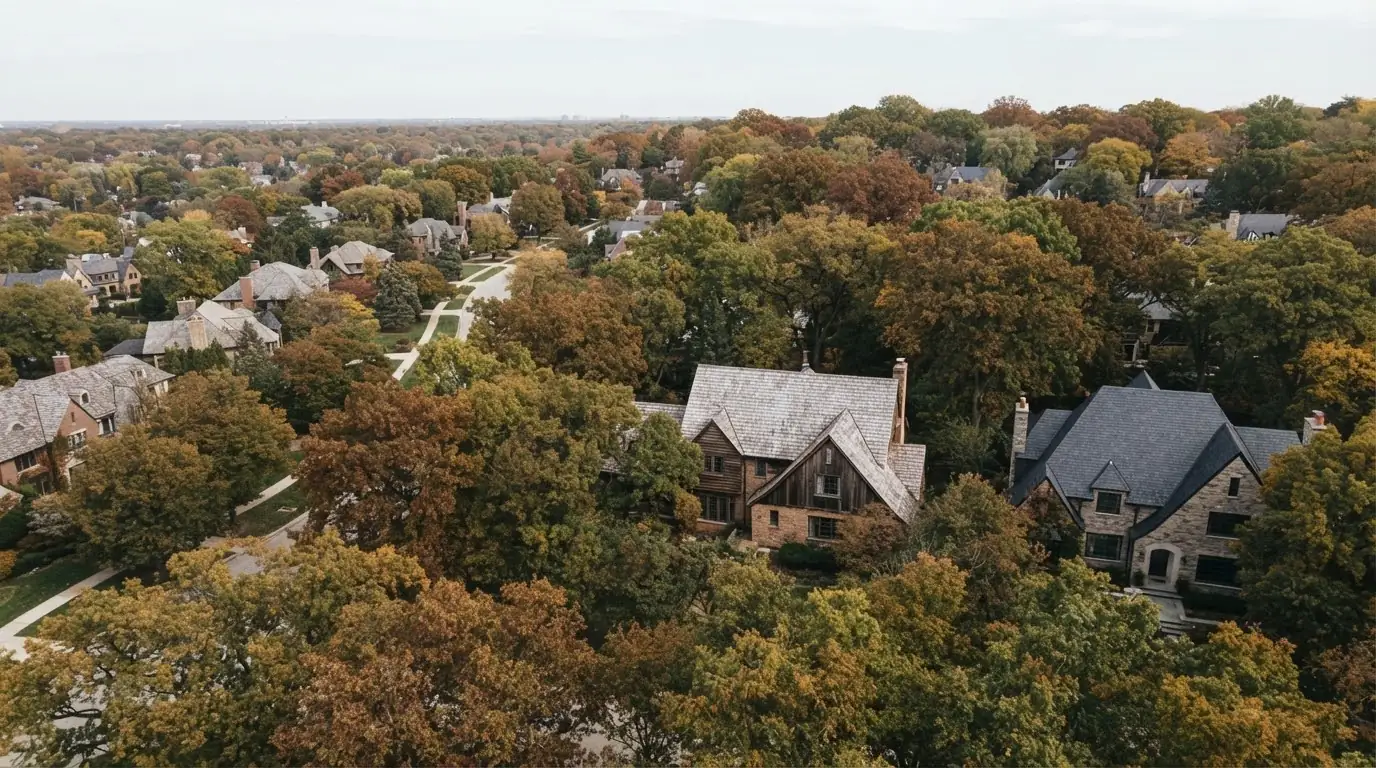
Gurnee grew substantially from the 1980s onward around a major retail and entertainment anchor, which gives it an unusual commercial profile for a village of its size: large low-slope roof areas on retail, hospitality and entertainment properties. The residential side is coherent late-century subdivision construction now working through its first and second replacement cycles.
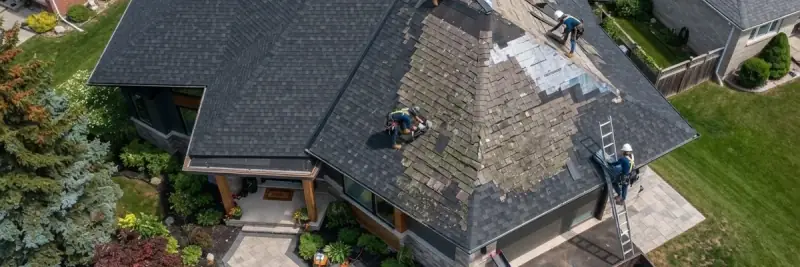
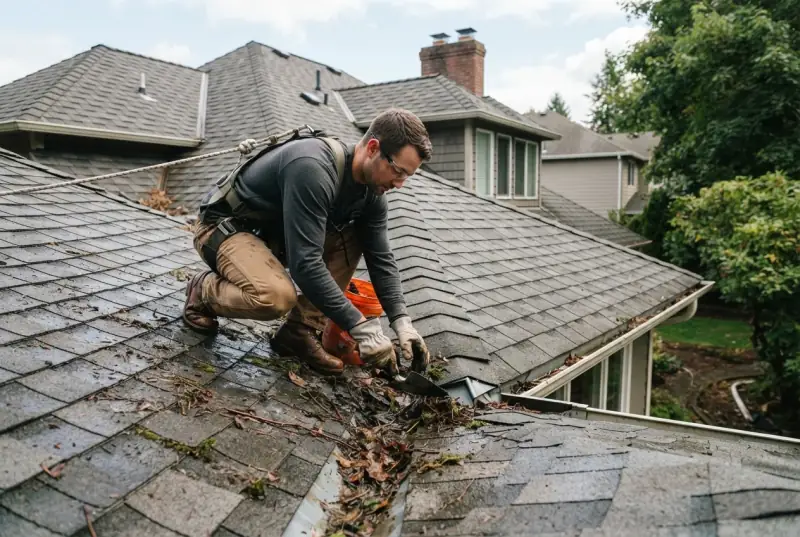
Most houses here are two-story homes from the 1980s to the 2000s, with several front gables, attached garages and a fair amount of valley work, and there are plenty of association-run townhomes as well. Older sections near the original village center carry mid-century and pre-war homes on simpler forms. The Des Plaines River runs through the village, and properties near the floodplain need roof drainage and downspout discharge handled with more care than a typical lot requires.
Services called in most here
What gets called in most around Six Flags corridor and Hunt Club area, roughly in the order it comes up.
Storms and what they take off these roofs
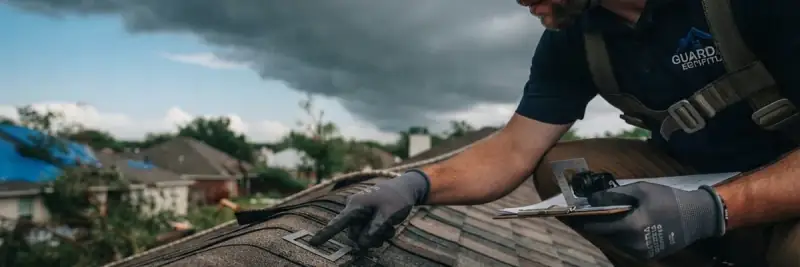
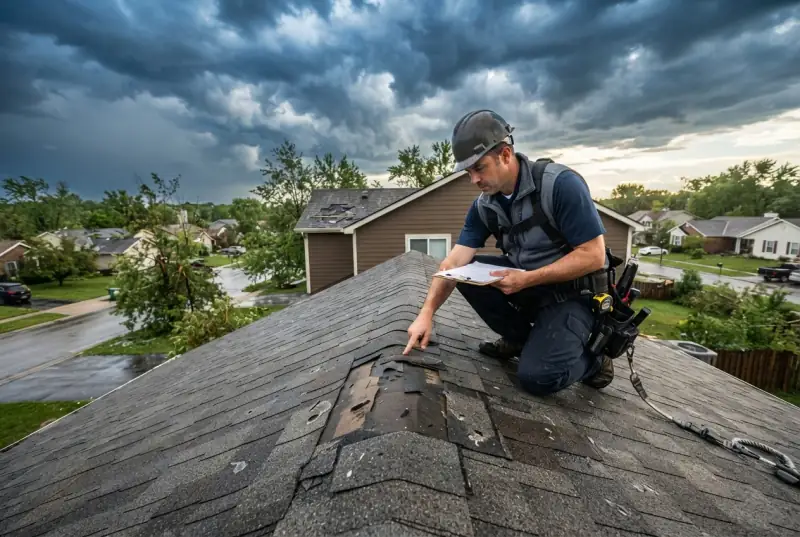
Northern Lake County sits far enough from the lake to lose most of the moderating effect, so freeze-thaw cycling is pronounced. Open subdivision terrain offers little wind buffering during summer thunderstorm complexes, and the area sees periodic hail. Properties near the river corridor have the additional drainage consideration.
Roofing questions from Gurnee
Specific to Six Flags corridor, Hunt Club area and the rest of Lake County, with everything else on the FAQ page.
Why is freeze-thaw harder on roofs in Gurnee than closer to the lake?
Northern Lake County sits far enough from the lake to lose most of its moderating effect, so temperatures swing above and below freezing more often. Each cycle works water into small gaps and opens them a little wider. Over years that is hard on flashing and older shingles.
What does freeze-thaw actually do to shingles over time?
Water gets into small cracks, freezes and expands, then thaws and seeps deeper. Repeated many times a winter, that widens cracks, loosens granules and works at the edges of flashing. It is a slow process, which is why roofs here age faster than the calendar alone suggests.
When is the best time of year to have my roof inspected?
Spring, after the freeze-thaw season, shows what winter did. Fall, before winter, catches problems while there is still time to fix them in good weather. An inspection after any major storm is worth it too. If you only do it once a year, spring is the better choice, because it shows exactly what the winter did.
Can a roof be replaced in winter in northern Lake County?
It can, but it is not ideal. Cold makes shingles brittle and keeps their seal strips from bonding, so the roofer may need to hand-seal them. Unless the roof is leaking, waiting for spring usually gives a better result. If it is leaking now, a temporary repair can hold until the weather turns.
Getting a roofer out
Call with the address and a licensed, insured roofer working Gurnee takes it from there: inspection, photographs, then the price in writing. Who does the work.
Retail and office roofs nearby
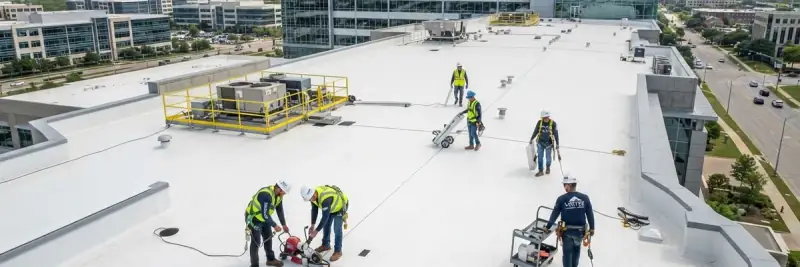
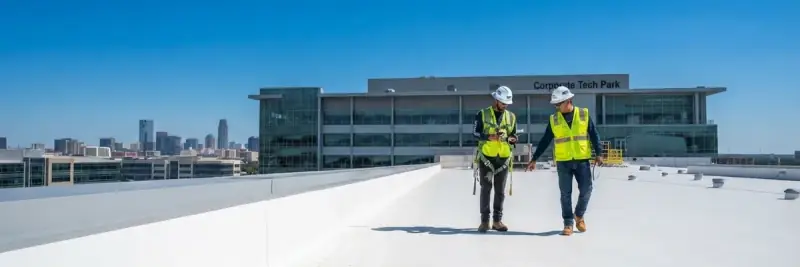
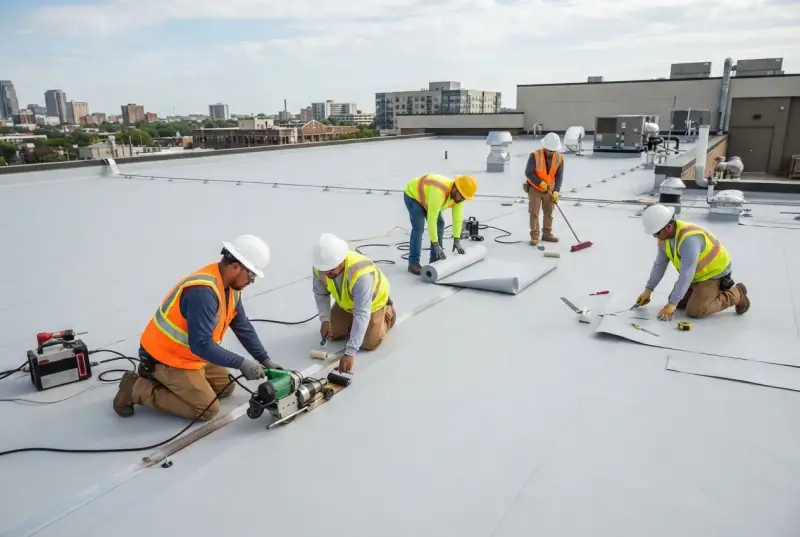
The Gurnee Mills and Grand Avenue corridor carries large retail, hotel and entertainment properties on single-ply membrane roofs. Roof areas of this scale make drainage design, drain maintenance and perimeter termination the deciding factors in service life.
Nearby communities
Waukegan, Grayslake, Libertyville, Mundelein, Evanston. Each has its own page covering local housing stock.
Gurnee roof estimates
Have the address ready and tell us what you have noticed. Six Flags corridor through to 60031, the estimate costs nothing.