
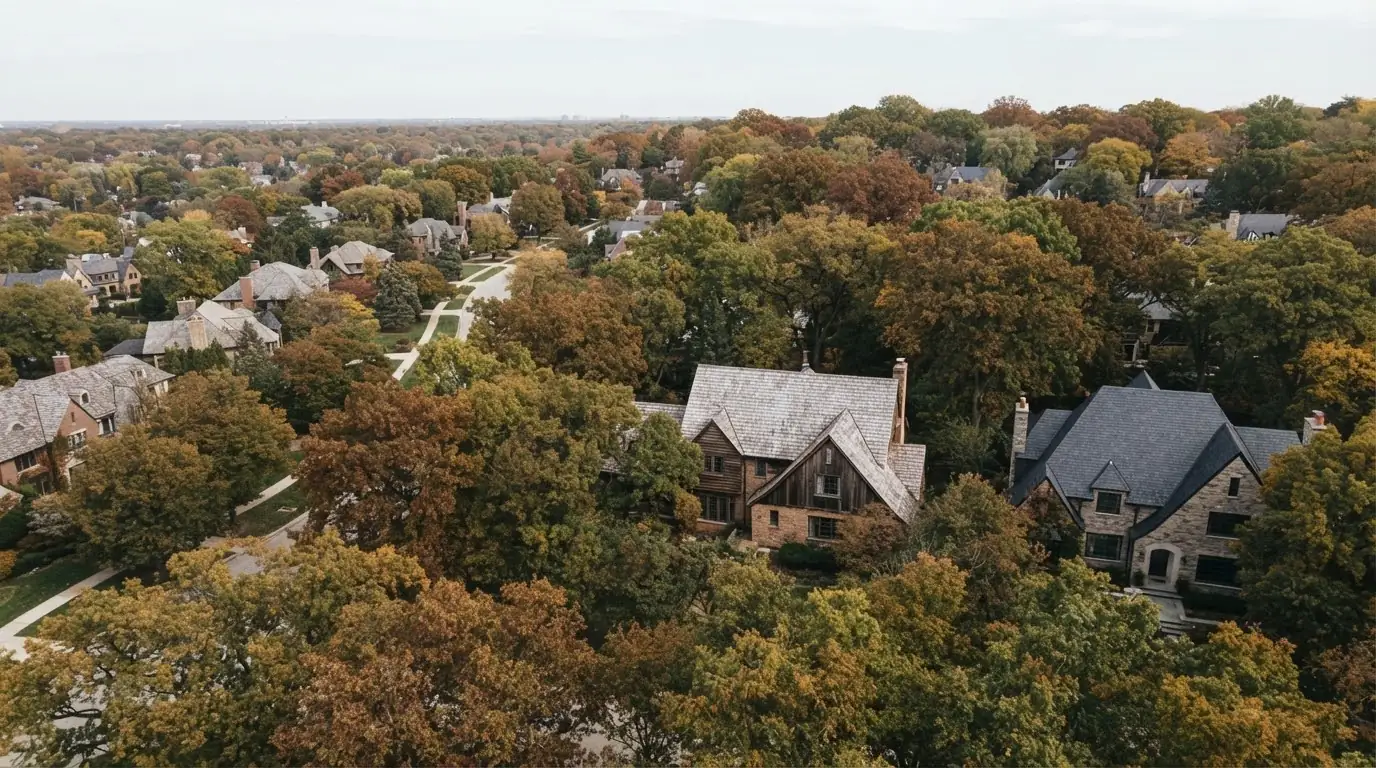
Roofing in Waukegan, Lakefront and Industrial
Older housing stock with a substantial industrial base behind it, and lake exposure on top of both.
Open ground and what wind does to a roof
Sitting right on the lake, these roofs take rain driven sideways off the water and heavy lake-effect snow, on framing built long before today’s load standards. Bluff-top properties take the wind without buffering. On the older housing with finished attics and minimal soffit intake, ice damming during thaw cycles is a persistent winter problem.
The houses out here
Waukegan is one of the older cities in Lake County and one of the most varied. There is significant late-19th and early-20th century housing on the bluffs and near the historic downtown, extensive mid-century development inland, and a real industrial and port presence along the lakefront. It is also directly on Lake Michigan, which means the roofs here take weather that inland Lake County communities do not.
The older neighborhoods carry Victorians, foursquares, frame cottages and early bungalows from the 1890s through the 1930s, often with steep pitches, dormers and multiple accumulated roofing layers. The 1950s and 1960s filled in around the older town with ranches, Cape Cods and split-levels. Multi-unit and two-flat style buildings appear near the downtown and along the older corridors, bringing low-slope sections. On the older housing, deck condition is frequently the deciding factor in a replacement scope, and it is rarely knowable until tear-off begins.
Services called in most here
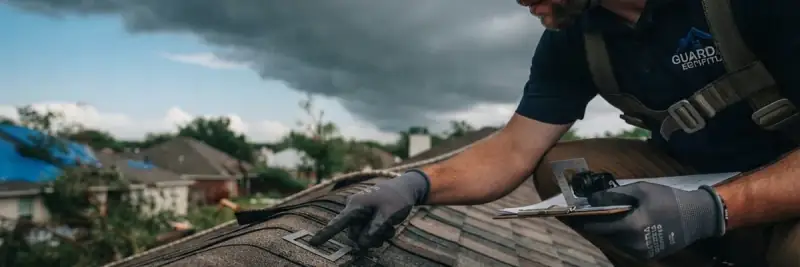
What gets called in most around Near North Historic District and Washington Street corridor, roughly in the order it comes up.
Roofing questions from Waukegan
Specific to Near North Historic District, Washington Street corridor and the rest of Lake County, with everything else on the FAQ page.
Why does wet lake-effect snow worry roofers in Waukegan?
Lake-effect snow off the water is heavy and wet, and it loads roofs that were framed long before modern load standards. It also feeds ice dams at the eaves. After a big snowfall, watch for sagging lines or new cracks in ceilings, and keep the eaves clear from the ground with a roof rake.
Can old roof layers hide damage?
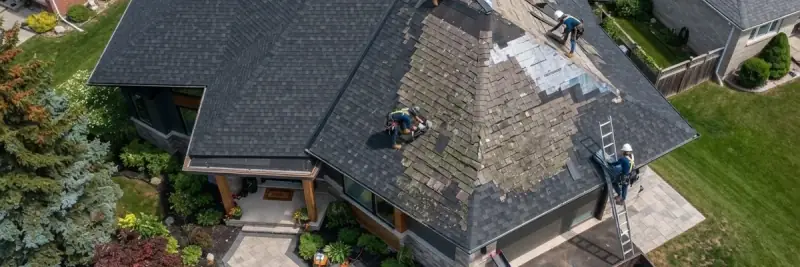
Yes. Older Waukegan homes often carry several layers, and they can hide rotten decking, old leak damage and failed flashing for years. A full tear-off exposes all of it, so the roofer can repair the deck properly before the new roof goes on instead of covering the problem again.
What should I do if my roof seems to sag after heavy snow?
Stay off the roof and keep people out from under the sagging area. A sag can mean the framing is overloaded or damaged, which is a structural question, not a shingle one. Have a roofer, and if needed a structural engineer, look at it before the next storm.
How do I keep wind-driven rain out of an older roof?
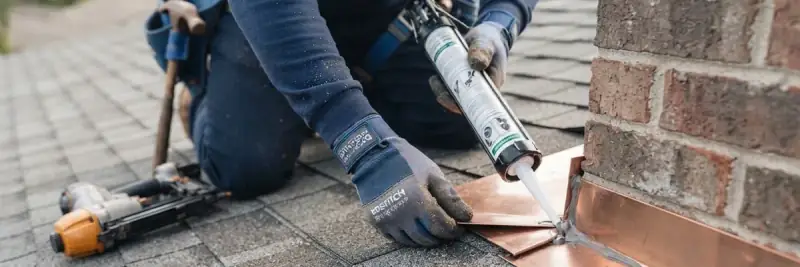
Wind off the lake pushes rain sideways under edges and flashing, so the flashing at walls and chimneys and the roof edges matter most. On a replacement, new underlayment and ice and water shield at the vulnerable spots make a big difference. On an older roof, start by having the flashing checked.
Getting a roofer out
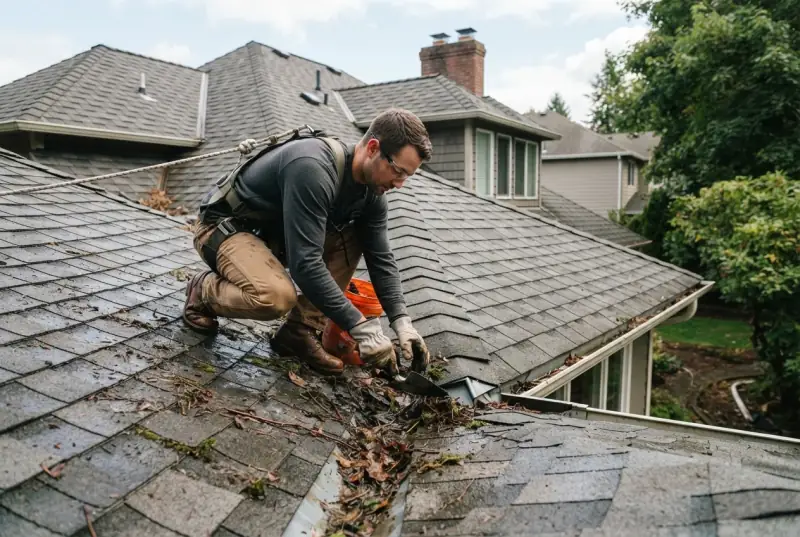
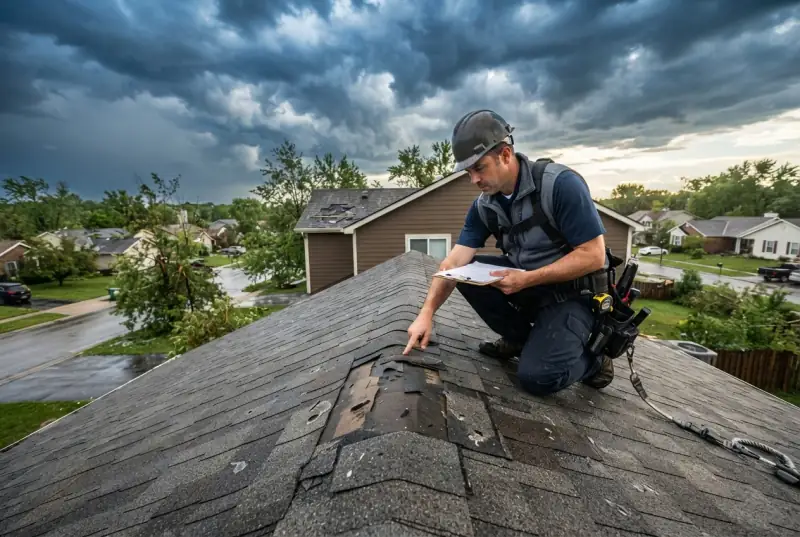
Call with the address and a licensed, insured roofer working Waukegan takes it from there: inspection, photographs, then the price in writing. Who does the work.
Industrial and commercial roofs
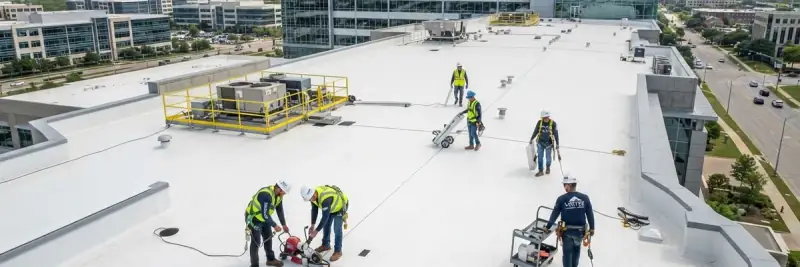
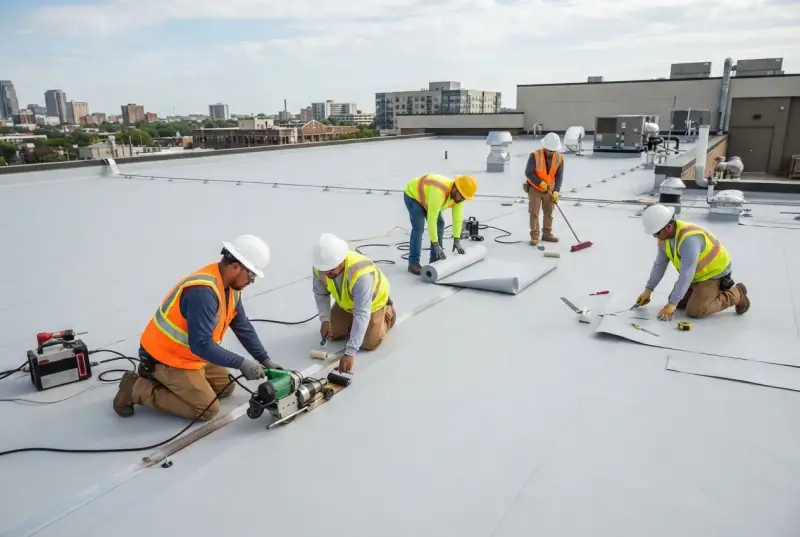
The lakefront industrial area, the port district and the Grand Avenue and Washington Street corridors carry manufacturing, warehouse and storefront property, largely on low-slope built-up, modified bitumen and single-ply systems.
Nearby communities
Gurnee, Lake Forest, Libertyville, Grayslake, Evanston. Each has its own page covering local housing stock.
Roof trouble in Waukegan?
Describe the problem and give us the ZIP. 60085 and the rest of Waukegan are covered, and nobody charges you for the look.