
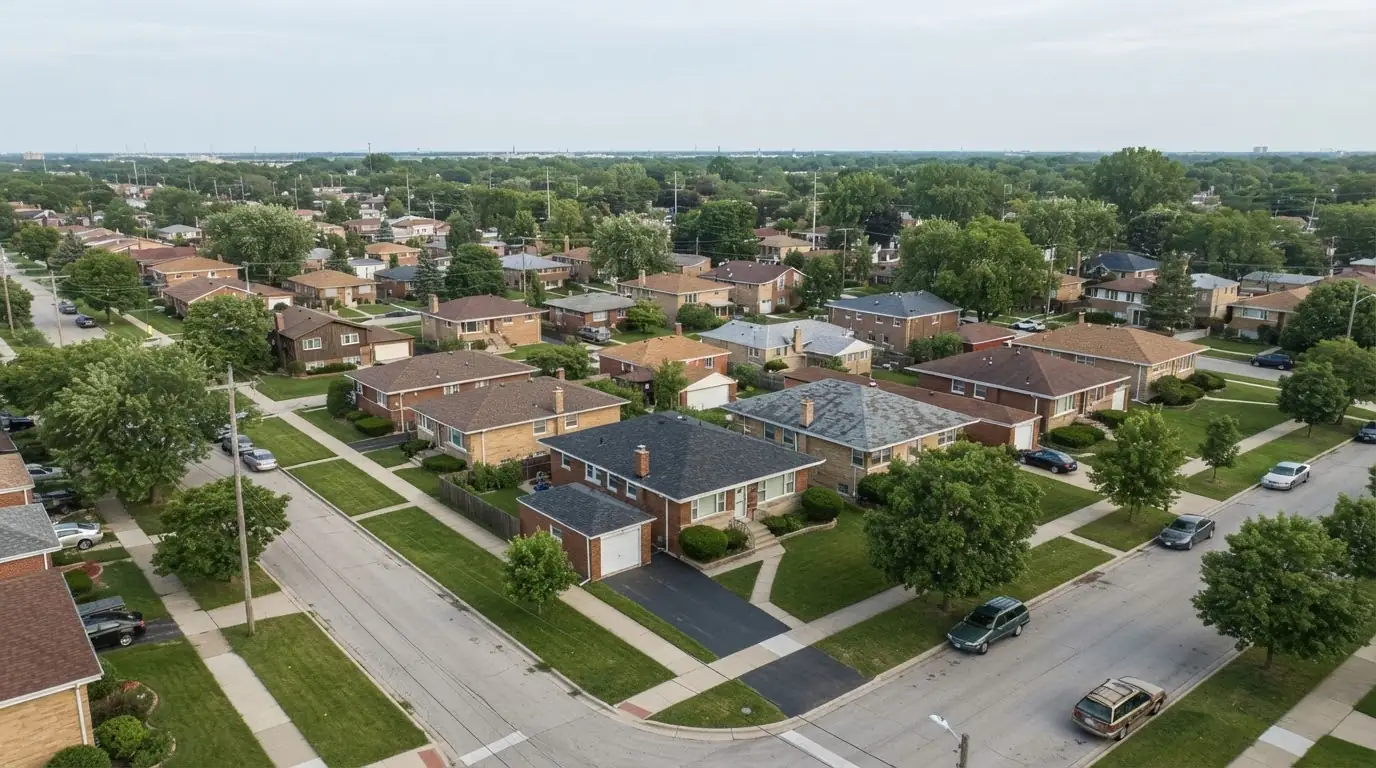
Roofing in Lockport, Canal Era and After
Limestone architecture in the historic core and newer subdivisions past it, which are two different jobs.
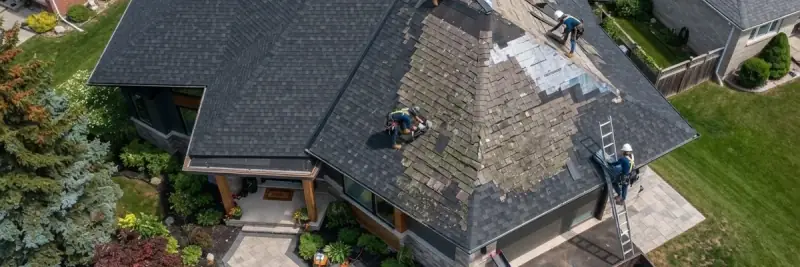
Older roofs and what keeps them watertight
Lockport grew up around the Illinois and Michigan Canal, and the historic district still shows it: limestone commercial buildings and 19th century housing concentrated near the canal corridor. Beyond that core, the city has added substantial newer subdivision housing. Historic masonry work and contemporary subdivision roofing are both routine here, and they demand completely different approaches.
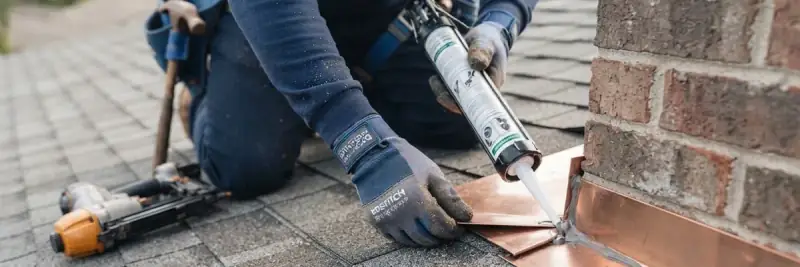
The historic district carries mid-to-late 19th century homes and limestone buildings, with steep roofs, cornice detailing and masonry-to-roof transitions where counterflashing must be cut into old mortar rather than surface-sealed. Early- and mid-20th century neighborhoods add frame and brick homes on simpler forms. Newer subdivisions from the 1990s and 2000s bring two-story homes with multi-gable elevations, more valley footage and vaulted interior spaces. On the historic stock, respecting the masonry while getting the flashing right is the core of the work.
What the weather does to an older roof
Storms crossing Will County bring straight-line wind fairly often and hail now and then. The canal and Des Plaines River corridor makes drainage handling more consequential for properties near the water. The old limestone suffers most from freeze-thaw, along with the flashing set into its mortar, so counterflashing here needs checking every few years instead of being treated as done.
Services called in most here
What gets called in most around Historic District and Canal corridor, roughly in the order it comes up.

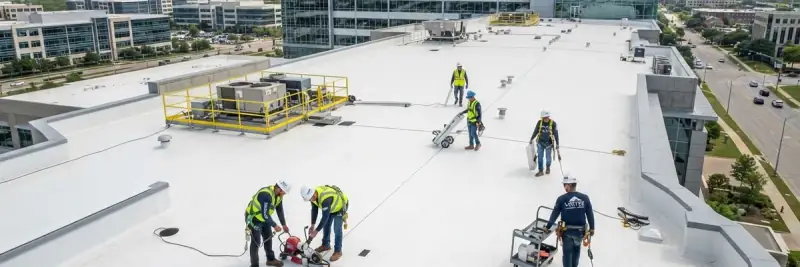
Older commercial buildings
Downtown, limestone and brick commercial buildings stand behind parapets that need careful flashing where the roof meets the wall; beyond them, newer retail and light industrial buildings sit under ordinary low-slope systems.
Getting a roofer out
Call with the address and a licensed, insured roofer working Lockport takes it from there: inspection, photographs, then the price in writing. Who does the work.
Roofing questions from Lockport
Specific to Historic District, Canal corridor and the rest of Will County, with everything else on the FAQ page.
Does living near the canal and the river affect drainage from my roof?
It can. Lower-lying land near the canal and the Des Plaines River makes it more important that roof water is carried well away from the foundation. Make sure gutters and downspouts discharge away from the house, not toward low ground that drains back.
Does the cornice detailing on Lockport’s older buildings affect the roof?
It does. Decorative cornices on the historic buildings often conceal built-in gutters and need careful flashing where they meet the roof. When those linings fail, water gets into the walls. A roofer familiar with historic cornices will know how to reline and flash them.
Are the newer subdivisions roofed differently from the historic core?
Very differently. The historic core has steep roofs, cornices and limestone where flashing must be cut into old mortar. The newer subdivisions are standard shingle roofs with valleys and garage transitions. Say which part of Lockport you are in when you call.
How often should a historic roof be inspected?
Regularly, every couple of years and after major storms. Old flashing and aging mortar fail quietly, and on a historic home a small leak can damage detail that is expensive to replace. Catching it early keeps a repair small. Ask for photos each time, so you can see how the roof is changing year to year.
Nearby communities
Joliet, Romeoville, Homer Glen, Crest Hill, New Lenox. Each has its own page covering local housing stock.
Request a roof estimate in Lockport
One call, and a licensed and insured roofer covering Lockport gets back to you. Estimates are free and carry no obligation.