
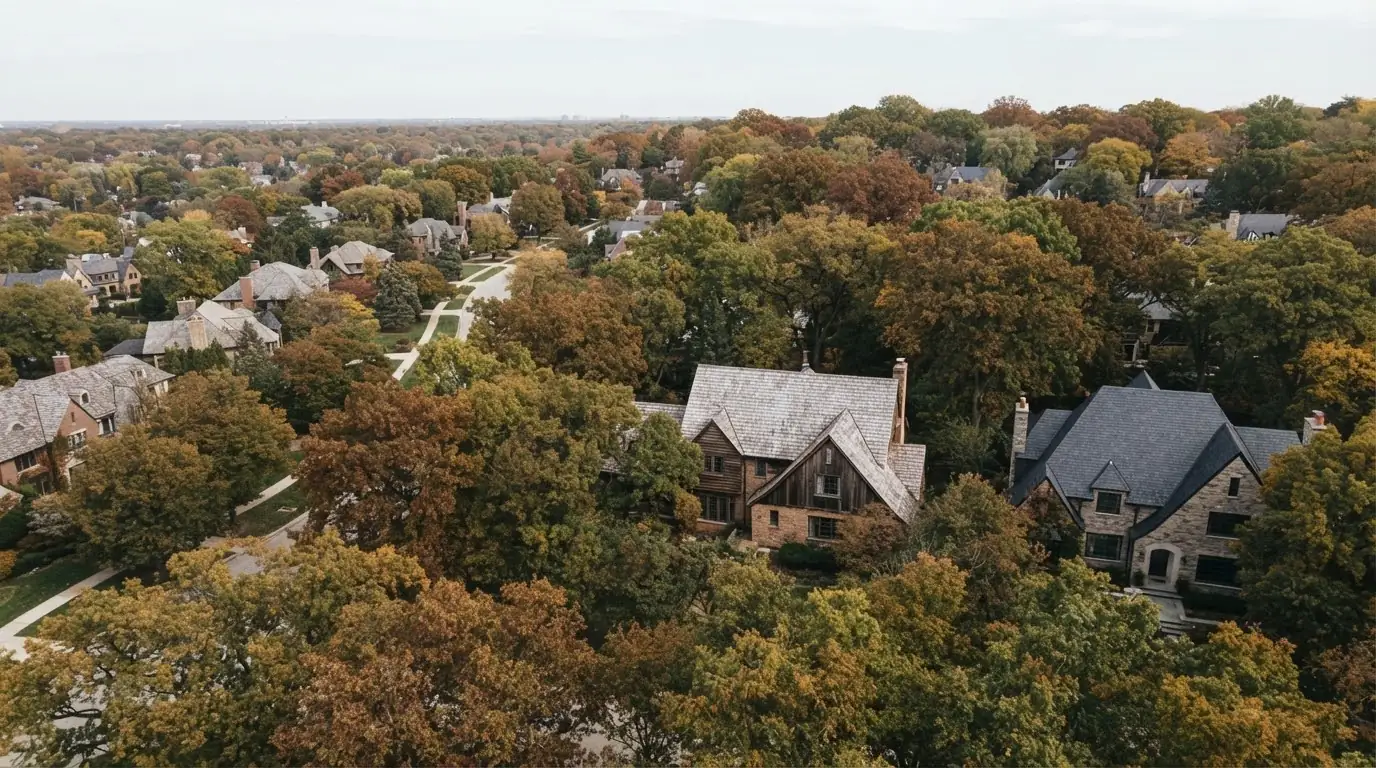
Tudor and Colonial Roofing in Park Ridge
Steep, detail-heavy roofs under a mature canopy, where flashing work matters more than shingle choice.
Older roofs and what keeps them watertight
Park Ridge has some of the most architecturally interesting residential roofs in the near-north suburbs. Much of the city was built out between the 1920s and the 1940s in Tudor Revival, Colonial Revival and Craftsman styles, which means steep pitches, prominent gables, dormers, and in many cases original slate, clay tile or heavy cedar that has been maintained rather than replaced. Roofs like these reward doing the detail work properly and punish shortcuts quickly.
Tudor Revival homes bring steep intersecting gables, complex valley arrangements and roof-to-masonry transitions where counterflashing must be cut into the mortar rather than surface-sealed. Colonial Revivals are simpler in form but often carry slate or tile that requires salvaged-material repair. Craftsman and foursquare homes fill in with deep overhangs and dormers. Newer teardown construction has added large homes with elaborate rooflines throughout the city. Uptown and the areas near the Metra stations include multi-unit and mixed-use buildings on low-slope roofs.
What the weather does to an older roof
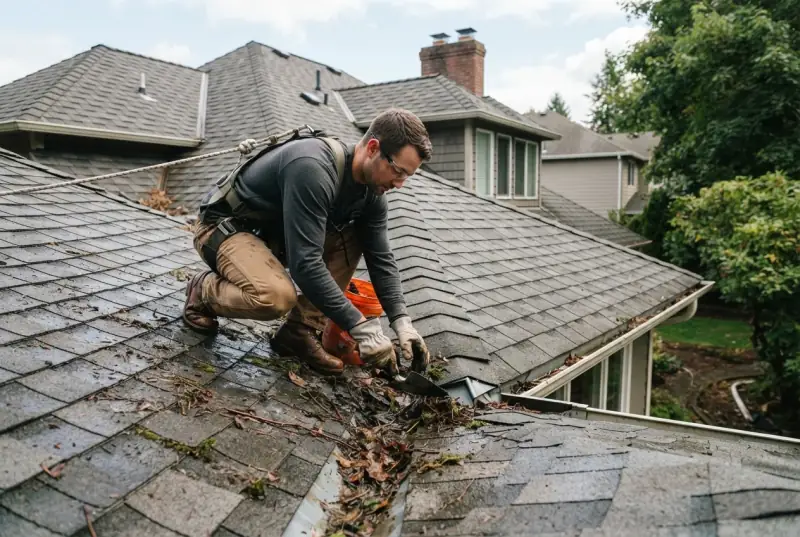
The dense mature tree canopy keeps valleys and gutters loaded with organic debris for much of the year, and shaded slopes hold moisture. Steep roofs with heavy valley footage shed a lot of concentrated water, so valley and gutter capacity matters. The city also sits directly under the O’Hare approach corridor, which has no roofing consequence but does mean noise-conscious scheduling for some commercial clients.
Services called in most here
What gets called in most around Country Club district and Northwest Park, roughly in the order it comes up.
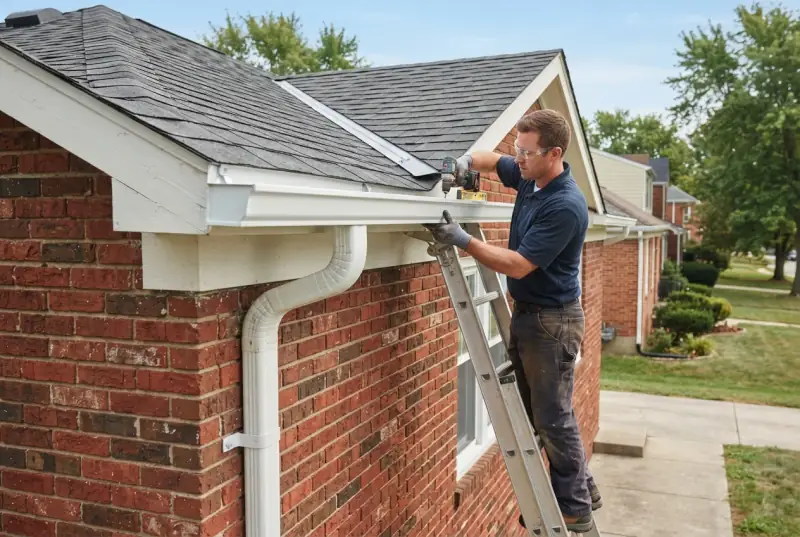
Older commercial buildings
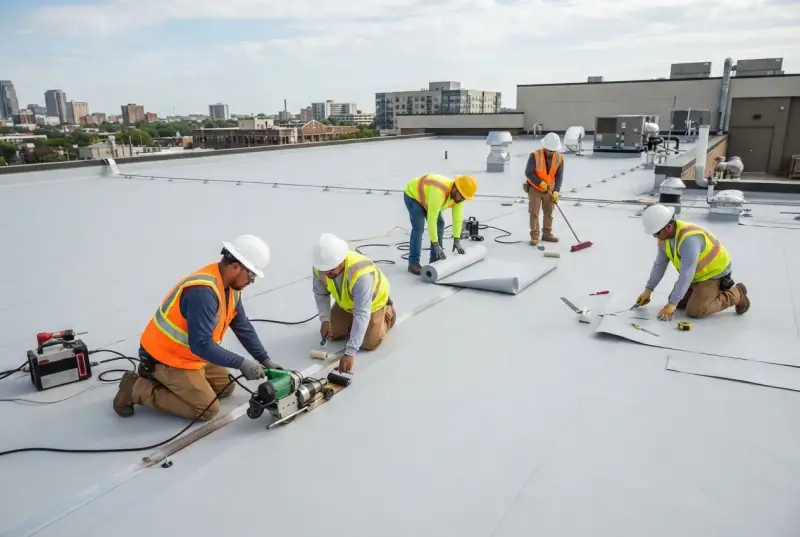
Uptown Park Ridge and the Touhy and Devon corridors carry mixed-use, professional office and medical buildings, mostly low-slope with masonry parapets.
Getting a roofer out
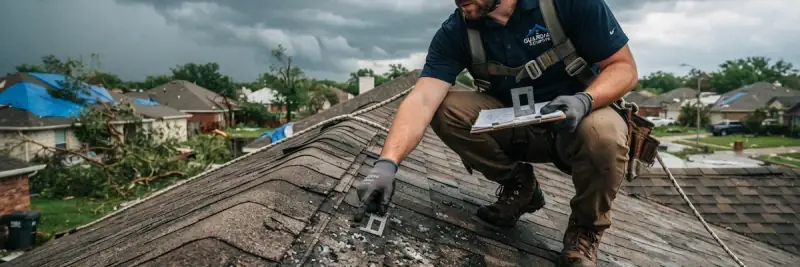
Call with the address and a licensed, insured roofer working Park Ridge takes it from there: inspection, photographs, then the price in writing. Who does the work.
Roofing questions from Park Ridge
Specific to Country Club district, Northwest Park and the rest of Cook County, with everything else on the FAQ page.
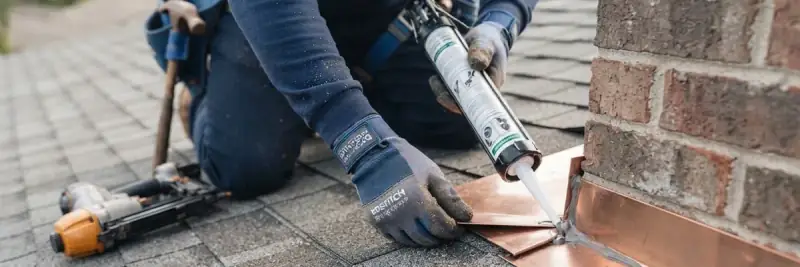
Why does the chimney on my Tudor leak?
Tudors have substantial masonry chimneys on steep roofs. Where the roof meets the chimney, the flashing needs counterflashing cut into the mortar joints, not sealant spread across the surface. Surface sealant fails within a few seasons. If yours was caulked rather than cut in, that is the likely source.
My Colonial Revival has slate. Can it be repaired?
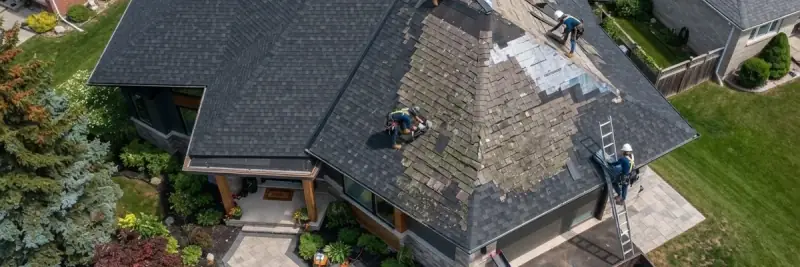
Usually. The slate on these homes often outlasts its fastening, so broken or slipped pieces can be replaced individually with salvaged or matched slate. That is far cheaper than a new roof. It needs a roofer who works slate regularly, because the wrong technique breaks more pieces than it fixes.
Why do steep roofs with lots of valleys need so much maintenance?
Park Ridge’s mature canopy drops debris into the valleys for much of the year, and a steep roof with many valleys funnels a lot of water through a few narrow paths. Packed debris holds that water against the roof. Keeping the valleys clear is one of the most useful things you can do.
Are Craftsman and foursquare homes easier to roof?
Generally simpler than the Tudors, with fewer intersecting gables, though they often have wide eaves and detailing of their own. Most are asphalt now and the work is more routine. The original carpentry at the eaves is worth protecting, so ask the roofer how they plan to handle it.
Nearby communities
Des Plaines, Niles, Chicago, Glenview, Mount Prospect. Each has its own page covering local housing stock.
Get a roof looked at in Park Ridge
Tell us the address and what the roof is doing. From Country Club district out to the rest of Cook County, the call takes a minute and the estimate is free.