
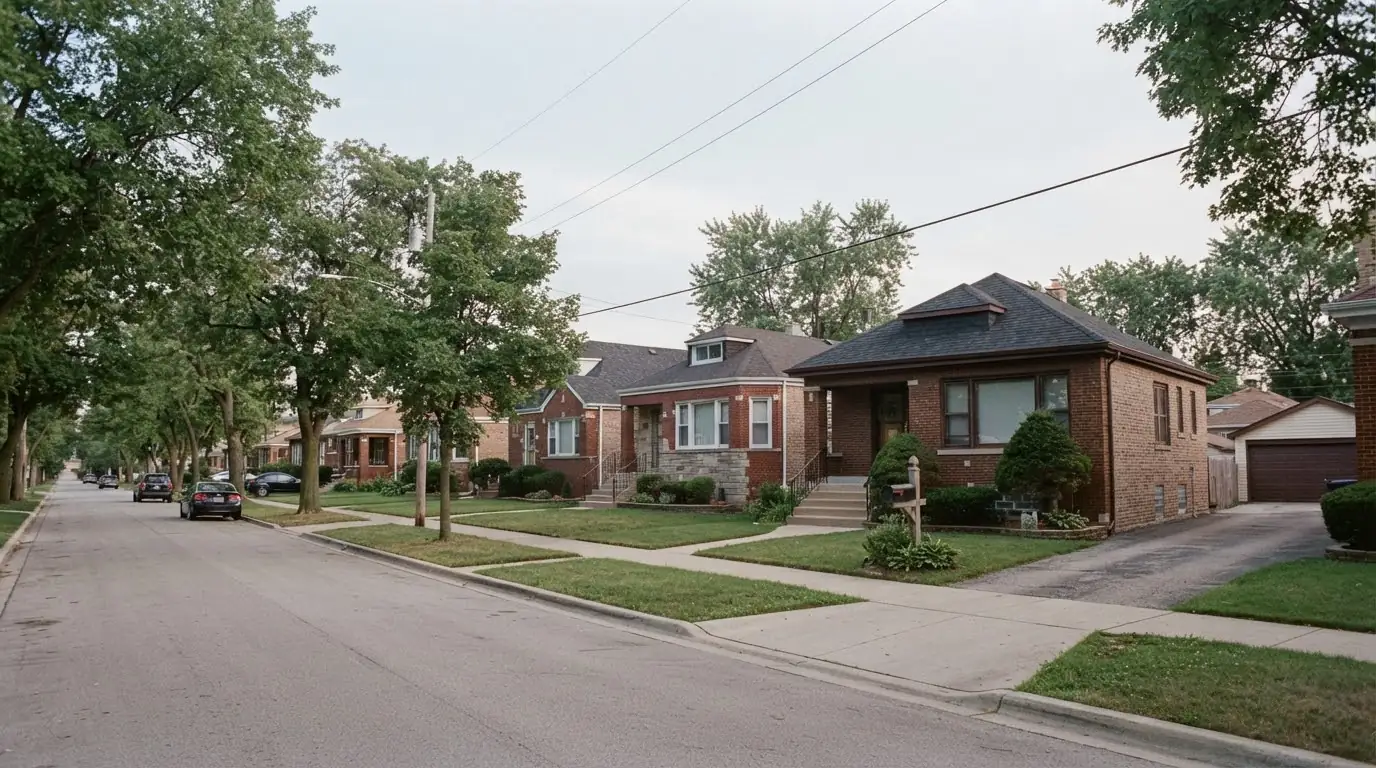
Roofing in Tinley Park, Old Core to New
A historic downtown ringed by 1980s and 1990s subdivisions now hitting replacement age. Different roofs, different problems.
What each service runs into in Tinley Park
Roof Replacement
Replacement work splits between the older core, where accumulated layers and additions joined at varying-quality transitions are the practical issues, and the 1980s and 1990s subdivisions now reaching first and second replacement.
Redoing the garage transition properly
On the subdivision stock this is what stops the new roof inheriting the old roof leak history, and it is worth insisting on even where the existing detail has not failed yet.
Additions in the older core
These houses have usually been added onto. Every junction between roof sections gets rebuilt during the replacement rather than flashed over.
Ventilation reworked, not carried over
Where an attic was partially finished at some point, the original ventilation path is usually gone. That gets restored during the tear-off while access is easy.
Roof Repair
Repairs split between the older core along Oak Park Avenue (simple steep roofs, often with additions joined at transitions of varying quality) and the 1980s and 1990s subdivisions, where the original step flashing at garage and wall transitions predicts the leak history.
Additions on the older core housing
These houses have usually been added onto at least once, and the junction between original roof and addition is where the water turns up more often than not.
Subdivision garage transitions
The attached-garage elevations in the surrounding neighborhoods put a roof plane against a wall in a spot that stays wet, and the flashing quality there varies enormously by builder.
Open-terrain wind at the edges
The newer subdivisions have little natural buffering, so ridge and rake damage after summer storm complexes is a routine call rather than an unusual one.
Storm Damage Roofing
Open southwest Cook terrain leaves the Tinley Park subdivisions exposed to straight-line winds, and the area sees hail with some regularity.
Damage at the garage transition
On the 1980s and 1990s stock, an already marginal wall flashing stops holding once the surrounding shingles have been lifted, so a wind event surfaces a pre-existing weakness.
Older core, more brittle material
The housing near Oak Park Avenue carries older roofs that lose shingles outright rather than creasing, and the debris usually ends up in the yard.
Tarping before the next front
Storms here tend to arrive in sequence. Temporary protection has to be installed to survive the follow-up, which is a different standard than covering a hole.
Residential Roofing
Residential roofing in Tinley Park spans two eras. The older core near Oak Park Avenue brings smaller homes with simple steep roofs, often complicated by additions. The surrounding subdivisions bring 1980s and 1990s houses with attached garages.
Step flashing predicts leak history
On the subdivision stock, the quality of the original garage and wall flashing is the single best indicator of whether a house has had water problems.
Additions in the older core
Most of these houses have been added onto at least once, and the junction between the original roof and the addition is the first place to look.
Association-managed townhomes
A meaningful share of the housing is attached and replaced building by building on a capital schedule rather than by individual owners.
Subdivision roofs at replacement age
Tinley Park pairs a historic downtown along Oak Park Avenue with extensive subdivision development built from the late 1970s onward. The result is two different roofing conversations happening in the same village: older, smaller homes with simple steep roofs near the center, and larger, more complex late-century homes in the surrounding subdivisions now reaching replacement age in volume.
The older core carries pre-war and early postwar frame and brick homes with straightforward gable roofs, some with additions that have complicated the original form. The subdivisions are dominated by 1980s and 1990s two-stories, split-levels and ranches with attached garages, multiple gables and moderate valley complexity. Townhome and condominium development is substantial and is generally handled through associations. As with most construction of this period, the quality of the original step flashing at garage and wall transitions is the single best predictor of whether a given house has had leak problems.
Services called in most here
What gets called in most around Oak Park Avenue Historic District and Brementowne, roughly in the order it comes up.
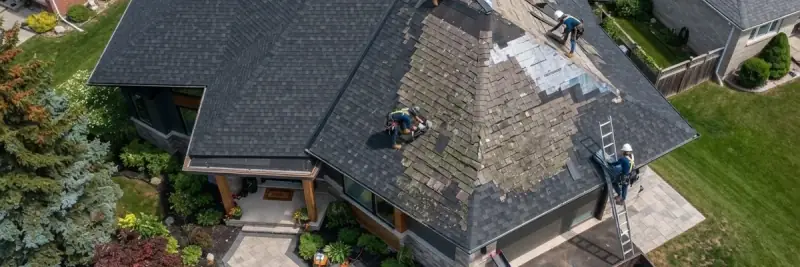
Roof Replacement
Replacement work splits between the older core, where accumulated layers and additions joined at varying-quality transitions are the practical issues, and the 1980s and 1990s subdivisions now reaching
Learn more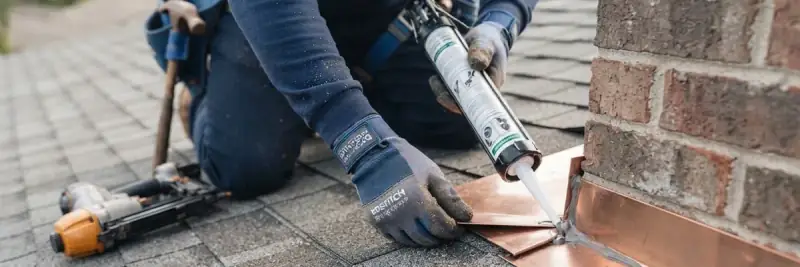
Roof Repair
Repairs split between the older core along Oak Park Avenue (simple steep roofs, often with additions joined at transitions of varying quality) and the 1980s and 1990s subdivisions, where the original
Learn more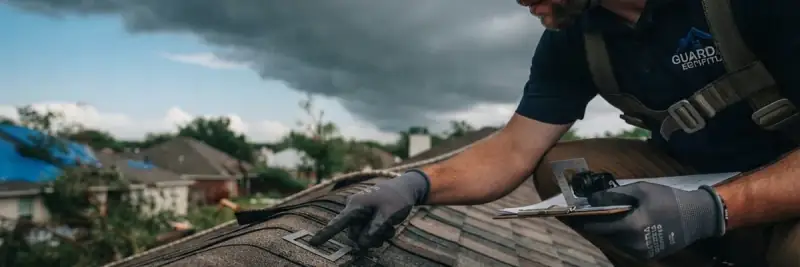
Storm Damage Roofing
Open southwest Cook terrain leaves the Tinley Park subdivisions exposed to straight-line winds, and the area sees hail with some regularity.
Learn more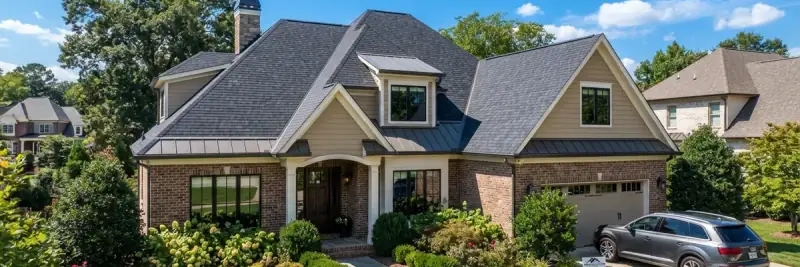
Residential Roofing
Residential roofing in Tinley Park spans two eras. The older core near Oak Park Avenue brings smaller homes with simple steep roofs, often complicated by additions.
Learn moreStorms and what they take off these roofs
Open southwest Cook terrain leaves the newer subdivisions exposed to straight-line winds, and the area sees hail with some regularity. Winter freeze-thaw drives ice accumulation in valleys and at eaves, particularly on the homes where the attic was partially finished without the ventilation being reworked.
Roofing questions from Tinley Park
Specific to Oak Park Avenue Historic District, Brementowne and the rest of Cook County, with everything else on the FAQ page.
My older Tinley Park home has an addition. Why does it leak there?
Where an addition joins the original house, a newer roof meets an older one, often at a different pitch and built at a different time. That transition is the weak point. If water shows up near where the addition meets the house, that joint is the first thing to check.
My 1990s house is due for a new roof. What should I expect?
A full tear-off down to the deck, any decking repaired, ice and water shield at the eaves and valleys, then new underlayment, flashing and shingles, all listed separately on a written estimate. On these subdivision homes, insist that the attached garage transition gets new flashing rather than keeping the old.
How often does hail reach Tinley Park?
The area sees hail with some regularity, and open southwest Cook terrain leaves the newer subdivisions exposed. Not every storm damages a roof. After a hail storm, check gutters and vents for dents from the ground, and if they are marked, have the roof inspected and photographed.
Do icicles along the eaves mean my roof has a problem?
Large icicles often point to ice dams, which form when heat escaping the attic melts snow that then refreezes at the edge. A few small icicles are normal. Heavy, recurring ones usually mean the attic needs better insulation or ventilation, which is worth fixing before it damages the eaves.
Getting a roofer out
Call with the address and a licensed, insured roofer working Tinley Park takes it from there: inspection, photographs, then the price in writing. Who does the work.
Retail and office roofs nearby
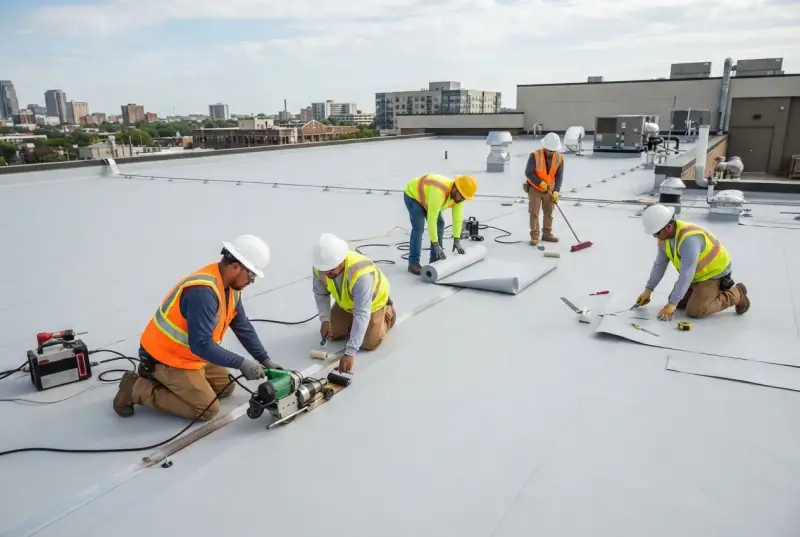
The Harlem Avenue and 159th Street corridors and the light industrial areas near the rail lines provide retail, restaurant and warehouse roofing work, predominantly low-slope.
Nearby communities
Orland Park, Mokena, Frankfort, New Lenox, Oak Lawn. Each has its own page covering local housing stock.
Get a roof looked at in Tinley Park
Tell us the address and what the roof is doing. From Oak Park Avenue Historic District out to the rest of Cook County, the call takes a minute and the estimate is free.